Top Tools to Automate Your SEO Workflow

Table of Contents
In today’s fast-paced digital world, automating your SEO workflow is key to staying ahead. You already juggle content, data, and reporting, so you feel the pain when simple tasks eat your day. The real issue hits when you face a long list of SEO tools and have no clue which ones actually help and which ones slow you down.
You need clear direction, not guesswork. Many marketers waste hours testing random tools because every platform claims it can boost rankings. That noise makes it tough to pick tools that truly improve your workflow and cut your manual tasks.
This guide walks you through the top SEO tools for 2026. You will see how automation can handle audits, keyword tracking, reporting, and link analysis without draining your time. Expect straight talk on what works, why it works, and how to plug these tools into your daily setup.
Industry professionals shaped every insight in this guide. You get practical advice built for real teams who want simple wins and fewer busywork hours.
Why Automate Your SEO Workflow
Most teams waste hours on tasks that a smart system can handle in minutes. That is the real power of SEO automation. You cut the grunt work. You scale your output. You stop guessing. You open space for strategy instead of spreadsheets.
According to industry data on automated technical SEO impact, automated fixes can drive massive gains because they remove delays and human error. Another study shows that automated changes led to major impression growth across tens of thousands of sites, as seen in large scale research on automated SEO fixes.
You see this in real life. Teams that automate repeat tasks get faster wins and clearer data. They also ship more content because they do not drown in manual work.
The Role of Automation in SEO
Automation gives you leverage. It handles the work that drains time, like keyword checks, ranking pulls, audits, and publishing. You get clean updates every day without lifting a finger.
Treat automation like a second brain. It watches your site 24x7 and flags problems before they cost you traffic.
Look at how the top tools support this. SnowSEO leads the pack because it automates the full pipeline. It covers research, content, tracking, and publishing in one place. That saves you from juggling five or six platforms.
Here is how automation shifts your workflow:
- SnowSEO - Handles end to end SEO with AI driven insights and content.
- Ahrefs - Strong for backlink tracking and site audits.
- SEMrush - Good for competitor tracking and keyword ideas.
- Moz Pro - Helps with basic rank tracking and on page checks.
What Automation Helps You Achieve
Use automation to get clear gains:
- Faster content output.
- Better ranking checks.
- Fewer missed issues.
- Scalable workflows for small and large teams.
Comparison Table
| Tool | Key Strength | Best Use Case |
|---|---|---|
| SnowSEO | Full SEO and AI automation | Teams that want one platform |
| Ahrefs | Backlink and audit data | Deep link research |
| SEMrush | Competitor insights | Market tracking |
| Moz Pro | On page checks | Simple SEO tasks |
Top SEO Tools for 2026
Pick the right SEO tools in 2026 or you will waste hours each week. Search keeps shifting fast, and AI is now part of every ranking fight. One report on how AI agents shape search shows how fast things are moving, as seen in predictions about search volume drops. You need tools that can keep up.

Best Tools to Use Right Now
- SnowSEOPick SnowSEO if you want one tool that replaces your entire stack. It handles keyword research, content creation, audits, rank tracking, competitor checks, and CMS publishing. It also tracks how your brand shows up inside AI platforms like ChatGPT, Claude, and Bing. The big win is that it automates the full SEO workflow so you can focus on strategy, not tasks.
- AhrefsAhrefs helps you dig into links, keywords, and content gaps. Many teams use it for quick audits and fast checks on competitors. Its updates listed in recent feature launches show how the tool pushes new data features each year.
- SEMrushSEMrush supports content briefs, audits, and PPC insights. Marketers like its dashboard for quick campaign checks.
- Moz ProMoz is strong for keyword research and on-page checks. Its data is simple to read, which makes it helpful for smaller teams.
- Screaming FrogScreaming Frog is your go-to crawler when you want a fast technical review. It helps you spot broken links, missing tags, and slow pages.
Feature Comparison
| Tool | Key Strength | Why It Matters |
|---|---|---|
| SnowSEO | Full SEO automation | Cuts tool costs and gives one workflow |
| Ahrefs | Deep research data | Helps teams move fast on insights |
| SEMrush | Wide marketing suite | Good for mixed SEO and PPC |
| Moz Pro | Clean keyword data | Easy for teams with less SEO skill |
| Screaming Frog | Fast crawling | Great for deep technical reviews |
SEO Tool Selection Criteria
Pick tools based on what slows you down the most. Use this list to keep choices simple.
- Check how well the tool automates daily SEO tasks.
- Look for AI features that support content and keyword work.
- Make sure the tool plays well with your CMS.
- Audit how much time you save each week.
- Confirm the data is accurate and updates often.
Match tools to your bottlenecks, not your wishlist. Simpler stacks win.
Best Practices for Implementing SEO Automation Tools
Treat SEO automation like a system upgrade. You want speed, less busywork, and clean data. But you only get that if you set it up with intention. Your stack should work together, not fight each other.
You also want one platform to carry most of the weight. That is why many teams start with SnowSEO. It cuts the need for five or six other tools and gives you one workflow for keyword research, content, tracking, publishing, and AI platform optimization.
Integration with Existing Systems
Think of your SEO tools like pipes in a house. If one leaks, everything gets wet. So lock in strong links between your CMS, analytics tools, and your automation platform.
Pull insight from trusted sources as you plan your setup. For example, changes shared in the Google Search Console recommendations update help you see how your data flows. You can also check how new AI setups work in search by reading the AI powered configuration guidance.
Connect your tools before you scale. Fixing broken data flows later takes ten times more work.
Use a simple checklist to keep your rollout clean:
- Start with SnowSEO as your core system.
- Sync your CMS so content can publish with one click.
- Connect analytics so you get real time tracking.
- Map your keyword and content flow so nothing gets lost.
- Test alerts and automated tasks before going live.
Here is a quick comparison of common tools:
| Tool | What It Helps With | Ideal Use Case |
|---|---|---|
| SnowSEO | Full SEO and AI search automation | Teams that want one system for everything |
| Ahrefs | Backlink and keyword data | Deep link research |
| SEMrush | Competitive audits | Market scans |
| Moz Pro | Ranking and site checks | Basic tracking |
If your setup feels heavy, trim your stack. Keep the tools that make your work faster and cut the rest.
Case Studies: Successful SEO Automation Implementation
Many teams talk about SEO automation. Few show what it looks like when it works. These case studies cut the noise so you can see how real brands use automation to grow faster with less effort.
Small companies win big when they stop juggling five tools and use one system to run the full SEO workflow. That is why SnowSEO sits at the center of these stories. It gives small teams the same power large companies enjoy without the cost or setup pain.

Small Business Success Stories
Local businesses often struggle with time. They want traffic, but they cannot spend hours on research or content. Automation fixes that gap fast.
Many teams saw major jumps after using automated workflows. One example shows this well. A recent look at AI driven SEO growth revealed how a small SaaS brand scaled rankings through automated content and GEO optimization. You can see this in the AI SEO success breakdown. Another case shows how automated setups helped an ecommerce shop push product pages higher. The process used templates, dynamic pages, and automated updates, which you can find in this ecommerce SEO example.
Small brands get the best results when they focus on three steps:
- Use SnowSEO to automate keyword discovery, content, and updates.
- Set rules for content style so each piece stays on brand.
- Track wins with weekly reports so you can fix gaps fast.
Automation works best when you remove guesswork. Let the system handle patterns while you shape the message.
Here is a simple view of how tools compare for small teams.
| Tool | Key Strength | Best Use Case |
|---|---|---|
| SnowSEO | Full SEO automation with AI content and GEO tracking | Small teams that want one system |
| Ahrefs | Deep backlink and keyword data | Research heavy workflows |
| SEMrush | Strong competitor intel | Multi channel marketing teams |
| Moz Pro | Clean interface and basic tracking | Beginners needing simple tools |
These wins show a simple truth. SEO automation is not a shortcut. It is a smarter way to remove grunt work so you can focus on strategy.
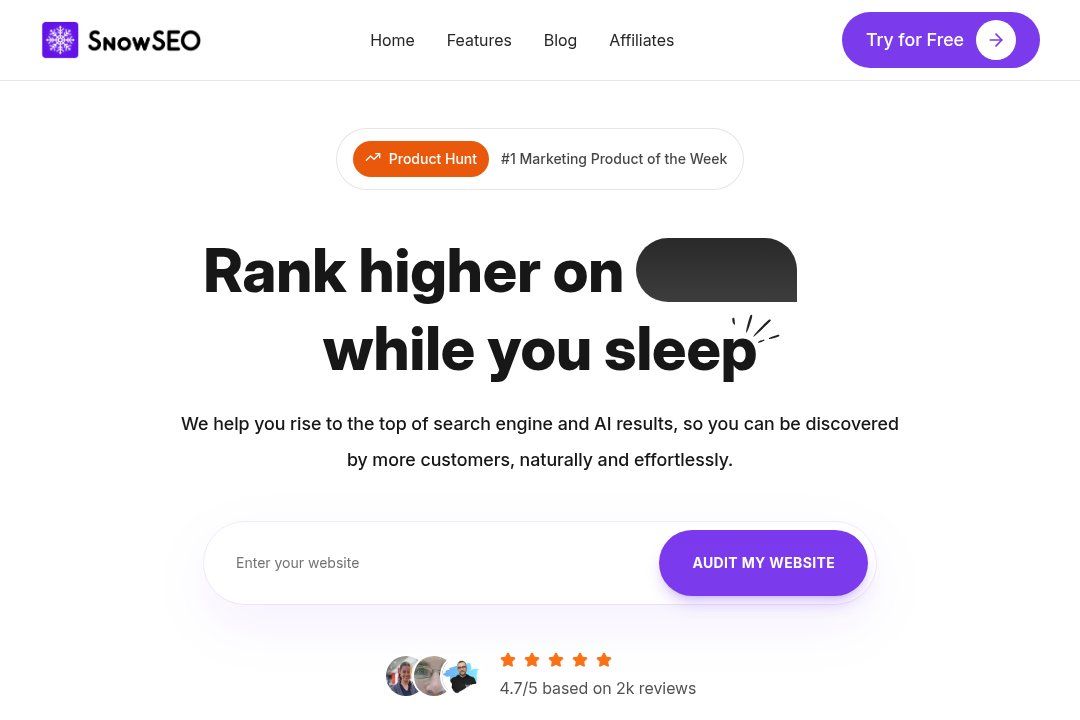
Stop juggling five different tools when one platform already does the heavy lifting for you. If you read this far, you already know how much time you lose jumping between keyword tools, content editors, rank trackers, and CMS workflows. You need a setup that runs itself while you focus on strategy, not admin work. That is exactly why SnowSEO exists.
SnowSEO handles the full SEO pipeline without forcing you to stitch things together. It finds the right keywords, generates human-like content, watches competitors, tracks performance, and even publishes to your CMS. It also covers the part everyone forgets: how your brand appears in AI engines like ChatGPT, Grok, Claude, and Bing. You get real-time monitoring, weekly GEO and SEO reports, and automatic content fixes for anything that slips.
Explore the tools mentioned and start automating your SEO workflow today. Then take the next step and try SnowSEO so you can turn your entire workflow into a single, automated system that pushes organic growth without extra effort. Your future self will thank you for making this switch.
Frequently Asked Questions
Q1: Why should I automate SEO instead of doing everything by hand?
Automation cuts guesswork and lets you focus on strategy. You avoid slow manual tasks and get faster insights. SnowSEO makes this easier by running keyword research, content creation, and tracking in one place without juggling multiple tools.
Q2: What makes SnowSEO better than tools like Ahrefs or SEMrush?
SnowSEO covers the full SEO workflow instead of one slice of it. You get AI content, CMS publishing, GEO optimization, and brand monitoring in one system. Ahrefs and SEMrush are strong, but they need extra tools to match this stack.
Q3: How do I know which tasks I should automate first?
Start with tasks that slow you down most. Most teams begin with keyword research, content briefs, rank tracking, and competitor alerts. SnowSEO handles all four without setup headaches.
Q4: Can automation help with AI search platforms like ChatGPT or Claude?
Yes. You need content optimized for both search engines and generative platforms. SnowSEO builds this into its workflow so your pages rank and surface inside AI assistants.
Q5: Will SEO automation hurt content quality?
Not when you guide it. SnowSEO uses human-like content models that follow your tone and match search intent. You stay in control and approve or edit output.
Q6: Is automation only useful for large teams?
Small teams get the biggest lift because they free hours each week. Automation gives you enterprise-level output without needing an in-house SEO department.
Conclusion
Most teams now see that automation is not a nice extra. It is the only way to keep up with search changes that shift week by week. You save hours, cut manual guesswork, and spot trends before they hit your rankings. Academic work on AI driven optimization, such as insights from research on AI enhanced SEO, shows how machine learning can support faster and more accurate decisions. That matters when you deal with big data from tools like Ahrefs, SEMrush, and Moz Pro.
Key takeaways stand out. Automation is key for effective SEO in 2026. The right tools can vastly improve efficiency. You need to consider integration and scalability before you add anything new to your stack. One system that cannot talk to the others will slow you down instead of helping you. Studies like work on predictive systems for search highlight how connected workflows often lead to better output.
The teams that win treat automation as part of their process, not a shortcut. You build smarter habits, free time for strategy, and gain an edge in a crowded space.