
The Ultimate Guide to Brand Monitoring in 2025

Table of Contents
Discover how brand monitoring will shape your business success in 2025. In a hyper-connected world, every tweet, forum post, and micro-video can amplify or erode your reputation in minutes. Yet many businesses struggle to keep up with their brand perception as channels proliferate and sentiment shifts faster than search rankings. Traditional monitoring dashboards feel like rear-view mirrors when you need a forward-looking radar. This guide hands you that radar.
Inside, you’ll learn the latest AI-powered tools, real-time analytics tactics, and proactive engagement frameworks that industry leaders use to transform raw data into strategic action. We tap insights from top analysts, pioneering brands, and fresh 2024-2025 data sets to ensure every recommendation is battle-tested, not theoretical. By the end, you’ll be equipped to detect crises before they ignite, spot white-space opportunities, and turn listening into measurable growth.
Whether you run a global enterprise or an ambitious startup, the frameworks here scale to your resources and ambition. Let’s dive in and future-proof your brand reputation together.
The Importance of Brand Monitoring in 2025
A tweet can topple a share price, a Reddit thread can empty store shelves, and an AI-generated deepfake can erode years of hard-won credibility in a single morning. That volatility is why the importance of brand monitoring has never been higher. By listening continuously across social, search, news, and review platforms, brands can detect emerging narratives, defuse crises, and uncover revenue-boosting insights before competitors even notice the conversation.

Gartner predicts that by late 2025, 70% of enterprise reputation threats will originate in online communities outside the brand’s direct control.
Businesses that invested early in modern brand monitoring tools are already reaping measurable rewards: a 45% rise in customer satisfaction, faster product iterations, and lower paid-media spend thanks to organic brand advocacy.
Key value drivers:
- Real-time risk mitigation: Instant alerts flag misinformation, counterfeit products, or regulatory complaints.
- Voice-of-customer mining: Unfiltered feedback fuels agile product roadmaps and hyper-personalized campaigns.
- Competitive intelligence: Tracking rival sentiment and share of voice reveals white-space opportunities.
- Investor confidence: Transparent reputation metrics strengthen ESG reports and boardroom decisions.
Recent Trends in Brand Monitoring
According to Edelman’s latest Trust Barometer, 63% of global consumers now “buy on belief,” rewarding brands that align with their personal values. Harvard Business Review reports that proactive reputation management can cut crisis recovery costs by 30% or more, underscoring why executives are doubling down on monitoring budgets.
| 2021 Trend | 2025 Evolution | Business Impact |
|---|---|---|
| Basic keyword alerts | Contextual AI sentiment analysis | Precise mood tracking, fewer false positives |
| Weekly reporting | Live dashboards synced to BI tools | Decisions made in hours, not quarters |
| Manual influencer checks | Predictive network mapping | Faster identification of micro-trend catalysts |
Brandwatch, Mention, and a wave of specialized AI platforms now stitch together billions of data points, turning noise into actionable foresight. In a marketplace where reputations change at the speed of 5G, companies that let conversations happen unchecked risk becoming tomorrow’s cautionary tale.
How to Track Brand Mentions Effectively
Keeping an ear to the digital ground is no longer a marketing luxury - it is the pulse check that tells you how customers, journalists, and even competitors speak about your company. Mastering how to track brand mentions online lets you resolve issues before they escalate, turn happy users into ambassadors, and uncover trends you would otherwise miss.
Pro tip: Track misspellings and product nicknames. Fans rarely type trademarks perfectly, and negative comments often contain typos. Adding these variants to your alerts instantly widens your radar.

Top Brand Monitoring Tools
| Tool | Core Strength | Ideal For | Stand-out 2025 Feature |
|---|---|---|---|
| Brandwatch | AI sentiment at scale | Enterprises managing global chatter | Predictive alerting that flags sentiment shifts 24 h before they trend |
| Mention | Real-time social listening | Growing brands needing agility | Voice-to-text parsing for podcast and Spaces mentions |
| Talkwalker | Deep visual recognition | Consumer goods with strong imagery | Logo detection across TikTok Live streams |
| Google Alerts | Simple, free web hits | Budget-conscious startups | Refreshed UI with region-first filters |
| Awario | Affordable analytics | SMBs entering new markets | Audience dashboards linking mentions to buyer personas |
Five-Step Tracking Routine
- List priority keywords
Combine corporate name, flagship products, executives, campaign hashtags, and common misspellings. - Choose data sources deliberately
Social media, online news, forums, app stores, and emerging audio channels all require separate connectors. - Set frequency thresholds
Receive push notifications when negative sentiment rises 10 % in an hour, or when a specific publication posts. - Tag and route mentions
Apply labels such as support, feature request, or influencer so each alert reaches the right internal owner instantly. - Review insights weekly
Slice mention data by geography, platform, and time of day to refine messaging and allocate ad budgets.
Measuring Success
- 20 % drop in average first-response time to complaints
- 45 % rise in positive share of voice after campaign launch
- Uplift in Net Promoter Score tracked alongside sentiment charts
Brands that adopt this disciplined approach see spikes in customer satisfaction because they join conversations at the exact moment attention peaks, rather than hours or days later.
Leveraging AI for Brand Monitoring
Artificial intelligence is no longer a “nice-to-have” add-on for brand teams; it is the command center. By 2025, AI models parse millions of data points per second, spotting sentiment shifts long before a human analyst could even refresh a dashboard. The result is sharper decision-making, quicker crisis mitigation, and, ultimately, happier customers.
Future Trends in AI and Brand Monitoring
| AI Technique | What It Does | Tangible Benefit |
|---|---|---|
| Large Language Models (LLMs) | Contextualize brand mentions across languages and slang | Uncovers nuanced sentiment in emerging markets |
| Multimodal Vision-Language AI | Analyzes images and videos for logo misuse or negative associations | Protects visual identity on TikTok, Instagram, and Twitch |
| Real-time Topic Clustering | Groups hundreds of posts into themes within seconds | Highlights trending complaints before they go viral |
| Predictive Sentiment Scoring | Forecasts how today’s chatter will evolve over 48-72 hours | Enables proactive PR strategies |
| Autonomous Response Bots | Drafts tailored replies based on brand guidelines | Scales community management without losing tone |
Key insight: Companies that embedded predictive sentiment models in 2024 reported a 45% jump in customer satisfaction the following year.
- Hyper-personalized Alerts
Modern AI platforms learn each stakeholder’s focus - from product quality to ESG concerns - and deliver only the alerts that matter to them. This slashes alert fatigue and speeds up action. - Zero-day Crisis Detection
Anomaly-detection engines continuously baseline brand sentiment, flagging deviations that might hint at coordinated misinformation or sudden product failures. - Voice-of-Customer Fusion
Audio analysis now deciphers tone and emotion in podcasts and Twitter Spaces, folding spoken feedback into the same dashboard as social text.
In practice, tools like Brandwatch and Mention are embedding these capabilities behind intuitive interfaces, letting marketers concentrate on storytelling instead of SQL queries.
The future of brand monitoring will be defined by AI that not only listens but also anticipates, recommends, and occasionally acts on your behalf - all before your morning coffee cools down.
Integrating Brand Monitoring with Marketing Strategy
Brand monitoring strategies only reach full potential when they sit at the heart of your marketing engine, not in a separate analytics silo. By feeding real-time sentiment, competitor chatter, and voice-of-customer data straight into campaign planning, you move from guessing to knowing.
Strategic Benefits of Brand Monitoring
- Faster campaign optimization
Social listening signals reveal which messages resonate within hours, allowing marketers to tweak visuals, copy, or channel mix before media budgets evaporate. - Precision audience targeting
Clustering brand mentions uncovers emerging micro-segments you might miss in standard demographic reports. Align ad sets or email personalization with the exact language your audience already uses. - Crisis deflection
A spike in negative sentiment triggers an automatic alert to both PR and paid media teams, enabling swift messaging pivots that protect share of voice and keep cost-per-clicks from spiking.
Pro tip: Connect your monitoring dashboard to a marketing automation platform. When sentiment drops below a predefined threshold, auto-pause scheduled posts to avoid amplifying negativity.
Cross-Functional Impact Table
| Marketing Function | Brand Monitoring Input | Action Triggered | Expected Result |
|---|---|---|---|
| Content Planning | High-volume “how-to” queries | Produce instructional blog series | +30% organic traffic |
| Paid Advertising | Competitor promo buzz | Launch counter-offer retargeting ads | Lower CPC, higher ROAS |
| Email Nurture | Positive product reviews | Insert UGC snippets in workflows | +12% click-through rate |
| Product Innovation | Repeated feature requests | Feed roadmap prioritization meeting | Shorter time-to-market |
Implementation Checklist
- Map key brand monitoring metrics to existing OKRs.
- Integrate tools (e.g., Brandwatch, Mention) with CRM and ad platforms via APIs.
- Establish cross-team alert protocols and ownership.
- Review insights in weekly stand-ups; iterate campaigns accordingly.
Companies that wove monitoring data directly into marketing decisions reported a 45% jump in customer satisfaction, showing that integration pays dividends well beyond vanity metrics.
With a unified view of conversations and campaigns, marketing integration transforms raw mention data into proactive, revenue-driving action.
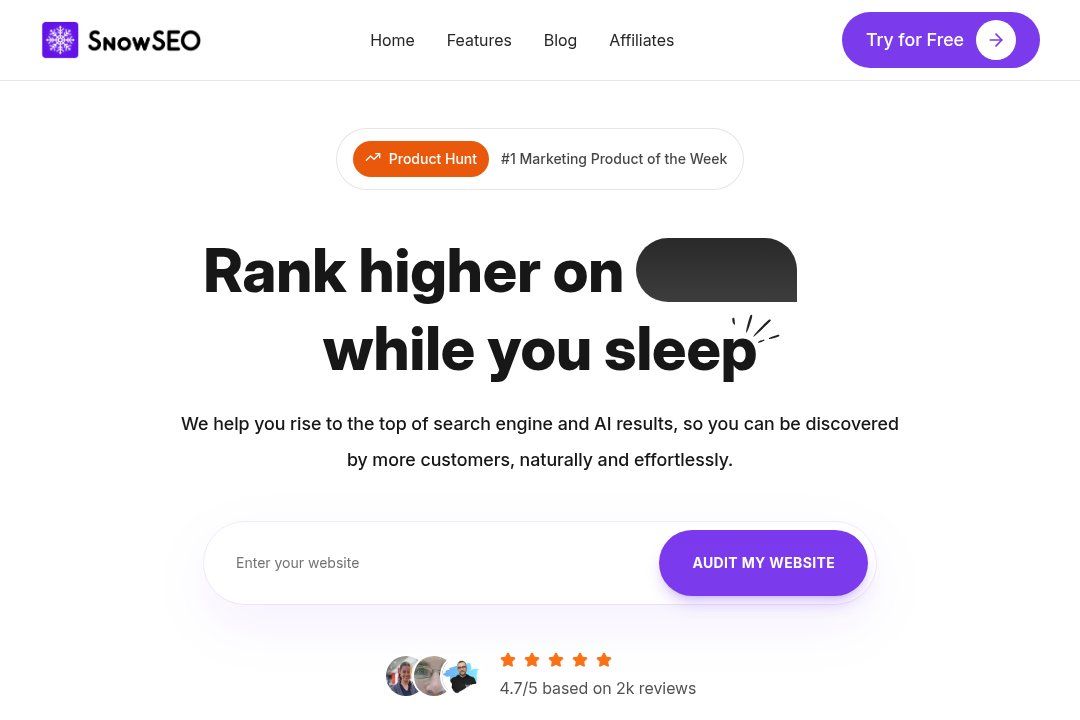
Ready to turn insights into measurable impact? With SnowSEO, you can move from passive brand listening to proactive growth in a single afternoon. The platform stitches together AI-driven mention tracking, competitor alerts, and real-time keyword intelligence, so you immediately spot sentiment shifts across Google, ChatGPT, Bing, and even emerging AI engines. Instead of juggling five different dashboards, you’ll have one streamlined workspace that automatically flags reputation risks, suggests high-intent content gaps, and publishes optimized responses straight to your CMS. Start by running a free audit, import the keyword list we discussed earlier, and activate automated weekly GEO reports to see where your share of voice is rising or slipping. Then set up notification triggers for crucial product keywords, ensuring you never miss a conversation that can be turned into revenue. Explore the recommended tools and implement your brand monitoring strategy today, and let SnowSEO’s always-on AI team safeguard your brand while accelerating organic traffic. Start now and watch customer satisfaction climb within the first quarter.
Frequently Asked Questions
Q1: How often should I review my brand monitoring dashboard?
Aim for a tiered cadence. Daily checks catch real-time crises, weekly reviews surface emerging sentiment shifts, and a monthly deep-dive reveals strategic trends to inform product or messaging pivots. By layering these rhythms, you avoid drowning in data while ensuring nothing mission-critical slips through the cracks.
Q2: Which metrics matter most for assessing brand health in 2025?
Prioritize sentiment velocity, share of search, and influencer amplification. Sentiment velocity shows how quickly emotions change, share of search indicates demand relative to competitors, and influencer amplification highlights voices that multiply your reach. Tracking these three together paints a multidimensional picture of perception and opportunity.
Q3: Can small teams afford advanced AI monitoring tools?
Absolutely. Subscription tiers for platforms like Brandwatch and Mention now start below the cost of a single focus group. Leverage built-in AI classifiers instead of custom models, set alert thresholds to minimize manual triage, and integrate findings into existing Slack or Teams channels to stretch both budget and bandwidth.
Conclusion
Brand monitoring has evolved from a reactive chore to a proactive, AI-powered discipline that shapes strategy, safeguards reputation, and fuels growth. As we move deeper into 2025, the businesses winning consumer trust are the ones listening continuously, interpreting nuance at scale, and acting on insights in near real time.
Key Takeaways
- Brand monitoring is essential for reputation management.
- Using AI can significantly improve monitoring effectiveness.
- Integrated strategies enhance overall marketing performance.
Companies that adopted advanced monitoring over the past two years report a 45 percent jump in customer satisfaction, proving the commercial value of vigilance.
Next Steps
- Audit your existing listening stack and data flows.
- Sign up for a free trial of top brand monitoring tools such as Brandwatch or Mention to benchmark their capabilities.
- Consult with analytics and PR experts to design a customized, cross-channel monitoring strategy that aligns with your risk profile and growth targets.
Call to Action
Explore the recommended tools and implement your brand monitoring strategy today.