The Ultimate Guide to AI and Traditional SEO

Table of Contents
Explore how AI is reshaping SEO in real time. You feel it every time rankings shift overnight or search results look smarter than they did last month. AI is not a small tune up to old SEO rules. It is a full rewrite. The hard part is simple to name but tough to solve. Most teams know AI is changing search, yet they have no clue how to blend new tools with the SEO playbook they already trust.
Picture this. You try to follow classic SEO steps, but AI driven engines now predict intent, rewrite snippets, and shift click paths. If you keep using old methods alone, you fall behind fast. You need a plan that links both worlds so you stay visible while search engines evolve.
This guide gives you that plan. You get clear insight into how AI shapes keyword research, content creation, and ranking signals. You also see how to mix AI tools with proven SEO methods so your work stays sharp.
Expect expert insights, fresh research, and a direct path to using AI without losing the SEO basics that still win.
The Evolution of SEO: Traditional vs AI
SEO changes fast. One year you tweak title tags. The next year Google rolls out AI search that rewrites the rules. If you want to stay visible, you need to know how we got here and what works now.
Search engines used to rely on simple signals. Think links, keywords, and clean site structure. Today, AI shapes results, rewrites pages, and even predicts user intent. That shift is huge, and you feel it if you run any site that depends on organic traffic.
According to updates on AI search features, search engines now use AI to change how pages get ranked and shown. Tools follow that push, like new AI driven marketing platforms that help teams work faster.
Traditional SEO Practices
Traditional SEO is the backbone of organic growth. You fix what is broken, write good content, and build trust over time. It works because Google still rewards strong fundamentals. AI may speed things up, but the base rules still matter.
Here is what old school SEO focused on:
- Keywords that match user searches.
- On page structure like title tags and headers.
- Site speed and mobile design.
- Backlinks from trusted sites.
- Clear content that answers a real question.
Treat traditional SEO like the frame of a house. AI can decorate it, but nothing stands without a strong base.
Benefits of traditional SEO
This method still gives you big wins. You get stable rankings. You build brand trust. You also get a clearer idea of what your audience wants.
Here is a quick look at why it still works.
| Benefit | Why it matters | Example impact |
|---|---|---|
| Strong site structure | Helps search engines read your site | Faster indexing |
| Keyword intent match | Brings the right traffic | More conversions |
| Long term trust | Builds authority | Higher rankings over time |
AI in SEO Today
AI changes the speed of everything. You no longer guess what users want. AI tools show you patterns that humans miss. You need to lean on both.
AI helps you:
- Predict what users want next.
- Create better content briefs.
- Rewrite and improve pages.
- Spot ranking drops faster.
- Find gaps your rivals ignore.
Search engines also evolve. AI powers new features that change how users find results, so your strategy must shift too.
Think of AI SEO tools for AI work as rocket fuel. They push your work further, but you still need to steer the ship.
Here is a simple comparison to show the shift.
| Factor | Traditional SEO | AI SEO |
|---|---|---|
| Speed | Slow to update | Fast and automated |
| Insight | Manual research | Predictive suggestions |
| Content | Human written | Human plus AI drafting |
| Ranking checks | Manual tools | Real time alerts |
AI does not replace traditional SEO. It lifts it. The strongest teams mix both.
AI-Driven SEO Tools and Their Impact
AI hits SEO like a power boost. You get speed, sharper insights, and fewer guesses. If you want a solid AI-driven SEO strategy, you need to pair smart tools with your own gut. The mix lets you move fast while still keeping control. Many teams now rethink their workflow after seeing how tools spot patterns we miss. One reason is clear data showing how search shifts. For example, reports on how users react to AI summaries in results remind you that rankings alone do not guarantee clicks anymore.

Comparing Top AI SEO Tools
Think of top AI SEO tools like Ahrefs, SEMrush, and Moz Pro but with added brains. They scan huge data sets, test ideas, and predict what might rank. You get faster keyword research and smarter content ideas. You also see gaps your rivals ignore.
Here is a quick look at how these tools stack up when used in an AI-driven SEO strategy.
| Tool Name | Best Use Case | Key AI Features | Why It Matters |
|---|---|---|---|
| Ahrefs | Deep backlink checks | Pattern spotting in link trends | Helps you spot link wins fast |
| SEMrush | Full site audits | Issue prediction from past data | Cuts time spent on manual fixes |
| Moz Pro | Rank tracking | Smart keyword difficulty scoring | Guides better keyword picks |
You want tools to do the heavy lifting, not all the thinking. Use them to point you to the right doors. You still decide which door to open.
Use AI to filter noise. Let your team focus on strategy, not chasing data dust.
Some brands already lean hard into AI. Many do this because search behavior shifts fast. You can see this in industry insights on how AI changes user journeys, which push companies to rebuild their funnel.
Integrating AI with Traditional SEO
Blend AI with classic SEO steps. You still need strong content, clean tech, and good links. AI just speeds the path.
Try this simple system:
- Use AI tools to scan topics and build keyword ideas.
- Write content with human tone and real value.
- Let AI check structure and find weak spots.
- Track results with traditional rank and traffic tools.
- Update content fast when data shifts.
This mix works because AI gives you direction while your human brain shapes the story. Your site earns trust, not just clicks.
Ethical Considerations and Future Trends
AI is changing SEO fast, and you need to keep your guard up. The tech gives you power, but it also creates risk. Teams that ignore the ethics side get burned. Teams that use AI with care win trust and long term gains.

Ethics of AI in SEO
Treat AI like a sharp tool. It can help you move faster, or it can cut deep if you get sloppy. The biggest issue is trust. A recent insight showed that many people question AI search results, and you can see this concern in data shared in a survey about distrust in AI powered results. If users do not trust your content, nothing else matters.
You also need to watch how AI uses data. Many companies collect more data than they need. That move looks smart at first, but it creates long term risk. Ethical bodies keep raising the bar, with new rules like the ones noted in a report on tightened ethics for AI in insights work. Push your team to follow these rules early. It saves you from stress later.
Use this quick list to keep your AI use clean:
- Check how your tools collect data.
- Write content that helps real people, not just bots.
- Keep humans in the loop for review.
Follow one simple rule: If you would not say it in person, do not let AI publish it for you.
The Future of SEO with AI
Picture SEO in two years. Search will shift from keywords to intent. AI will do more of the heavy lifting, and you will focus on strategy and voice. This change opens new doors if you stay flexible.
Expect three big shifts:
- Engines will blend search and chat.
- Brands will fight harder to earn trust signals.
- Content will need stronger expert proof.
Here is a quick view of what will shape the future of SEO with AI:
| Trend | Why It Matters |
|---|---|
| AI driven answers | Users want fast, clear replies. |
| Trust as a ranking factor | Search engines reward real experts. |
| Multimodal search | Images, voice, and text mix into one flow. |
Treat AI as a partner. It will boost your reach, but only if you stay ethical and clear.
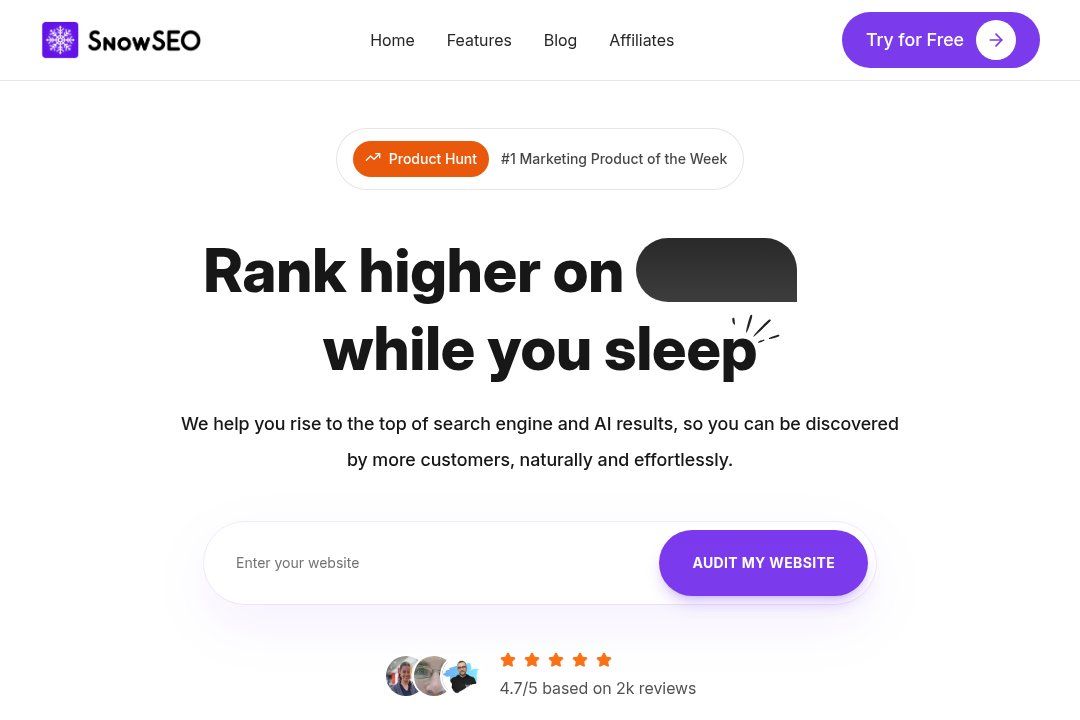
You just walked through the hard truth about winning with both AI and traditional SEO, so now is the moment to act on it. Stop trying to duct tape ten different tools together. Let SnowSEO handle the heavy lifting for you. The platform gives you a full SEO and AI-SEO engine that works nonstop, tracks your rankings across search and AI chat systems, finds gaps you missed, and even publishes content straight to your CMS. It feels like having a 24x7 SEO team that never needs a break.
If you want to future proof your strategy, explore and invest in AI tools for a future-proof SEO strategy. You already know how fast search is shifting. You can try to keep up on your own, or you can let a system built for 2025 do the work for you.
Start simple.
- Run your first keyword audit inside SnowSEO.
- Let the platform map where your content falls short.
- Push one optimized article live to see the difference.
You need only one win to see how much easier growth feels when your SEO stack is unified and automated.
Frequently Asked Questions
Q1: How do AI tools change the way I do SEO?
AI speeds up the work you already do. It helps you spot keywords, map search intent, and predict what content gaps matter. You still guide the strategy. Think of AI like a second brain that never gets tired. You use tools like Ahrefs or SEMrush to check the data, then let AI help you shape ideas faster. You stay in charge of decisions, editing, and quality. AI just cuts the grunt work so you can focus on moves that push rankings.
Q2: Can AI replace traditional SEO?
No. AI can write drafts and surface insights, but it cannot replace your judgment. Google still rewards clarity, trust, and real expertise. You use AI to test ideas and speed up tasks, but you still need classic SEO skills like internal linking, keyword research, and technical fixes. AI works as a power tool, not a magic wand. You win by blending both, not picking sides.
Q3: What should I avoid when using AI for SEO?
Skip blind automation. Do not publish raw AI text. Do not chase keywords that ignore search intent. You need to edit every draft, add real examples, and support claims with data. Keep your brand voice tight. Check facts. Watch for patterns that sound robotic. AI boosts speed, but your input keeps content human.
Conclusion
AI now sits at the center of SEO. You can see this shift clearly in how search works today, and reports like the one on AI driven search expansion back it up. Search engines lean on machine learning to judge quality, predict intent, and reward sites that solve real user problems. You cannot ignore that.
Key takeaways stand out.
- AI is reshaping SEO faster than most teams expect.
- You gain an edge when you mix smart tools with solid strategy.
- Ethical choices matter because search engines judge trust as much as content.
- Human insight still drives the choices that AI cannot make.
Treat AI as a power tool, not the driver of your strategy.
Next steps are simple.
- Review your current SEO setup.
- Spot gaps in research, content, or technical work.
- Bring in AI tools where they help you work faster or think clearer.
- Keep control of the final message so your content feels human and honest.
The mix of AI and traditional SEO will keep changing. Your job is to stay flexible, stay sharp, and let data guide your moves.