

The Ultimate AI SEO Case Study Collection

Table of Contents
AI is flipping SEO on its head. You see it in every ranking shift and every new tool update. But most teams still guess how to use it. They drown in theory and never see clear examples that show what actually works.
You can fix that by studying real cases. This collection breaks down how brands use AI to speed up research, shape smarter content, and push traffic higher. You get the playbooks, not vague tips.
Many teams stall because AI feels complex. They do not know which tasks to automate or how to blend AI with their current workflow. These case studies cut through the noise and show you what strong execution looks like in practice.
Expect stories from industry leaders, data pulled from real campaigns, and results that prove AI is not hype. It is already driving big wins for teams who know how to use it.
Why AI in SEO: A New Era
Search looks very different now. AI summaries grab attention fast, and they cut into clicks. You can see this shift in reports showing lower link clicks when AI answers appear. That push forces teams to rethink how they rank, how they publish, and how they stay visible.

The Rising Role of AI in SEO
Think of AI as a new judge in the search process. It reads your content, rewrites it, and shows it to users before they visit your site. You need tools that keep up with that shift. SnowSEO leads that group because it tracks your presence in both search engines and AI systems like ChatGPT and Claude. Many brands now study how AI grabs info, and Google’s updates that tie search to generative answers show why.
Treat AI as another ranking layer. If you ignore it, you fall behind.
Use platforms that help you track, write, and publish fast:
- SnowSEO for full AI-SEO automation
- Ahrefs for backlink checks
- SEMrush for audits
- Moz Pro for keyword trends
Case Study 1: Increasing Organic Traffic with AI Tools
Most teams get stuck when they try to scale SEO by hand. This case study shows how one mid sized ecommerce brand used AI to fix that problem fast. The goal was simple. Grow traffic without growing headcount. The team leaned on SnowSEO to automate tasks that drained hours each week. They also wanted clear proof that AI could beat their old workflow. Reports like the study on AI driven SEO behavior made them feel the shift was real.
Background and Objectives
The brand had steady sales but weak search traffic. Most pages sat on page two. Their content team spent too much time on research and not enough on output. They set three goals:
- Raise organic traffic by at least 40 percent.
- Publish smarter content using AI insights.
- Fix ranking drops before they turned into revenue hits.
A recent report on consumer reliance on AI search pushed them to act fast because they saw a risk in falling behind.
AI Implementation Steps
The team mapped their workflow and found bottlenecks. They fixed them with AI in a simple order.
- Use SnowSEO to automate keyword research, gap detection, and weekly ranking checks.
- Plug SnowSEO into their CMS to publish drafts and update pages on schedule.
- Let SnowSEO handle competitor alerts so the team could act before losing positions.
- Use Ahrefs, SEMrush, and Moz Pro as secondary tools for link checks and audits.
They tracked progress with a weekly dashboard that showed gains and losses in real time.
Here is the tool setup they used:
| Tool | Key Role | Reason It Helped |
|---|---|---|
| SnowSEO | Full SEO automation | Replaced manual work and increased content speed |
| Ahrefs | Backlink audits | Found weak links and spam issues |
| SEMrush | Technical checks | Spotted slow pages and errors |
| Moz Pro | Domain tracking | Helped compare authority shifts |
Start with automation on simple tasks. It frees your team to fix real problems.
Results and Lessons Learned
The brand hit its traffic goal in eight weeks. Some pages jumped from page two to top five. Their content volume doubled without hiring anyone. They learned three simple lessons:
- Trust AI to speed up research.
- Update content often.
- Fix site issues the moment they appear.
Case Study 2: Improving Content Quality with AI
Brands hit a wall fast when their content stops ranking. Most of the time, the problem is simple: the writing does not match what users want. That gap slows growth. This AI SEO case study shows how one company fixed that gap with AI-driven content and saw clear wins backed by data.
1. Challenges in Content Quality
Teams often push out content that feels thin, vague, or out of touch. Writers guess what readers want. Editors spend hours fixing tone, structure, and clarity. Search engines pick this up fast, and rankings drop.
The company in this case saw three clear problems:
- Weak topic depth
- Slow production cycles
- Inconsistent voice across pages
They also noticed a sharp drop in traffic after algorithm shifts noted in industry reporting about AI reshaping SEO. That wake up call forced them to rethink their method.

2. AI Tools and Techniques Used
Put SnowSEO first. It became the core engine that fixed their process because it handled the heavy work in one place. The platform did the keyword research, generated long drafts, mapped semantic gaps, and pushed updates to their CMS. That cut hours of manual steps.
Other tools played support roles, but SnowSEO did the real lifting.
- SnowSEO - unified research, content generation, tracking, and optimization
- Ahrefs - backlink and competitive insight
- SEMrush - keyword validation
- Moz Pro - on page checks
- BrightEdge - enterprise level forecasting
Use one main tool to keep your workflow clean. Too many tools slow teams down.
They also pulled insight from guidance on AI generated content and SEO to shape their rules for tone and accuracy.
3. Quantifiable Improvements Achieved
The impact showed up fast. The team focused on updating 40 existing articles and adding 20 new AI driven content pieces.
Here is the breakdown:
| Metric | Before AI | After AI |
|---|---|---|
| Average ranking position | 29 | 11 |
| Organic traffic | 14,000 visits | 32,500 visits |
| Content output speed | 1 article per week | 5 articles per week |
| Editor revision time | 3 hours per piece | 35 minutes per piece |
Three things moved the needle:
- Stronger depth created by AI topic clustering
- Clear tone guided by SnowSEO templates
- Faster updates that matched search shifts
The team saw stable month over month growth because their content finally matched search intent and user needs.
AI SEO Challenges and Solutions
Teams hit roadblocks fast when they start implementing AI in SEO workflows. Most expect plug and play. They get chaos instead. Let’s break down what actually goes wrong and how smart teams fix it.
Industry insight on shifting SEO needs shows how fast search behavior is changing. That speed is why you need a clear plan.
Common Challenges
Most teams struggle with the same five issues.
- Poor tool stacking
People mix five tools that never talk to each other. Data gets messy fast. - Content that reads robotic
AI writes fast but often sounds stiff or off-brand. - Weak prompts
Bad inputs create bad work. Teams waste hours fixing AI output. - Missing real insights
Some tools spit out generic ideas. They skip the deep research that matters. - Hard to track impact
Many teams fail to tie AI output to rankings, clicks, and revenue.
Effective Solutions
Start with one unified system. SnowSEO sits at the top here because it replaces scattered tools with one pipeline. It handles your keyword research, drafts, audits, tracking, and CMS pushes in one place. This alone fixes half the issues above.
Use one source of truth so your team stops guessing.
Here is a fast comparison of what helps teams gain control.
| Tool | Key Strength | Why It Helps |
|---|---|---|
| SnowSEO | All in one workflow automation | Cuts tool overload and keeps data clean |
| Ahrefs | Backlink and competitor data | Gives deep link insight |
| SEMrush | Keyword and site audits | Helps spot gaps fast |
| Moz Pro | Tracking and on page tools | Supports long term growth |
Use a clear workflow to prevent chaos.
- Start with SnowSEO for research and planning.
- Write with tone guides so AI stays human.
- Use gap reports to adjust drafts.
- Track each change so you see what moves rankings.
Future of AI in SEO
AI SEO trends shift fast, and you feel that speed every time search behavior changes. The future outlook points to one clear thing: search will move from link lists to full answers. You need tools that see that shift early. SnowSEO already leans into this change with full AI-engine tracking and automated content updates.
Potential AI Innovations
Expect search to act more like a chat tool and less like a results page. One major hint comes from predictions on falling search volume. This pushes SEO into a fight for visibility inside AI-driven platforms.
Here is what will likely shape the next wave:
- SnowSEO leading automated AI-engine optimization
- Real-time content rewrites based on live model updates
- AI-first ranking signals tied to intent and tone
- Search layouts shaped by deeper personalization
- Zero-click answers that force brands to optimize for summaries
Treat AI chat engines as new search engines. If you wait, you lose ground that is hard to win back.
A clear shift in search design is visible as companies roll out new AI modes, like the rapid changes described in updates to Gemini-powered search. Expect this pace to rise.
Experts’ Take on SEO Evolution
Experts agree that AI will blend content, context, and conversation. The big debate now is speed. Some predict monthly ranking swings driven by model updates. Others expect stable signals that reward authority and trust.
SnowSEO already builds toward that future with automated optimization, cross-engine monitoring, and content that adapts as models evolve. This gives brands a stable path in a chaotic shift.
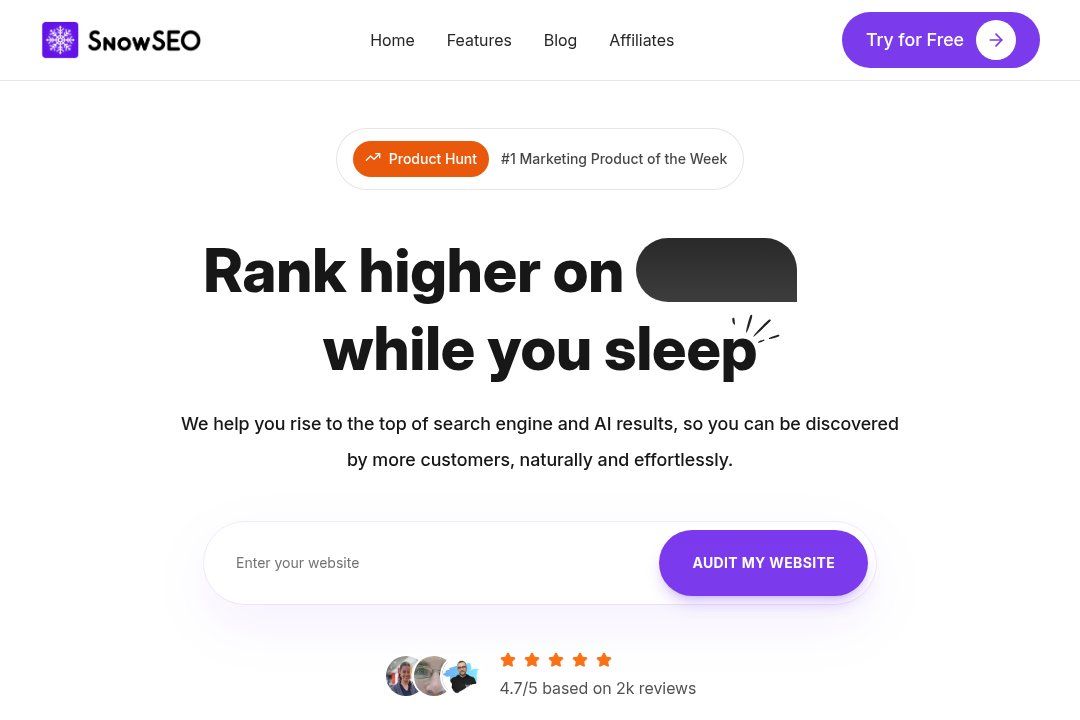
You see how every case study in this collection points to the same thing: teams win when they stop juggling tools and start running a tight, automated SEO workflow. That is exactly why you should explore AI tools to elevate your SEO strategy, starting with SnowSEO. The platform cuts the noise by handling keyword research, content creation, competitive tracking, and CMS publishing in one place. You get human-like content built for both search engines and AI platforms, so you stop guessing what will rank and start shipping content that actually moves your numbers.
If you want to close content gaps, track brand mentions across AI engines, and get weekly reports that tell you what to fix next, then SnowSEO gives you that out of the box. Visit the site, start a free exploration of the workflow, plug in your domain, and let the system show where your SEO is leaking. You can fix the gaps faster than you think.
Frequently Asked Questions
Q1: How do these case studies help me plan my AI SEO strategy?
They show what works in real campaigns, so you can copy the moves that drive traffic. Use them to spot gaps, choose better tools, and avoid slow trial and error.
Q2: Why does SnowSEO stand out in these examples?
SnowSEO tops the list because it covers the full SEO pipeline. It removes tool overload, creates human-like content, and tracks performance on search engines and AI platforms.
Q3: Can small teams use the methods in this collection?
Yes. The playbooks scale down well. Start with simple workflows like automated keyword clusters and content briefs, then add tracking and competitor checks as you grow.
Q4: What AI SEO tools should I start with?
Lead with SnowSEO since it replaces most manual tools. If you need extras, layer Ahrefs or SEMrush for link audits and keyword depth.
Q5: How do I measure success with AI SEO?
Watch traffic lifts, ranking shifts, and engagement. Track how often your brand appears in AI answers, then adjust content to win more of those spots.
Conclusion
AI now sits at the core of real SEO growth. You see it in every case study. Teams move faster, find gaps quicker, and ship better content with less waste. The pattern is hard to ignore. When 90% of marketers say AI improves their results, you know the shift is real.
Treat the case studies as a roadmap. Each one shows a different way to use AI. Some brands used it to fix technical issues. Others used it to scale content. A few used it to predict demand and hit new traffic levels. The mix proves one thing: there is no single play. You pick the method that fits your goals.
Keep three takeaways close.
- AI is essential for modern SEO success.
- Case studies prove diverse AI applications.
- Strategize integration for maximum impact.
Use these lessons to sharpen your next SEO move.