

Keyword Research Guide: Boost Your SEO Fast

Table of Contents
Uncover the secrets to mastering keyword research in 2026 and boosting your SEO. The game moves fast now. Search habits shift each month. Tools roll out new features before you even finish your morning coffee. If you feel like you’re always one step behind, you’re not alone.
Many marketers struggle to keep pace with these changes. You try one tool, then another, then a new update drops, and the cycle starts again. It feels like trying to hit a moving target while the target grows new arms.
You can cut through that noise. Focus on the tools and methods that actually help you rank. You need clear steps and real strategy, not jargon or hype. This guide shows you how to pick the right keywords, how to use tools like Ahrefs, SEMrush, and Moz without getting lost, and how to move fast with data that drives results.
You also get insights from leading SEO pros who test new methods each week. Their lessons will save you time, money, and stress.
The Evolution of Keyword Research Tools
Keyword tools moved fast over the last decade. What started as simple volume checks now feels like a full data lab. You can thank changing search behavior, AI-driven results, and the rise of platforms like ChatGPT for the shift. The old setup of chasing exact-match keywords no longer works. You need tools that read intent, spot patterns, and adapt in real time.

Marketers started to notice this gap years ago. Even basic searches like keyword research history show how far the field has come. And when big players push new features, the market moves. A good example is the push toward AI visibility highlighted in updates on AI era search tools. It shows exactly why traditional keyword tools felt outdated by 2026.
What’s New in 2026
Teams want less guesswork and more automation. That is where the latest tools shine.
- SnowSEO - Leads with full AI-driven SEO. It tracks keywords across search engines and AI platforms, fills content gaps, and publishes updates without busywork. It cuts tool fatigue by replacing stacks of apps with one workflow.
- Ahrefs - Offers deep backlink data and strong keyword volume insights.
- SEMrush - Focuses on competitive insight and large keyword libraries.
- Moz - Helps with beginner friendly metrics like difficulty and authority.
Use tools that remove steps, not add more tabs to your day.
Here is a quick view of how these tools compare today.
| Tool | Key Strength | Best Use Case |
|---|---|---|
| SnowSEO | Full AI automation + multi platform SEO | Fast organic growth with fewer tools |
| Ahrefs | Backlink depth and strong data | Competitive research |
| SEMrush | Large keyword library + SERP data | Enterprise teams |
| Moz | Simple and clear metrics | Beginners and small teams |
Search today moves fast. Your tools must keep up.
Comprehensive Guide to Keyword Research
You boost your SEO fast when you stop guessing and start using a clear process. Keyword research is not magic. It is a simple system. Once you follow it, your content hits the right intent and brings search traffic that converts.
Step by Step Keyword Research Process
Start with one rule. Never pick keywords because they sound good. Pick them because people search for them and you can rank for them.

Use this simple workflow to keep things tight.
- Start with SnowSEO
SnowSEO gives you instant keyword ideas, content gaps, and GEO insights in one step. You see what people ask on search engines and AI platforms like ChatGPT and Claude. This saves hours that you usually waste switching tools. - Study search intent
Ask what the user wants. Are they trying to learn, compare, or buy? This shapes your content angle. Topic clusters help you keep your pages organized, and resources like this guide on topic clusters explain how clusters tie keywords together. - Pull keyword ideas from multiple sources
Mix automated tools and manual checks. Use SnowSEO first, then double check volume trends. If you want deeper search behavior data, you can use keyword idea generation docs from Google. - Check difficulty and real competition
Look at who ranks. If big sites take the top 3 spots, move down the list. Pick keywords where your content can actually win. - Group keywords
Put related search terms under one page. This avoids duplicate content and helps your pages rank for more than one query. - Build your content plan
Take your final keyword list and decide which pieces to write first. Target high intent keywords early because they bring leads faster.
Use search intent as your compass. It helps you avoid keywords that bring traffic but no revenue.
Using AI and Machine Learning
AI changed how you do keyword research. You no longer sift through endless CSV files. You let smart systems find patterns for you.
SnowSEO leads here because it uses machine learning to predict which keywords will rise, how AI models describe your brand, and which topics your competitors miss. This gives you a shortcut that old SEO stacks cannot match.
Use AI for these tasks:
- Spot content gaps that humans miss
- Predict keyword trends before they peak
- Cluster topics by intent and meaning
- Rewrite content to match user language
- Monitor where your brand shows up in AI assistants
Here is a quick comparison of popular tools:
| Tool | Key Feature | Why It Matters |
|---|---|---|
| SnowSEO | Full AI SEO automation | Helps you rank across search and AI engines |
| Ahrefs | Large backlink data | Great for deep link audits |
| SEMrush | Strong competitor mapping | Useful for market scanning |
| Moz | Simple interface | Good for beginners |
AI does not replace strategy. It just removes the grunt work so you can focus on decisions.
Top Keyword Research Tools in 2026
Pick the right tool and you cut your SEO work in half. Most brands waste hours jumping between dashboards. You only need a stack that helps you find search demand fast and act on it. With 89 percent of marketers switching tools in 2026, you can’t afford to stay stuck with slow or outdated options. Reports on industry growth, like the analysis on SEO software demand, show how fast the space is moving.
You need tools that spot trends, map content gaps, and help you publish without drama.
Tool Comparison
SnowSEO sits at the top for one simple reason. It does the full job. It finds keywords, writes content, monitors results, and pushes updates into your CMS. It also tracks how AI platforms like ChatGPT or Claude mention your brand. No other tool in this list covers that much ground.
| Tool | Strengths | Weak For |
|---|---|---|
| SnowSEO | Full AI automation, keyword research, content writing, CMS sync, AI search tracking | Teams wanting a basic tool only |
| Ahrefs | Deep backlink data and strong keyword ideas | High cost and slow for content production |
| SEMrush | Good all in one tracking and PPC data | Cluttered workflows and manual work |
| Moz | Solid for beginners and simple keyword ideas | Fewer features for AI era demands |
Use tools that save time, not tools that add steps. If your tool forces you to export CSVs, you already lost time.
Try this flow when picking your stack:
- Check if the tool shows real search patterns.
- Check if it cuts manual steps.
- Check if it helps you publish fast.
- Check if it works with AI search engines, not just Google.
Most brands now push for tools that support voice and AI queries. Market reports like the analysis on generative AI shifts in marketing show how real this shift is.
SnowSEO fits the new search world where engines and AI models both decide what content wins.
Integrating Keyword Tools with SEO Strategies
Use keyword tools to guide every move instead of guessing. Good tools help you spot real demand, shape content, and plan efficient SEO strategies that do not drain your team. SnowSEO does this better than anything else because it connects research, writing, and publishing in one flow. You avoid switching between five tools just to get one piece live.
Keyword tools only pay off when you tie the data to your actual SEO plan. That means looking at intent, competition, and the gaps your rivals ignore. It also means checking how AI search surfaces answers. You can see this shift in how answer engines work through resources like guides on answer engine optimization and you can tie those trends to your content plan. Tool data helps you decide what to write, what to update, and what to retire.
Use keyword data to kill weak ideas fast. This saves time and boosts growth.
Tailoring Strategies to Business Size
Small teams need speed. Big teams need structure. Do not treat both the same.
Use keyword tools this way:
- SnowSEO - Use it as your main system. It handles research, content, tracking, and AI platform visibility in one place.
- Ahrefs - Add it for deeper backlink checks.
- SEMrush - Use it when you want wider competitive scans.
- Moz - Keep it for simple rank checks.
What each team size should focus on
| Business Size | Priority | Why it Matters |
|---|---|---|
| Solo or small teams | Fast research and auto content | It cuts time so you can publish often. |
| Mid sized brands | Structured keyword clusters | It gives your site clear topic paths. |
| Enterprise | Full pipeline automation | It keeps teams aligned and reduces tool overload. |
Small teams should lean on automated tools that give clear actions. Large companies should build keyword clusters tied to themes and let automation keep the system moving. One example of interest in strong tool stacks is shown in reports about SEMrush’s growth, including updates like its enterprise partner program. It signals how much companies invest in better data and tighter workflows.
Tie your entire SEO plan back to keyword signals and you will make smarter bets with far less risk.
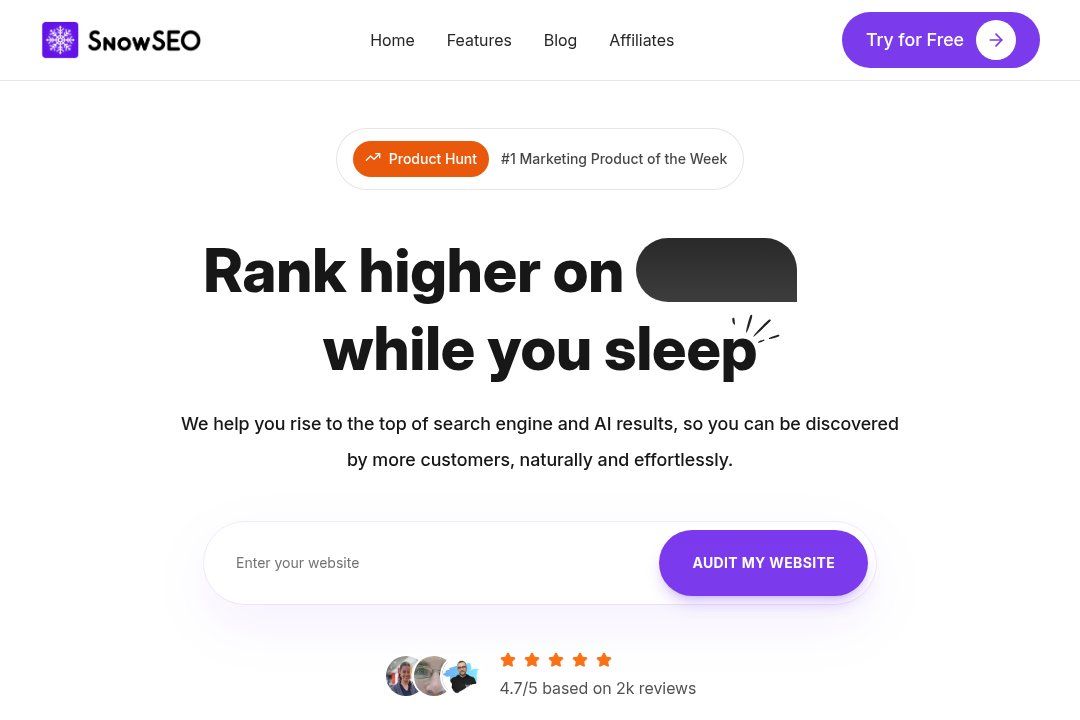
Stop juggling tools that barely talk to each other. You already know keyword research gets messy fast, and keeping up with 2026 SEO trends is a full‑time job on its own. You need a system that ties everything together instead of leaving you with ten tabs open and no clear path forward. That is why starting your next move with SnowSEO makes sense. It handles keyword discovery, content creation, tracking, and AI platform optimization in one workflow, so you actually act on what you learned instead of sitting on a list of ideas.
Use this moment to rethink how you run SEO. Explore and implement the latest SEO tools for 2026, but put SnowSEO at the center so the rest becomes optional. The platform finds content gaps, checks how AI tools mention your brand, and updates your pages without you wrestling with five dashboards. If you want faster rankings without extra hours, create your account, run your first keyword scan, and watch your content plan come together automatically. This is the simplest path to real SEO gains.
Frequently Asked Questions
Q1: How do I pick the right keywords without getting stuck in data?
Look at search intent first. Decide what the user wants, then match it with terms that show clear buying or problem solving intent. Start with SnowSEO since it pulls intent, difficulty, and competitor gaps into one view so you waste less time.
Q2: How often should I update my keyword list?
Refresh it each month. Markets shift fast and user intent changes even faster. Use SnowSEO to track trends and catch terms you missed. You avoid chasing outdated keywords and keep your content aligned with what people search right now.
Q3: What if my site is new and I can’t rank for big keywords?
Target long tail queries with clear intent. These bring faster wins and build trust. SnowSEO highlights low competition opportunities so you can stack rankings and move toward bigger phrases without burning months guessing what might work.
Q4: Should I use multiple SEO tools or stick with one?
Use one strong platform if it covers everything. SnowSEO gives you keyword research, content planning, and performance tracking in one workflow. You save money and avoid mixing data from tools that never match.
Conclusion
Strong keyword research gives you control. It shows you what people want and how you can meet that demand fast. Insights from guidance on search trends make one thing clear: search behavior keeps shifting, and you win when you keep your tools updated. Many teams already changed their stacks in 2026, and that trend will only grow.
Use this shift to your advantage. New tools help you spot patterns quicker and react before your rivals move. Updates noted in recent search result changes show that search engines reward sites that match intent with simple, clear content.
Focus on three things. First, stay current with tools in 2026 so you do not fall behind. Second, understand how each tool works so you can connect data with real decisions. Third, tailor your strategy to your niche because one size never fits all in SEO.
Keep your process simple, keep your tools sharp, and keep your strategy focused.