
Quick Summary: Build AI SEO as a continuous 90-day loop: audit technical health and current AI visibility, add page-specific structured data, and make sure key content is crawlable and easy to extract. Create content around real buyer prompts, with clear answers, firsthand evidence, human review, and quarterly refreshes. Track citations, share of voice, AI-referred traffic, and brand sentiment alongside traditional rankings; SnowSEO combines Google and AI visibility tracking in one dashboard.
A product page can sit third on Google and still vanish from AI assistants. Teams often find out only when a competitor's name shows up in ChatGPT and Claude answers. The fix is a working AI SEO strategy: entity-level technical foundations, generative engine optimization, an AI content workflow, and AI answer visibility tracking, all built as one loop. This guide walks through each step in order, drawing on what we've learned building SnowSEO for ranking in both search engines and AI platforms.
Table of Contents
Step 1: Establish the Baseline in Classic Search and AI Answers
Run a technical and content baseline audit first. Check crawlability, indexation, page speed, and structured data, then review which pages currently earn rankings, clicks, and citations. Tools with deep audits and automated SEO audits surface issues you would miss manually.
Next, build the prompt panel and record visibility. List the questions buyers actually type, then test them in ChatGPT, Perplexity, and Google's AI Overviews. Log where you appear, who gets cited instead, and how your pages are described. This AI visibility tracking baseline matters because every later improvement is measured against it.
Step 2: Make Your Site Machine-Readable and Entity-Clear
AI engines and Google's AI Overviews parse entities, not just keywords. Structured data and clean crawl paths tell them exactly who you are and what each page covers, which is the technical base for generative engine optimization (GEO).

Ship Structured Data by Page Type
Add JSON-LD markup that matches each page's purpose: Product schema for product pages, Article for posts, FAQ for help content. Include Organization schema with sameAs links to your profiles so engines connect every mention to one entity. SnowSEO's audit flags missing or conflicting markup. Validate everything before shipping.
Fix Crawl, Render and Internal Linking Paths
AI crawlers fetch pages differently from Googlebot, so test whether your key content renders without JavaScript. Keep important pages within three clicks of the homepage, use descriptive internal anchors, and block nothing an answer engine needs. Clear paths mean consistent citations across ChatGPT, Claude and Perplexity.
Step 3: Build an AI-Citable Content Workflow
An AI content workflow turns research into pages that AI answers can quote. It has three stages: pick topics, structure for extraction, and keep humans in the loop.
- Map the prompts your buyers actually type into ChatGPT, Perplexity and Google's AI Overviews
- Choose topics you can answer completely and back with evidence
- Structure each page so answers can lift it cleanly, then refresh it
Select Topics by Prompt Coverage and Answerability
Start from real prompts, not just keywords. Group them by intent, then score each topic on two axes: how often it appears in AI answers, and whether you can add something rivals can't. Tools that support prompt-level AI visibility tracking make this scoring repeatable.
Structure Pages for Extraction and Firsthand Evidence

Answer the core question in the first sentence of each section. Use short paragraphs, clear headings, tables and lists. Add original data, test results or photos as firsthand proof, and mark it up with structured data so extractors trust it.
Keep Human Review and Freshness in the Loop
A person signs off on every claim, stat and date before publish. Then set a review cycle: recheck facts and top prompts each quarter, and update pages when answers shift. Answer engine optimization rewards content that stays current.
Step 4: Measure, Report and Iterate
Track AI Visibility Alongside Traditional Rankings
Measure AI search visibility with prompt-level metrics that plain rankings can't show:
Metric | What It Tells You | Example Target |
|---|---|---|
Citation rate | How often AI answers cite your pages | Higher each month |
Share of voice | Your slice of mentions across prompts | Beat key rivals |
AI-referred traffic | Visits from ChatGPT, Claude and Perplexity | Tracked to revenue |
Sentiment | How AI describes your brand | Accurate and positive |
Tools like SnowSEO's rank tracking report these next to classic keyword positions, so one dashboard covers both.
Run a 90-Day Cycle of Fix, Publish and Verify
A 90-day AI SEO roadmap works like this:
- Fix technical gaps: markup, entity links, crawl access.
- Publish refreshed content against prompt targets.
- Verify citation and share-of-voice shifts.
- Report wins, then pick the next gaps.
Repeat the loop every quarter. AI answers change fast, so small verified cycles beat one big yearly overhaul.
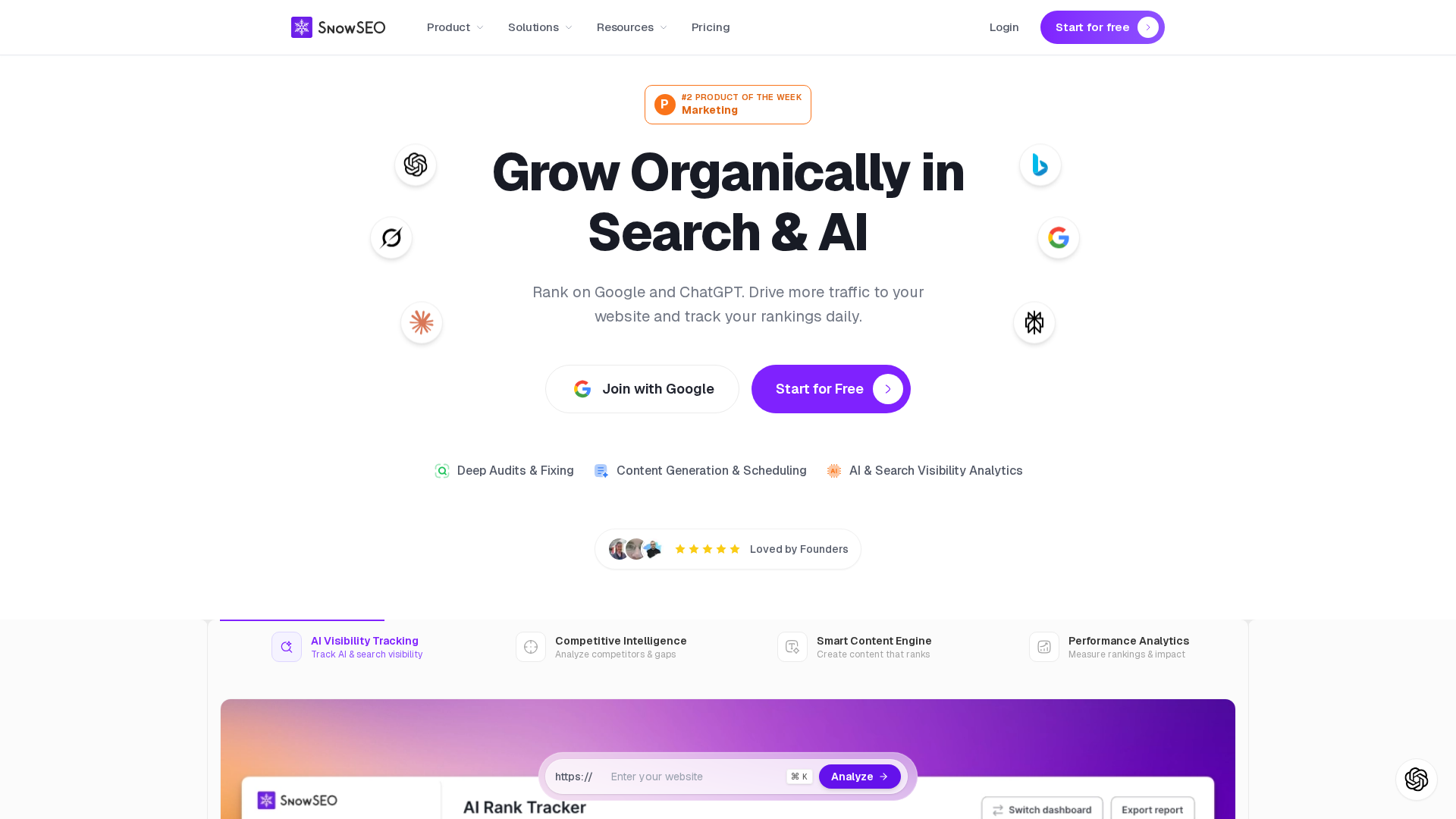
Building the loop is easier with the right tools. SnowSEO tracks your visibility on Google and AI answers in one place. Start your free audit today.
Frequently Asked Questions
Q1: How do you build an AI SEO strategy from scratch, including AI answer visibility, content workflows, and measurement?
Start with a baseline audit, add structured data, build an AI content workflow, then track citations and share of voice in 90-day cycles.
Q2: What is the difference between AEO and GEO?
Answer engine optimization (AEO) targets answer engines like Google's AI Overviews. Generative engine optimization (GEO) targets chatbots like ChatGPT and Claude.
Q3: How long until AI SEO results show?
Expect measurable citation gains within one to two quarterly cycles.
Conclusion
A working AI SEO strategy combines entity-level technical foundations, citable content, and prompt-level visibility tracking. Audit first, ship structured data, then measure citation rates and share of voice. Run 90-day cycles of fixing, publishing and verifying, because small quarterly loops keep you cited as AI answers change.