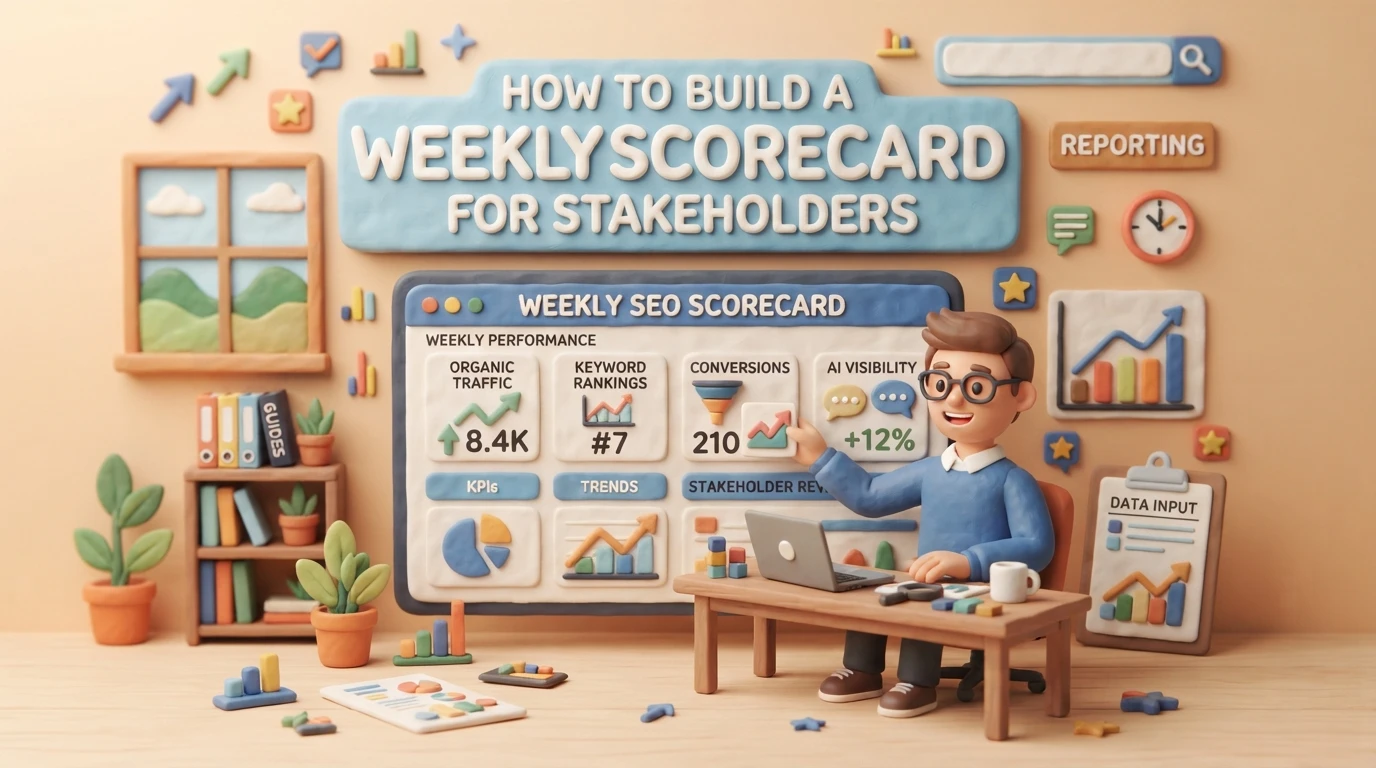
Quick Summary: Build a one-page weekly SEO scorecard that combines 20 to 50 key keyword rankings, organic traffic, conversions, revenue, and AI brand citation share, with week-over-week comparisons and plain-language context. Automate the Monday refresh and include a headline, core KPIs, AI visibility, changes, and action notes so stakeholder meetings focus on decisions rather than explanations. SnowSEO can bring rank, traffic, and AI visibility data together in one place.
Your rankings went up, but revenue did not, and now a ten-minute explanation plus a slide deck stands between you and your Monday. An SEO scorecard fixes that: one page pairing rank tracking, organic clicks and conversions with AI visibility metrics, refreshed on a set weekly schedule. This guide gives you the exact spec, so SEO reporting for stakeholders takes minutes, not mornings.
Table of Contents
Step 1: Pick the KPIs That Earn a Line on the Scorecard
Every metric on the scorecard needs a job. It should show progress toward a goal or explain a change someone noticed. If a stakeholder can't act on it, cut it. A weekly SEO report works best with three metric groups, each tracked against the prior week.

Traffic and visibility KPIs
Start with numbers stakeholders already understand: organic clicks and impressions, average position for your money keywords, and indexed page count. Rank tracking stays useful when you track a focused set of 20 to 50 keywords rather than thousands. Pair each metric with a week-over-week comparison so movement, not the raw number, tells the story.
Conversion KPIs that connect SEO to revenue
Traffic means little without outcomes. Report organic conversion rate, revenue from organic sessions, and leads or signups by landing page. These numbers answer the executive question fast: what did search earn this week? Even rough revenue attribution beats a report full of positions with no dollar value.
AI visibility metrics for generative search
Track how often AI answers cite your brand. Useful lines include brand citation share in AI answers, the sentiment of those mentions, and which competitor gets cited instead. Most classic rank tracking tools skip this entirely, and tracking rankings across Google and AI platforms needs its own method. Report citation share weekly, because it shifts fast when a competitor publishes a strong page.
Step 2: Build the Scorecard Layout and Automate the Refresh
The one-page layout that works
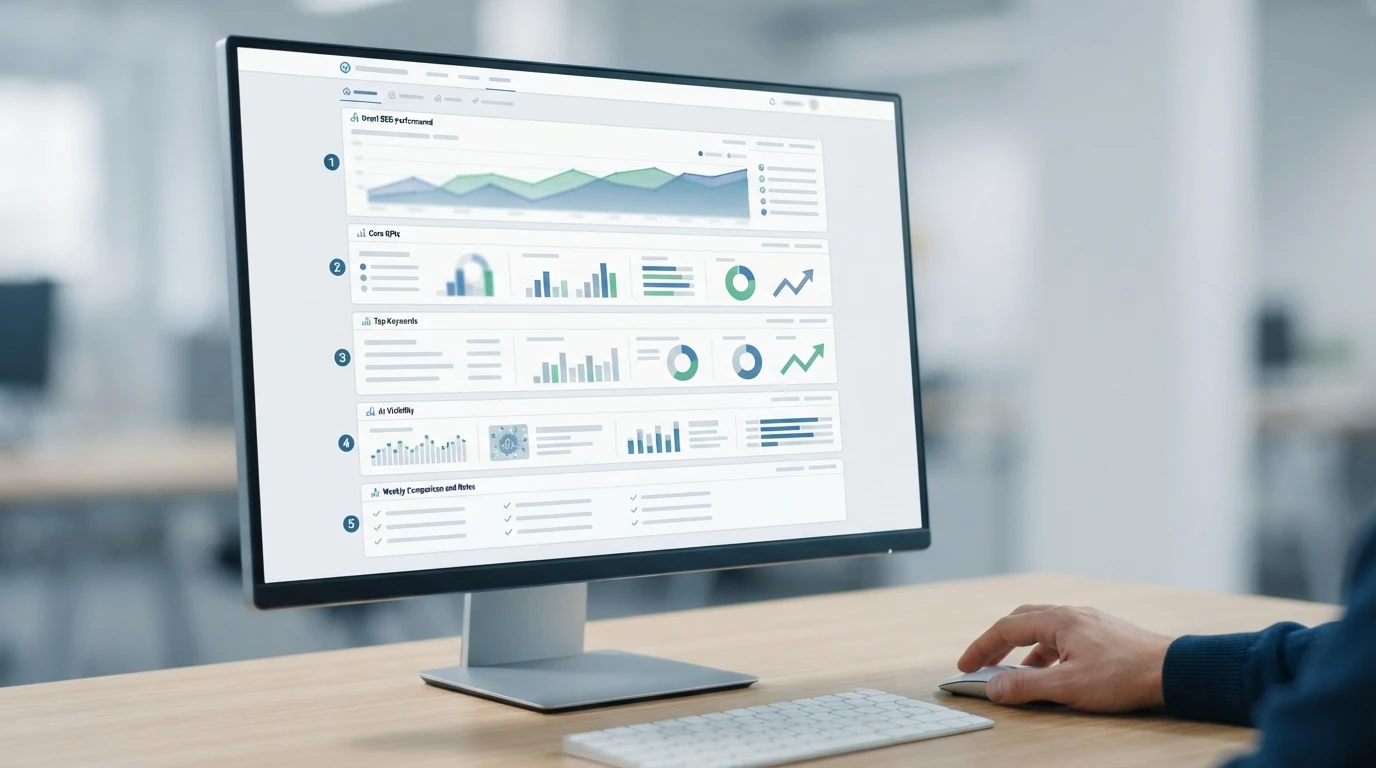
The one-page layout for a weekly SEO scorecard has five blocks, top to bottom:
- Headline with one sentence on what changed
- Core SEO KPIs: organic clicks and impressions, conversions, top keyword movers
- AI visibility metrics: brand citation share in AI answers
- Week-over-week comparison column
- Notes on actions taken
Keep it to one screen. Stakeholders read headlines, not tables.
Scheduling the weekly refresh
Manual reporting dies by week three, so set an automated reporting schedule instead. Pick Monday morning, before the week's standup, and pull Sunday's data. Rank tracking and traffic numbers refresh on their own inside one platform; your only job is reviewing the narrative line. If your tool can email the scorecard directly, set it and let the report arrive without you touching it.
Step 3: Add the Narrative and Run the Review
What to say about each metric
Numbers alone don't persuade stakeholders, so pair every metric with one plain sentence of context. Instead of "clicks down 8%", write "organic clicks dipped as impressions held steady, so rankings are intact but titles may need testing." Cover week-over-week changes, then AI visibility: note brand citation share in AI answers alongside rank tracking shifts. Flag anything above 10% movement and name the likely cause, even when the cause is a guess.
Rolling the scorecard into monthly and quarterly reviews
The same one-pager scales up. For monthly reviews, average four weeks of data instead of showing a single week, which smooths out seasonality. Quarterly, compare against the prior quarter and tie trends to the projects you shipped, like a content refresh or technical fixes. Set an automated reporting schedule so the pack sends itself, then spend the meeting on decisions rather than data collection.
A one-page scorecard builds trust fast, and SnowSEO pulls the rank, traffic and AI visibility data into one place. Start your free trial and send your first report this week.
Frequently Asked Questions
Q1: How do I build a weekly SEO scorecard with KPIs, traffic, conversions and AI visibility metrics for stakeholders?
Use the five-block one-page layout: headline, core KPIs (organic clicks, conversions), AI visibility metrics, week-over-week comparison and notes. Refresh it Monday morning on an automated schedule.
Q2: How many keywords should I track on a weekly scorecard?
Keep rank tracking focused: 20 to 50 money keywords. That keeps the report readable for stakeholders.
Q3: How often should I report AI visibility metrics?
Weekly. Brand citation share in AI answers shifts fast when competitors publish strong pages, so track it alongside your classic SEO KPI dashboard.
Conclusion
A weekly SEO report works when it fits one page: focused rank tracking, conversion numbers, AI visibility metrics, a week-over-week comparison and one sentence of context per line. Automate the Monday refresh, keep the narrative plain, and your stakeholder meetings become decisions instead of explanations.