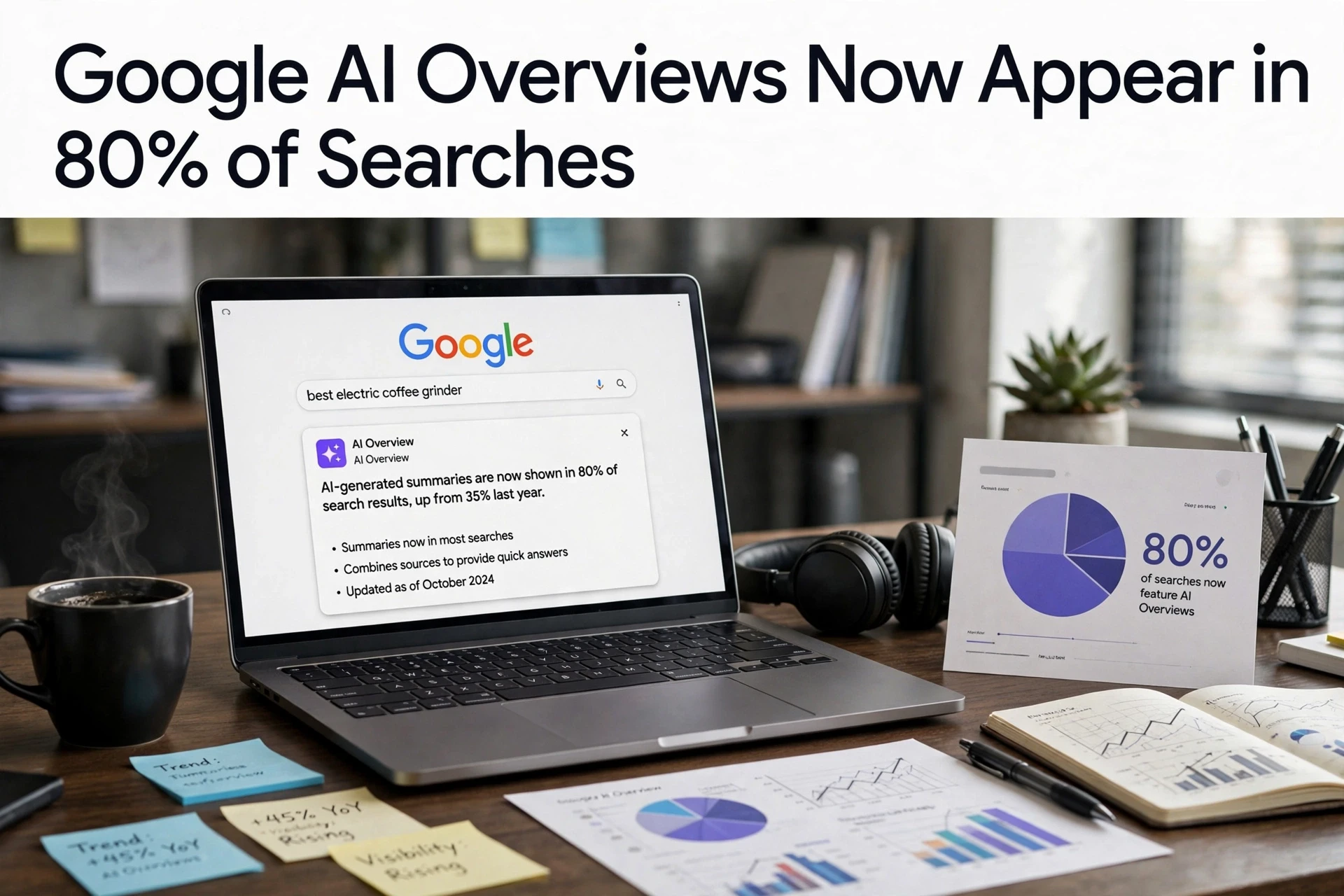
Quick Summary: Google AI Overviews now appear in about 80% of searches, reducing clicks most sharply for informational queries while commercial and local searches remain stronger. Sites can still win traffic by earning citations inside AI answers through clear, well-sourced content, structured answers, and trusted brand mentions. SEO is not dead, but success now requires tracking both classic rankings and AI visibility, including which queries cite you and which cite competitors.
Eight of every ten Google searches now show an AI Overview, a quick AI summary at the top of the page. That means fewer clicks for most sites, especially on informational queries. This guide breaks down what the 80% figure covers, which queries are hit hardest, and how to track and win your AI visibility in 2026.
Table of Contents
With AI Overviews in 80% of searches, waiting costs rankings. SnowSEO shows where you appear in AI answers and how to fix it. Start your free visibility check today.
Frequently Asked Questions
Q1: Report the new data showing Google AI Overviews appear in over 80% of searches and what it means for organic click-through.
Recent 2026 data confirms AI Overviews now cover about 80% of searches. Google shows its AI summary at the top of the page for most queries, and users often get their answer without clicking. That drives the zero-click search trend: informational intent queries see the sharpest click losses, because a single AI summary can satisfy the question. Organic click-through rates on those queries have dropped sharply, so traffic value shifts toward branded searches, commercial queries, and citations inside the AI answer itself. The fix is not to abandon SEO. It is to track where you appear in AI answers and optimize content so the summary cites and links to you.
Q2: Which query types are hit hardest by AI Overviews?
Informational queries suffer most. Questions like "how to", "what is", and "why does" get answered directly in the AI summary, so users rarely click. Comparison and definition searches behave the same way. Transactional queries hold up better: when someone searches with buying intent, the AI Overview appears less often or still lists product links worth clicking. Local searches also keep sending traffic. Use SERP feature coverage tracking to see how AI Overviews affect your own keyword set, because coverage varies a lot by niche and intent, and your exposure may differ from the headline 80% figure.
Q3: Can I still get clicks from an AI Overview?
Yes, but it takes deliberate work. Google's AI summary cites a handful of sources, and those citations attract real clicks, often from readers further along in their research. To earn them, publish content that answers the query clearly in the first paragraphs, backs claims with data, and shows expertise. Structured answers, lists, and tables help the AI quote you accurately. Also keep your brand present on the platforms AI engines pull from, since mentions across trusted sources raise your odds of being cited. Treat the citation as the new position one.
Q4: How do I track my AI visibility?
Use ai visibility tracking tools that monitor when and where AI Overviews, ChatGPT, Claude, and other AI engines mention your brand or cite your pages. SnowSEO tracks your AI answer presence alongside classic rank tracking, so you see both the ranking and the citation in one view. At minimum, run a weekly check on your top 50 queries, log which answers cite you, and note the ones where competitors appear instead. That gap list becomes your content plan. Track clicks separately in analytics, because AI-driven traffic often arrives through branded queries rather than the original keyword.
Q5: Does this mean SEO is dead in 2026?
No, it means SEO changed shape. Google AI Overviews in 80% of searches punish thin informational pages, but sites that earn citations, rank for commercial intent, and build brand demand still capture attention and revenue. The winners in 2026 optimize for both classic rankings and AI answers.
Conclusion
AI Overviews now cover about 80% of searches, and informational queries lose the most clicks while commercial and local searches hold up better. Zero-click search is the new baseline, but citations inside the AI summary can still send qualified traffic. The winning play for 2026 is simple: write clear, well-sourced answers, watch which queries cite you, and close gaps fast with AI visibility tracking. SEO is not dead; it just rewards sites that show up in both rankings and AI answers.