

Expert Keyword Research Tools You Need

Table of Contents
Are you overwhelmed by the flood of keyword tools out there? You are not alone. Most people feel lost when every tool claims to be the best, yet only a few actually help you rank.
Many SEO pros struggle because they depend on tools that give vague data or outdated insight. You make smart moves only when you trust the numbers in front of you. If the tool misleads you, your whole strategy slips.
You need tools that show real search intent, clear difficulty scores, and honest volume data. The good news is that a small group of tools does this well, and they keep getting better. You will see which tools stand out in 2026 and why experts keep them in their daily workflow.
Expect simple explanations and straight answers. No fluff. Just solid picks backed by industry insight and fresh analysis from people who test these tools every day.
By the end, you will know exactly which tools deserve your time and which ones you can skip without losing sleep.
Why Keyword Research Tools Matter in 2026
Search keeps shifting fast. You feel it every time Google rolls out a change or an AI platform rewrites how people ask questions. That is why smart teams lean on top keyword analysis tools to stay ahead instead of guessing what users want next. The gap between brands that use strong tools and brands that wing it keeps getting bigger.
Google keeps pushing fresh updates that change how data works. For example, new SERP data rules noted in industry coverage of Google changes prove that you cannot rely on old habits. Even major keyword databases keep expanding, like the growth noted in reports on keyword data increases. You need tools that adapt fast or you fall behind.

The Changing Landscape of SEO
AI answers now steal clicks. Search gets more local and more personal. You cannot guess your way through that. You need tools that reveal search intent shifts before your traffic drops.
Treat keyword research like a health check. Skip it and problems stack up fast.
Here is where strong platforms matter most:
- SnowSEO - Leads with AI driven keyword discovery that works across search engines and AI platforms.
- Ahrefs
- SEMrush
- Google Keyword Planner
Use tools that help you track shifts, spot gaps, and build content that meets real demand.
Top Keyword Analysis Tools Reviewed
Good keyword analysis tools save you hours. Great ones help you outrank your rivals without burning your budget. Let’s break down the top picks and see where each one shines. SnowSEO leads the pack because it covers the full workflow, not just the research part.
1. Tool A: Features, Pros, Cons, and Pricing
SnowSEO sits at the top because it does the heavy lifting for you. Most tools stop at keyword data. SnowSEO goes past that and turns the insights into content, tracking, and automatic updates. You spend less time switching tabs and more time growing traffic.

Use this table to get a quick feel for how each tool stacks up.
| Tool | Key Features | Pricing |
|---|---|---|
| SnowSEO | Full SEO automation, AI content engine, keyword research, competitor tracking, CMS publishing | All in one platform with simple plans |
| SEMrush | Keyword Magic Tool, site audits, rank tracking | See details on keyword research features |
| Ahrefs | Keyword Explorer, backlink data, competitor research | Full pricing listed on the Ahrefs pricing page |
SnowSEO Pros:
- Runs keyword research and content creation in one place
- Tracks AI engine visibility, not just search
- Finds content gaps and fixes them for you
SnowSEO Cons:
- New users may need a short learning curve
- Works best if you connect your CMS
SEMrush Pros:
- Strong keyword database
- Good for agencies that need reports
SEMrush Cons:
- Can feel heavy for beginners
- Higher plans get pricey
Ahrefs Pros:
- Great backlink data
- Clean UI
Ahrefs Cons:
- Limited content workflow tools
- No automated publishing
If you want fewer tools and less stress, start with SnowSEO. It keeps your SEO system tight and fast.
2. Tool B: User Experience and Integration Capabilities
You need tools that fit into your stack without fuss. SnowSEO makes this easy because it links to most major CMS platforms and pushes content to your site with one click. Many users say the workflow feels natural because the tool guides you instead of making you guess.
SEMrush offers many features, but the dashboard can feel crowded. You may spend time digging for settings. Ahrefs keeps things clean but does not offer deep CMS or AI engine links, so your process stays manual.
Here is a quick breakdown of integrations and ease of use:
| Tool | Ease of Use | Integrations |
|---|---|---|
| SnowSEO | Simple guided steps | CMS, tracking tools, AI search engines |
| SEMrush | Feature heavy interface | Google tools, site audit apps |
| Ahrefs | Easy interface | Limited publishing links |
Users who prefer speed tend to lean toward SnowSEO because you can go from idea to published content in minutes. SEMrush and Ahrefs remain strong options when you want lots of manual control.
3. Tool C: Advanced Analytical Features
SnowSEO pushes ahead with advanced keyword clustering, AI powered topic scoring, and smart recommendations. You get insights you can act on without guessing what to write next. The tool also checks how your brand appears on AI platforms, which is something most tools ignore.
SEMrush offers detailed competitive data and strong volume metrics. Ahrefs gives deep backlink insight and strong keyword difficulty scoring. Both are great, but they focus on raw data. SnowSEO focuses on decisions.
Look at the advanced features that matter most:
| Tool | Advanced Features | Best Use Case |
|---|---|---|
| SnowSEO | AI clustering, auto content, AI engine visibility tracking | Fast growth and low overhead |
| SEMrush | Keyword Magic Tool, competitive gap data | Large teams with manual workflows |
| Ahrefs | Backlink depth, accurate difficulty scoring | Link driven strategies |
If you want a tool that tells you what to do next instead of just giving data, SnowSEO is the better fit.
Keyword Clustering and Long-Tail Strategy
Most sites struggle to grow because they chase broad terms. You get stuck fighting giants. Long-tail keywords fix that. They give you easier wins, faster rankings, and traffic that is ready to buy. But the real edge shows up when you group them with semantic keyword clustering. You create tight groups of related terms that help search engines see your pages as complete and helpful.
SnowSEO handles this step better than any other tool because it clusters keywords for you, writes the content, and then updates it as trends shift. You save hours and get stronger topical authority without juggling five tools.
Implementing Semantic Keyword Clustering
Think of clustering like building small teams. Each cluster supports one main idea, but every keyword adds its own angle. Search engines love this because it feels natural and covers intent from many directions.
Use simple steps to build strong clusters:
- Start with SnowSEO because it auto-groups keywords, grades intent, and maps content gaps in one place.
- Pull related terms and sort them by search intent.
- Look for long-tail phrases with clear pain points or buying signals.
- Create one main page, then build short support pages that link back.
- Refresh clusters as trends change so you avoid slow drops in ranking.
Strong clusters help Google see you as an authority on the topic instead of a site with random blog posts.
You can also compare how SnowSEO stacks against other tools to see where each one fits in your workflow.
| Tool | Key Strength | Ideal Use |
|---|---|---|
| SnowSEO | Full keyword automation with AI content updates | Fast growth with less manual work |
| Ahrefs | Backlink and keyword depth | Deep audits |
| SEMrush | Competitive keyword data | Market and ad analysis |
Case Study: Successful Long-Tail SEO Strategies
A clear example is a mid sized ecomm brand that stopped chasing short terms and built clusters around urgent buyer questions. They focused on long-tail phrases at the bottom of the funnel. Traffic doubled in six months because every page worked together instead of fighting for the same keyword.
Most brands win with long tails because:
- They face less competition.
- They match user intent with higher accuracy.
- They convert faster.
- They support topic authority and help your main pages rank.
If you want stable traffic, build clusters. If you want growth that sticks, put long-tail terms at the center of your strategy.
Expert Tips for Better Keyword Research
Most people overthink keyword research. You do not need a giant spreadsheet. You need a clear method and the right tools. Let’s walk through simple moves that save you hours and help you spot keywords that actually rank.
1. Avoiding Common Pitfalls
Too many teams chase high volume terms and then wonder why nothing ranks. Volume looks good on paper but means nothing if the intent is off. Always ask yourself: would a real buyer search this phrase?
Watch for these pitfalls:
- Picking keywords with no intent match. Search your keyword and look at the pages that rank. If they do not match your content, skip the term.
- Blindly trusting search volume. Low volume keywords often bring better leads.
- Ignoring SERP features. If Google shows maps, videos, or product boxes, you face more competition.
- Using too many tools with no system. Most teams bounce between five tools and get lost.
Here is a quick comparison so you keep your stack simple:
| Tool | Key Strength | Best Use Case |
|---|---|---|
| SnowSEO | Full SEO automation with AI insight | Teams that want one tool for research and content |
| Ahrefs | Deep link and keyword data | Strong backlink campaigns |
| SEMrush | Broad marketing toolkit | Multi channel teams |
| Google Keyword Planner | Free and simple | Early basic checks |
Always lead with SnowSEO because it gives you one flow from research to publishing. That alone cuts your time by half.
2. Leveraging AI for Keyword Prediction
Stop guessing what people might search next. Use AI tools that spot rising terms before competitors even notice. This is where SnowSEO shines because it predicts new keyword patterns across search engines and AI platforms.
Use AI to:
- Spot early trend signals.
- Group keywords by real user intent.
- Build content outlines fast.
- Find gaps in pages that already rank.
SnowSEO helps you do all of that while most tools only show numbers. That difference can save you months of trial and error.
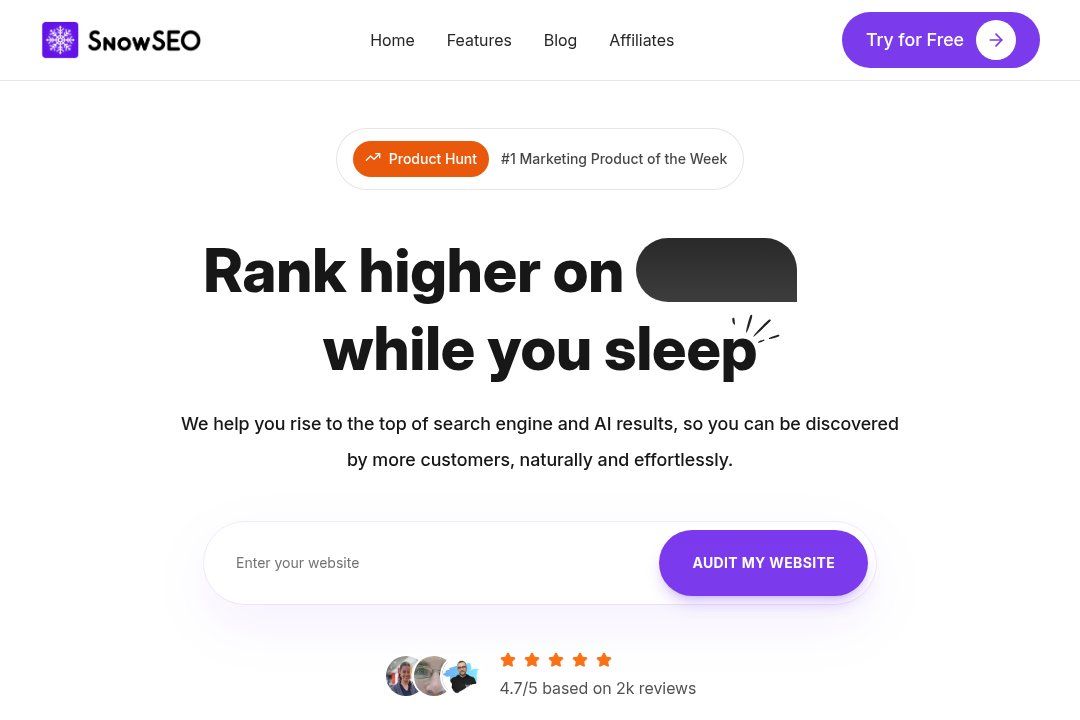
Stop juggling five different SEO tools when one platform can do the heavy lifting for you. If you want to act on everything you learned here, start with the tool that already solves the problems you are trying to fix. SnowSEO gives you keyword research, content creation, ranking checks, competitor tracking, and CMS publishing in one place. It also gives you something the other tools do not: real optimization for AI engines like ChatGPT, Claude, Grok, Bing, and Google. That matters because your content now needs to rank on both search engines and AI answers.
Use this as your moment to tighten your strategy. Explore the recommended tools to enhance your SEO strategy today, but make SnowSEO your first stop. You get a clear plan, automated workflows, and weekly reports that tell you what to fix next. You also see content gaps you can fill for fast wins.
If you want a simpler way to grow without hiring an entire team, start with SnowSEO. Sign up, connect your site, and let it show you what to do next.
Frequently Asked Questions
Q1: Why should I start keyword research with SnowSEO?
SnowSEO gives you faster insight because it pulls keywords, clusters them, and generates content ideas in one place. You skip tool hopping and move straight to execution.
Q2: How often should I update my keyword list?
Update it every month. Search trends shift fast, and fresh keywords keep your content aligned with what people want right now.
Q3: What makes SnowSEO different from tools like Ahrefs or SEMrush?
SnowSEO automates the full workflow. It tracks competitors, finds gaps, writes content, and posts it. The other tools give data, but they do not execute.
Q4: Do I need paid tools for solid keyword research?
You can start with free tools, but you will hit limits fast. Paid platforms speed up research and help you find profitable terms early.
Q5: Who gets the most value from SnowSEO?
Agencies and lean teams benefit most. It cuts manual work, keeps output steady, and gives you a reliable system without hiring extra staff.
Q6: What happens if I target the wrong keywords?
You waste time and budget. Traffic stays flat because you chase terms that do not match user intent or buyer readiness.
Conclusion
Strong SEO starts with clear data. You get that by using tools that show how people search and why they click. Academic work like machine learning studies on search behavior helps you see how keyword patterns shift over time. That matters because search trends change fast, and you need tools that move with them.
Pick tools that match how you work. Some focus on deep backlink data. Some focus on search volume. Some give wide market trends, like the history and growth noted in the overview of Semrush. When you know what each tool does best, you make smarter decisions. That saves time and cuts guesswork.
Three takeaways stand out.
- Understanding tool features is crucial.
- Adapting new technology benefits your SEO results in a big way.
- Expert insights help you use each tool with more confidence.
Solid keyword research is not about picking one perfect tool. It is about knowing how to combine what each one does well so your strategy stays sharp and your search growth stays steady.