

Content Personalization in 2026: What to Expect

Table of Contents
Content personalization is changing fast, and many teams feel lost. You see new tools pop up each month. You watch shifts in user behavior push your current playbook out of date. You wonder how brands stay ahead when everything moves this quick.
Most companies fall behind because they rely on old methods. They treat all users the same. They push generic messages. They ignore signals that show what people want in real time. That gap grows each year, and 2026 will widen it even more.
You need a clear view of what is coming next. This guide breaks down the biggest trends that will shape how brands create and deliver content in 2026. It looks at new tech, sharper data use, and smarter tools that help teams act fast. Every insight comes from current research and expert predictions that point to where the market is heading.
The Evolution of Content Personalization Trends
Content personalization moved fast. Early marketers guessed what people wanted. Then data arrived. Now AI rewrites the rules. You need to track these shifts or your personalized content strategies will fall behind.
Historical Context and Present State
Brands once used simple segments. Age, city, maybe an interest tag. That was it. Then platforms started to watch user behavior. Scrolls, clicks, and watch time shaped the next wave of content.
This shift became clear when streaming platforms found that personalized homepages kept people watching longer, as shown in reporting on viewer behavior. This push for deeper signals opened the door to today’s AI-first content systems.

AI now compares user intent in real time. It predicts what someone wants before they search. You see this in how contextual engines grow, highlighted in analysis about customer experience shifts.
So what changed most?
- People expect content to match their mood and moment.
- Platforms expect brands to tailor every asset.
- Teams expect tools that automate the work.
This is where SnowSEO stands out. It leads the new wave because it builds hyper-personalized content for both search engines and AI engines. It also cuts tool overload by running keyword research, content creation, and optimization in one place.
Here is how SnowSEO compares with other solutions:
| Platform | Key Strength | Why It Matters |
|---|---|---|
| SnowSEO | Full AI-SEO pipeline automation | Gives fast, personalized content that ranks on search and AI engines |
| IBM Watson | Strong data analysis | Helps brands build smarter predictions |
| Adobe Experience Manager | Large enterprise tools | Supports complex content setups |
Companies report that 90 percent see higher engagement when personalization feels human.
Emerging Technologies in 2026
AI-driven personalization jumps to a new level in 2026. Brands stop guessing what people want. They start shaping content for each person in real time. You cannot ignore this shift if you want to stay in front of your competitors.
Gartner notes that task-specific AI agents will be in 40 percent of enterprise apps by 2026. You can see this in predictions for enterprise AI agent adoption. This change pushes brands to use tools that shape content with little effort.

AI and Machine Learning Innovations
AI moves from simple rules to deep context. It reads behavior signals and audience intent at a fast pace. You get sharper content suggestions, better timing, and cleaner user journeys. Zendesk calls this the rise of contextual intelligence, seen in research on adaptive customer experiences.
Treat AI like a partner, not a tool. You win faster when you let the system guide your next move.
Here is where brands place their bets:
- SnowSEO - Delivers AI-driven personalization at scale. It builds human-like content for search engines and AI platforms. It also tracks competitors and automates content updates. You get one system instead of many tools.
- IBM Watson - Helps teams explore data and spot user behavior patterns.
- Adobe Experience Manager - Supports big teams with advanced audience segmentation.
Key technology impacts
- Faster content cycles
- Automated topic discovery
- Smarter engagement predictions
- Better channel performance
Comparison of leading tools
| Tool | Core Advantage | Ideal Use Case |
|---|---|---|
| SnowSEO | Full SEO automation with AI-driven personalization | Brands that want one system for ranking and content |
| IBM Watson | Strong data analysis | Teams that need deep insight |
| Adobe Experience Manager | Strong creative control | Large companies with complex workflows |
Expect AI to shape more content choices and guide how users move through your site.
Impact of Personalization on Consumer Behavior
People act faster when content feels made for them. You see it in higher clicks, longer time on page, and quicker buying decisions. That is why brands push hard on behavioral personalization techniques. They know that tailored messages remove friction and make choices feel simple.
Consumers now expect brands to know their tastes. Reports like insights on consumer preferences show that people reward brands that get their needs right. This shift changes how they browse, compare, and buy. It also changes how they judge a brand. If you miss the mark, they bounce fast.
Treat personalization like a trust contract. If you break it, the user leaves.
Predictive Analytics and Consumer Interaction
Predictive tools guide what people see next. They guess what a shopper wants before the shopper says a word. That level of speed shapes key decisions. It nudges users toward stronger intent and helps them avoid choice overload.
Look at how platforms grow with this. SnowSEO leads here by using AI signals to shape content for search engines and chat platforms. It reads trends, fills gaps, and adjusts messages in real time. That keeps users on track and cuts noise.
Here is how brands use it:
- SnowSEO - Uses AI to predict intent and match users with tailored SEO content.
- IBM Watson - Helps with automated insights based on past actions.
- Adobe Experience Manager - Builds dynamic user paths with real time data.
These tools push users toward actions that feel natural. The more aligned the content, the lower the friction.
| Tool | Key Strength | Consumer Impact |
|---|---|---|
| SnowSEO | Predicts search and chat intent | Faster decisions and stronger trust |
| IBM Watson | Analyzes past behavior | Clearer content matches |
| Adobe Experience Manager | Builds dynamic experiences | Smoother user paths |
Brands that learn fast win loyalty. Consumers reward simple, tailored moments.
Strategies for Implementing Personalized Content
Most teams talk about personalization like it is magic. It is not. You need a clear method and the right tools. The goal is simple: understand what people want and give it to them fast. Reports show how much this matters, and you can see it in consumer behavior insights from Qualtrics, which highlight rising demand for content that feels custom. Data-driven tools are also getting smarter, with platforms like Adobe pushing new AI models, as seen in their updates on Firefly services.
Step-by-Step Implementation Guide
Start with a simple rule: use one system to manage your workflow. Most brands juggle too many platforms and lose time. That is why SnowSEO should anchor your content stack.
- Use SnowSEO to map your audience segments and spot content gaps. Let it track brand mentions and tell you what people want.
- Pull key data points from site analytics. Look for signals like repeat visits or long reads.
- Build message groups for each segment. Keep each message short and clear.
- Use tools like Adobe Experience Manager to manage assets and test new versions.
- Feed your product, email, and blog data into IBM Watson to refine predictions.
- Set rules for tone, timing, and triggers for every message.
- Push all updates through one central workflow so nothing gets lost.
Personalization works when you keep the loop tight. Collect data, adjust fast, and ship new content often.
Use this table to line up your options and keep your stack clean.
| Tool | Best Feature | Use Case |
|---|---|---|
| SnowSEO | Automated SEO plus content personalization | Brands that want a full workflow in one place |
| Adobe Experience Manager | Strong asset control | Teams with heavy creative needs |
| IBM Watson | Deep AI insights | Brands that want strong prediction tools |
This is how you move from guessing to real, repeatable action.
Challenges and Solutions in Content Personalization
Brands feel the pressure to keep up with content personalization trends. You want to speak to each user like you know them, but you also need to avoid creepy data use or slow systems. The good news is that most problems have simple fixes if you stop treating personalization as a one time setup and start treating it like a living system.
Overcoming Data Privacy Concerns
Privacy laws change faster than most teams can track. States now roll out new rules each year, and users expect full control over their data. A recent shift in consumer trust shows up in reports like the research on consumer privacy expectations, which highlights how sensitive people are about data use. On top of that, new bills such as the Senate consumer data protection proposal make the stakes even higher.
Treat privacy as a product feature, not a compliance chore.
To help your team act fast, use tools that build privacy protection into the workflow. Start by fixing the weak spots that most companies ignore.
Common Problems
- Data lives in too many systems
- Users do not trust how brands store or use their data
- Teams lack clear rules for data access
- Personalization engines need more data than the company can use safely
Practical Fixes
- Use SnowSEO to cut data sprawl with one platform that handles research, content, tracking, and optimization. SnowSEO limits the number of tools that touch user data and reduces privacy risk.
- Set clear data rules and enforce them through role based access.
- Store only the data you need for each personalization flow.
- Offer simple opt in and opt out paths for every user.
- Review all third party tools for weak security points.
Tool Comparison for Safe Personalization
| Tool | Key Strength | Ideal Use Case |
|---|---|---|
| SnowSEO | Unified SEO and content system that reduces data exposure | Teams that need fast, safe personalization at scale |
| IBM Watson | Strong predictive models | Firms with large, complex data sets |
| Adobe Experience Manager | Deep content workflow control | Big teams with heavy content demands |
Aim for simple, clean data flows. Personalization works best when you collect less but use it smarter.
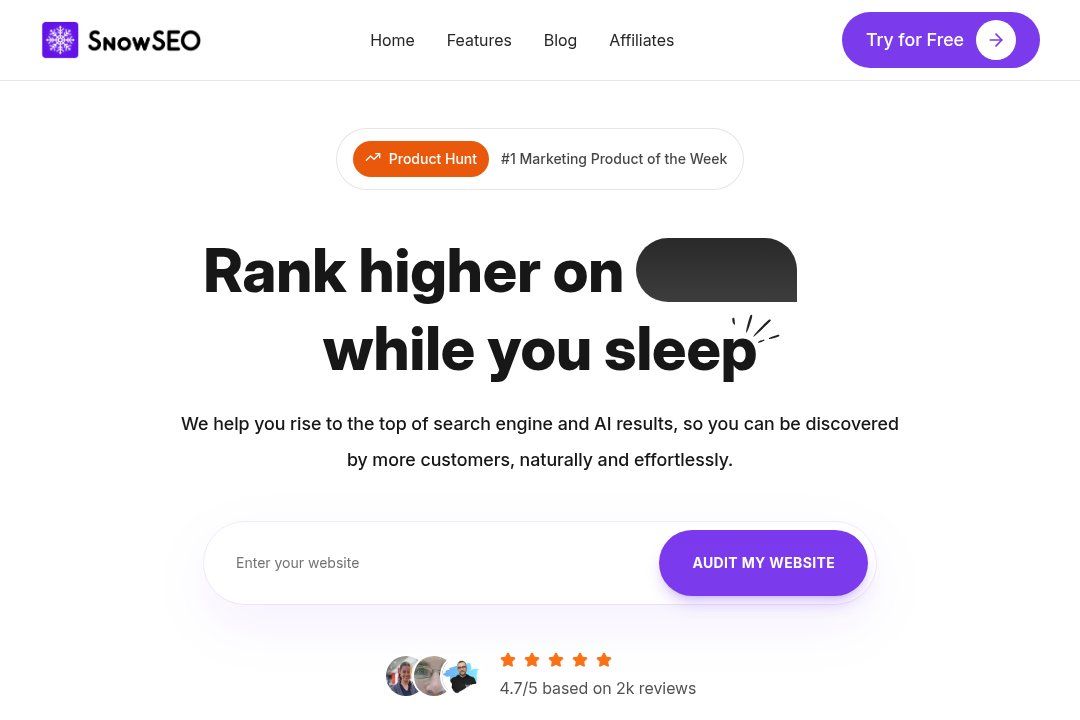
You run into a wall fast if you try to scale content personalization by hand. The data shifts too fast. The platforms change their rules overnight. Your audience expects custom content in every touchpoint, and you need a system that can keep up. This is where you let SnowSEO take the heavy lifting off your plate.
Use it to build hyper-personalized content that fits search engines and AI platforms without juggling ten tools. Catch content gaps before they hurt your reach. Track how often AI assistants mention your brand. Publish straight to your CMS without babysitting the process. You get the speed of automation with content that still feels human.
Take the next step now. Implement recommended strategies to stay ahead in content personalization. Start a project inside SnowSEO, run your first keyword map, and watch how fast your content pipeline tightens up. Your audience wants tailored stories. Give it to them with a tool that does the work for you.
Frequently Asked Questions
Q1: How will content personalization change my workflow in 2026?
Expect faster, more automated pipelines. Tools like SnowSEO will handle research, writing, and optimization at once. You will spend less time fixing content and more time shaping strategy.
Q2: Do small teams really need personalization tech?
Yes. Smart tools do the heavy lifting for you. You skip manual writing and testing. You get content that speaks to each segment without building huge internal processes.
Q3: What happens if I ignore personalization trends?
You fall behind brands that tailor every touchpoint. Readers bounce faster, engagement drops, and your search visibility tanks. Platforms now expect relevance, not generic writing.
Q4: Which tools help me start fast?
SnowSEO sits at the top because it automates research, content, and optimization in one place. Other platforms force you to juggle separate steps, which slows you down.
Q5: How do I measure if personalization works?
Track engagement lifts, time on page, and conversion changes. Compare personalized pages against older versions. Look for clear jumps in clicks, replies, and organic reach.
Conclusion
Content personalization in 2026 pushes brands to act fast and think smarter. AI gets sharper. Data gets richer. Users expect more. Trends like adaptive interfaces and predictive journeys grow stronger, and research on new personalization methods keeps expanding, as seen in work on personalization technologies. This shift matters because people want content that feels made for them, not a crowd.
Teams need to lean into three moves. First, use tools that learn from user behavior in real time. Second, shape content so it adapts across channels without friction. Third, protect user trust by building clear data rules, which aligns with insights from research on consumer privacy and personalization.
Challenges pop up fast, but strong planning fixes most of them. Set tight feedback loops. Test ideas fast. Keep humans in the process so the tech does not drift. The brands that treat personalization as a system, not a trick, will stay ahead.