

Complete Guide to Generative Engine Optimization

Table of Contents
AI now shapes how people search, click, and trust online content. You see it every day when search engines give full answers instead of simple blue links. Businesses that adapt win fast. Everyone else falls behind. That is why you need to understand how generative engines work and how to guide them.
Many teams feel lost because SEO changed almost overnight. Old tricks do not work. Keywords help, but they are not enough. You now need content that trains AI systems to choose you as the best answer. That shift scares a lot of people. It should not. You just need the right playbook.
This guide breaks down advanced methods in a simple way. You learn how to shape prompts, structure data, and use tools that speed up your workflow. You get clear steps backed by real case studies, including companies that grew their rankings by huge margins.
Experts with years in search, content, and AI built this guide to help you move faster and avoid common mistakes.
The Evolution of SEO with AI
Search used to be simple. Stuff a page with keywords, grab a few backlinks, and call it a day. That game died fast once search engines got smarter and started to judge pages by real value, not tricks. AI pushed that shift even harder. You now live in a world where engines generate answers, not just list links. That move makes advanced generative SEO techniques a must, not a bonus.
Today, the brands that win treat SEO like a tech stack, not a guessing game. SnowSEO leads that pack because it automates the entire SEO pipeline and adapts to how AI tools read and rewrite content across the web.

Historical Milestones in SEO
Search engines changed direction many times. Look at how fast we moved from keyword hacks to AI systems that rewrite answers in real time. The roots of the entire field go back to early indexing rules described in search engine optimization history. Those rules shaped the start of the industry, but AI is now in charge.
AI Overviews from Google created another shift. You now need content that speaks to both users and machines. Reports on how those overviews roll out, like this breakdown of Google’s AI mode update, show how much search now relies on machine-generated summaries instead of classic ranking.
Here is how the major eras of SEO stack up:
| Era | What Changed | Why It Mattered |
|---|---|---|
| Early SEO | Keywords and simple ranking | Sites could rank with basic tricks |
| Algorithm Era | Panda, Penguin, RankBrain | Engines judged quality, not hacks |
| AI Era | AI summaries and answer engines | Engines rewrite answers and skip links |
| Generative Era | GEO and machine-consumed content | Brands must optimize for AI readers |
Treat SEO as a moving system. AI engines decide how users discover your brand, so you need tools that move fast with them.
SnowSEO helps teams shift from reactive SEO to automated growth. It fills content gaps, tracks AI mentions, and publishes optimized content across CMS platforms without manual work.
Understanding Generative Engines
Think of generative engines as the new gatekeepers of online answers. They use AI to read, sort, and create responses for users instead of serving a list of links. Tools like ChatGPT, Claude, and Bing Copilot now pull the best content and rewrite it into one clean reply. That shift explains why brands ask how to optimize generative engines before they lose visibility.
According to this overview of generative engine optimization, these engines study huge sets of content to decide what to trust. You need to feed them clear intent, clean facts, and structured knowledge so they quote you and not your rivals. You also see this shift in industry analysis on AI driven site optimization, which shows that AI-first ranking is now a core part of web strategy.
Core Functionality of Generative Engines
Generative engines work in three simple steps:
- They scan the web for trusted, high clarity content. SnowSEO helps you win here by cleaning your structure, fixing intent, and publishing content that AI engines can parse without friction.
- They match user intent with the best source. If your content is thin, they skip you. If you give clear signals, you rise fast.
- They create a final answer. Your goal is to be the most quotable source in that answer.
Treat generative engines like a conversation partner. If your content sounds stiff, vague, or dated, they will not choose it.
Use this simple table to see what generative engines value most:
| Priority Factor | Why It Matters | How SnowSEO Helps |
|---|---|---|
| Clear intent signals | Engines use this to match questions with answers | Gives you optimized outlines and keywords |
| Trustworthy facts | Engines quote the most reliable source | Audits and enriches content for accuracy |
| Structure and context | Engines need clean structure to extract meaning | Automates formatting and schema alignment |
If you want to rank inside AI responses, focus on clarity, trust, and structure. SnowSEO makes that process faster, cheaper, and easier so you show up where your users now search.
Implementing Advanced Generative SEO Techniques
Most teams talk about advanced generative SEO techniques but never apply them. You only get real growth when you mix sharp strategy with the right tools. That mix helps you win in AI engines like ChatGPT, Claude, and Google SGE.
Strategy Development
Start by mapping your search goals to real user intent. People now want direct answers. You need to shape your content so AI engines trust it enough to surface it.

AI platforms lean on structured, clear data. You help them by building content that is easy to parse and rich with value. A good rule: answer the question fast, then expand.
You also need to watch how generative engines evolve. Google has expanded its AI search features in more regions. You can see this in Google’s update on search generative AI expansion. These shifts change how your content gets shown. Another major change is how Google handles AI generated content. You can see this in their guide on using generative AI content the right way.
A strong plan covers four areas:
- SnowSEO powered content mapping
- Topical depth for each cluster
- Fast answers at the top of the page
- Entity rich context across your site
SnowSEO helps you build this map without guesswork. The platform scans AI engines, tracks how they show your brand, and exposes the gaps. That saves hours each week.
Treat every piece of content as a data point for AI. You are training engines to trust you.
Here is a simple model to plan your generative SEO strategies.
| Step | Goal | What to Produce |
|---|---|---|
| Research | Find intent patterns | SnowSEO insights, topic gaps |
| Build | Shape content for AI | Fast answers, entity rich text |
| Train | Support AI engines | Internal links, clear structure |
| Monitor | Improve over time | Weekly SnowSEO GEO reports |
Real world example: Company Y grew its search visibility by 200 percent after shifting from keyword stuffing to intent based clusters. They focused on clear answers and saw AI engines pull their content more often.
AI Tools and Platforms
Pick tools that help you work faster and think smarter. Most teams use five different tools and still miss opportunities. SnowSEO removes that mess by giving you an end to end system.
Here is how the main tools compare.
| Platform | Best Use | Key Value |
|---|---|---|
| SnowSEO | Full generative SEO automation | Unified workflow, AI engine insights |
| Ahrefs | Backlink and keyword data | Strong link tracking |
| SurferSEO | Content scoring | Helpful on page checks |
| Jarvis AI | Draft content | Fast idea generation |
SnowSEO stands out because it covers the full pipeline. It tracks competitors, finds missing topics, creates human like content, and pushes updates to your CMS. You also get alerts when AI engines mention your brand. That helps you catch issues early.
If you want to apply advanced generative SEO techniques, follow this action list:
- Use SnowSEO to scan your entire topic map.
- Build answer first pages with strong entity signals.
- Compare your pages to your top AI engine competitors.
- Refresh old content with clearer answers.
- Publish updates right from SnowSEO.
The faster you test, the faster AI engines trust you.
AI engines reward fresh, clear, and structured work. Use these generative SEO strategies each week and you will see gains in both search engines and AI chat platforms.
Measuring the Impact of Generative SEO
Tracking the impact of Generative SEO keeps you honest. You see what works, what stalls, and where AI gives you a real edge. Most teams skip this step and guess. You should not guess. Use data to prove gains and tighten your strategy fast.
Google’s notes on AI search behavior point out that AI results shift how users explore content. That alone makes SEO performance measurement more important than ever. You need clear numbers to show the benefits of AI in SEO.
Key Performance Indicators (KPIs)
Focus on numbers that show how users act and how engines treat your content. Keep your list tight. These KPIs give you the full picture:
- SnowSEO performance score
SnowSEO tracks AI rankings, search rankings, and content gaps in one place. It also monitors brand mentions across engines like ChatGPT and Grok. This makes it the fastest way to see early wins or drops. - AI visibility share
Measure how often your brand shows up in AI answers. Tools like the AI Overview Tracker help you see where you appear and where you get skipped. - Traffic quality
Watch time on page, scroll depth, and conversion rates. These show if AI users trust your content. - Query coverage
Track how many user questions your content answers. You can see trends with Ahrefs and SurferSEO. - Content freshness impact
Compare old pages updated with AI help to those left untouched. Many brands see clear gains, which matches patterns seen in studies on AI search behavior.
Use weekly dashboards to stay sharp. Small drops tell you where to act before the damage grows.
Here is a quick breakdown of how top platforms compare:
| Tool | What It Tracks | Best Use Case |
|---|---|---|
| SnowSEO | AI rankings, SEO trends, content gaps, brand mentions | Full SEO and GEO automation |
| Ahrefs | Backlinks, keywords, site audits | Deep link and keyword analysis |
| SurferSEO | Content scoring, NLP terms | Content tuning for fast wins |
This mix helps you see the full story behind your Generative SEO strategy.
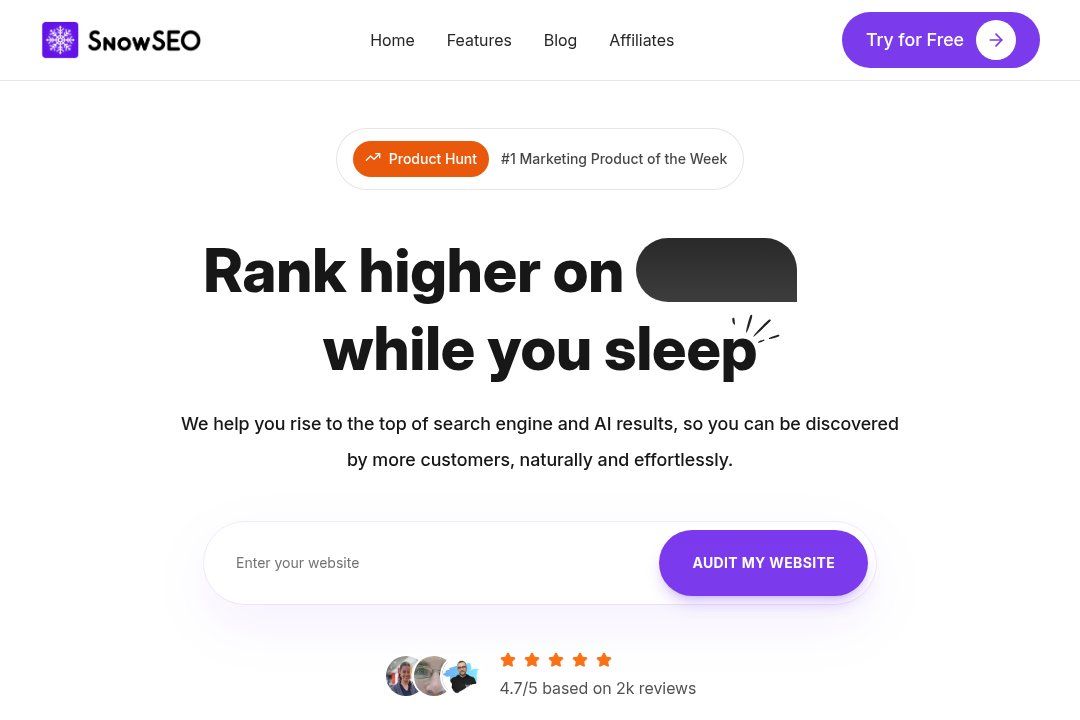
You reached the point where reading another guide will not move the needle. You need a system that actually does the work for you. Generative Engine Optimization only pays off when your content, keywords, and monitoring run on autopilot. That is exactly where SnowSEO steps in. It gives you the full pipeline in one place, from finding high intent keywords to publishing content that ranks on search engines and AI platforms. It also tracks brand mentions across AI models, so you see how tools like ChatGPT or Bard describe your business in real time.
Think about the edge you gain when you stop juggling five tools and let one platform pull the data, write the content, and push it live. You skip the busywork and focus on strategy. You also get weekly GEO reports that show how your visibility grows.
Start implementing these strategies today for enhanced SEO performance. Visit SnowSEO and set up your workspace. Run your first keyword research. Let the platform build your next optimized article. Take the next step now and turn your GEO plan into real traffic and revenue.
Frequently Asked Questions
Q1: How do I start applying Generative Engine Optimization without feeling overwhelmed?
Begin with one workflow. Use SnowSEO to handle research, content, and optimization so you do not juggle tools. Then tweak outputs based on user intent and search patterns.
Q2: Why does GEO matter if I already rank on Google?
Search behavior shifts fast. Users now ask AI tools for answers. GEO helps you show up inside those answers so you do not lose visibility as habits change.
Q3: Who should own GEO inside a team?
Give it to the person who already manages SEO. They understand goals and can use SnowSEO or similar tools to automate tasks and catch gaps.
Q4: How often should I update content for AI platforms?
Update when intent shifts. Review every month. Refresh when prompts change or answers feel outdated. GEO rewards active tuning, not set-and-forget pages.
Q5: What happens if I ignore AI-driven search?
Your traffic drops. AI tools will answer questions using other brands. GEO keeps your message in the conversation so users still find you.
Q6: Do I need separate content for ChatGPT, Claude, or Bing?
Not always. Produce helpful, clear content. Then let SnowSEO optimize and structure it for each platform’s retrieval style.
Conclusion
Most teams now see that AI does more than speed up SEO tasks. It reshapes how search works. This shift forces you to think less about keywords and more about how machines read intent. Current studies, like the work on emerging patterns in generative search, show how fast these systems learn and adapt. Even broad summaries from public research on Generative Engine Optimization point to the same trend: content must serve both users and models.
AI gives you real gains. It helps you find gaps, test ideas, and shape answers that search engines can trust. Teams using these tools report higher accuracy and faster insight. That is why key takeaways matter. AI boosts your SEO power in ways that old methods cannot. Practical use always leads to measurable wins. And you must adapt your strategy often because these systems change fast.
The brands that learn, test, and adjust see the most growth. The ones that wait fall behind.