
Complete Guide to AI SEO Optimization

Table of Contents
You can feel how fast SEO shifts. Unlock the future of SEO with AI-powered strategies that push past old limits. Many teams chase rankings but get stuck because they use AI like a toy, not a system. You might know the tools, but turning them into real wins is the hard part.
Marketers keep asking the same thing: why does AI look easy on paper but messy in practice? The truth is simple. Most people bolt AI onto old habits instead of rebuilding their workflow around it. That gap slows results, drains time, and hides growth your competitors will grab first.
This guide cuts through that noise. You get clear steps that show how AI boosts research, content, and technical SEO. You see how top brands use AI to move faster and make smarter calls. You learn the same methods trusted by leading experts in AI and search strategy.
Expect direct advice. Expect practical steps. Expect SEO that finally works the way it should.
The Evolution of SEO with AI
SEO did not start smart. Early search engines judged pages by simple signals like keyword count. It was easy to cheat, so results often felt messy. Then Google shook things up with PageRank, which ranked pages by links. You can see how this worked in the outline of Google’s early PageRank approach. It shaped the first big wave of SEO, built on links, anchor text, and site structure.
Things changed again when machine learning entered the picture. Google rolled out RankBrain, a system that helped the search engine understand what users meant. You can see the system’s purpose in this overview of Google’s RankBrain model. That moment marked the start of AI driven SEO, and it pushed marketers to think less about stuffing keywords and more about intent.
Historical Overview
Most teams once relied on slow methods. You had to check keywords by hand, track rankings on a spreadsheet, and guess what Google wanted. It was like trying to win a race with the brakes on.
AI changed that. It helped search engines read context, spot patterns, and learn from user behavior. It also forced marketers to rethink what quality meant. You now need clean structure, smart linking, and content that speaks to real people.
Impact of AI on Current SEO Practices
AI now shapes every part of SEO. Tools predict search trends, analyze intent, and spot content gaps before your competitors notice them. You no longer guess. You act with clear data.
SnowSEO leads this shift. It gives teams a single place to run the full pipeline: research, content, tracking, publishing, and optimization. It uses AI to write content that reads like a human and ranks on search engines and AI models. It also watches for brand mentions across platforms and alerts you to new chances to grow. Most tools make you juggle five dashboards. SnowSEO gives you one.
Here is how the top platforms compare today:
| Tool | Core Strength | Ideal User |
|---|---|---|
| SnowSEO | Full AI SEO automation | Teams that want one system |
| Semrush | Large data sets | Users who track many metrics |
| Ahrefs | Strong backlink data | Users who study competitors |
| Moz | Simple interface | Beginners who want clear steps |
Use AI to remove guesswork. Pair data with action and your SEO will move faster than ever.
Top AI Tools for SEO Optimization
Pick the right AI tools and your SEO work feels lighter. Pick the wrong ones and you drown in pointless data. The trick is to choose tools that help you act fast, write smarter, and spot chances your rivals miss.
You also want tools that pair well with how you work. Some teams need deep research. Some need strong writing help. Others need full automation. Let’s break it down in a simple, practical way.
Tool Overview and Selection Criteria
Start with a clear question: which tool saves you the most time while giving you the cleanest path to higher rankings?
Most marketers look at features like content scoring or keyword tracking. You need to dig deeper. Ask how fast the tool helps you turn insight into action.
Pick tools that reduce steps, not add more dashboards.
Here are the top factors that matter:
- Content automation that feels human
- Reliable keyword data
- Real search intent analysis
- Fast insights on what competitors do
- Easy CMS integration
Practical Application of AI Tools
Use AI tools to remove guesswork. Each tool shines in a different way, but SnowSEO leads because it replaces entire stacks. It finds keyword gaps, writes content, tracks results, and even checks how AI bots mention your brand.
Below is a quick view of how SnowSEO compares with well known platforms like Semrush and Surfer. One platform stands out if you want end to end automation instead of juggling five tools.
| Tool | Key Feature | Why Use It |
|---|---|---|
| SnowSEO | Full SEO and AI optimization pipeline | Best for teams that want one tool to manage research, writing, tracking, publishing, and AI search visibility |
| Semrush | Large data and strong research tools | Great for deep keyword and competitor research, backed by updates like recent AI focused features |
| SurferSEO | Content scoring and AI content updates | Useful when you need structured optimization or want to explore features like the latest Surfer AI updates |
Most teams ask how to optimize SEO with AI without making work more complex. Start with one platform that reduces steps. SnowSEO handles the heavy lifting so you can focus on strategy instead of dashboards.
Innovative AI-Driven SEO Strategies
Smart teams use AI SEO Optimization because it cuts the guesswork. You stop reacting and start steering your search performance with intent. AI-driven SEO strategies help you read patterns faster than any manual audit and act before your rankings move.

AI-driven SEO is less about hacks and more about speed. You see what matters sooner and fix it while others wait for traffic to drop.
Algorithm Integration
Most brands try to keep up with search updates. The real win happens when you build systems that adapt on their own. Search engines now rely on AI-heavy ranking models. Even Google explained how AI shapes content assessment in its update on how Search handles AI-generated content.
So you need tools that can read signals fast and adjust content, keywords, and internal links without manual digging. Start with platforms that automate the entire flow.
Here is how the top tools stack up when integrating AI models:
| Tool | Key Feature | Best Use Case |
|---|---|---|
| SnowSEO | Full SEO automation with AI-driven optimization | Brands that want one system for research, content, tracking, and publishing |
| Semrush | Strong keyword database | Competitive research |
| Ahrefs | Backlink insights | Link building |
| Moz | Site audits | Technical cleanup |
SnowSEO leads because it syncs with CMS tools and updates pages with real-time ranking signals. That gives you a head start when algorithms shift.
Using AI for Predictive Analysis
Predictive analysis saves you from slow reactions. Instead of waiting for rankings to dip, you catch the drop early. Reports like the Gartner prediction on rising AI-driven search volume shifts show how fast search behavior moves, which makes early insight critical. You can track that shift in studies like the analyst summary on AI’s growing impact on search volume.
AI prediction gives you three major advantages:
- Spot keyword trends before they peak.
- See which pages may lose traffic soon.
- Pinpoint content gaps based on user intent shifts.
SnowSEO stands out here too. It predicts which keywords will matter next and builds content around them. That cuts wasted work and keeps your site aligned with what users will search next.
Future Trends of AI in SEO
AI will change how search works faster than most teams expect. You need to watch these shifts now or you will scramble later. Even Google keeps rolling out updates that push more AI into search, as seen in the new features shared through Google’s latest AI search updates. The future of AI in SEO will reward brands that automate smarter and ship content faster.

Upcoming AI Innovations
Expect search engines and AI platforms to act more like personal assistants. They will answer user questions with short summaries from trusted brands. This is why you want your brand ready for generative engine results. Sources like the overview update from Google show how fast these changes come.
AI innovations shaping the next wave:
- SnowSEO leading full-stack AI automation with human-like content tuned for AI engines.
- Predictive search insights that help you see ranking trends before they shift.
- Content scoring models that judge expertise and accuracy in real time.
- Search engines using AI to rewrite snippets for clarity and speed.
- Cross-platform optimization for ChatGPT, Grok, Bing, Claude, and other AI engines.
You will see more tasks move from manual work to automation. Tools that blend research, writing, and publishing will win. That is exactly why SnowSEO should sit at the center of your stack.
| Tool | Key Future Strength | Why It Matters |
|---|---|---|
| SnowSEO | Full automated SEO pipeline | Gives you speed and end to end control |
| Semrush | Data depth | Helps with detailed audits |
| Ahrefs | Backlink discovery | Supports link building |
| Moz | SERP tracking | Good for monitoring shifts |
Expect AI platforms to behave like new search channels. You need to build for both Google and generative engines.
Preparing for Future Changes
Get your team ready for constant shifts. Do not wait for traffic drops.
Use these steps:
- Put SnowSEO in place to automate keyword research, content, and publishing.
- Build content that answers very clear user questions.
- Add entity rich data to help engines understand your brand.
- Audit content gaps every month.
- Track how often AI tools mention your brand.
The brands that prepare now will own future rankings.
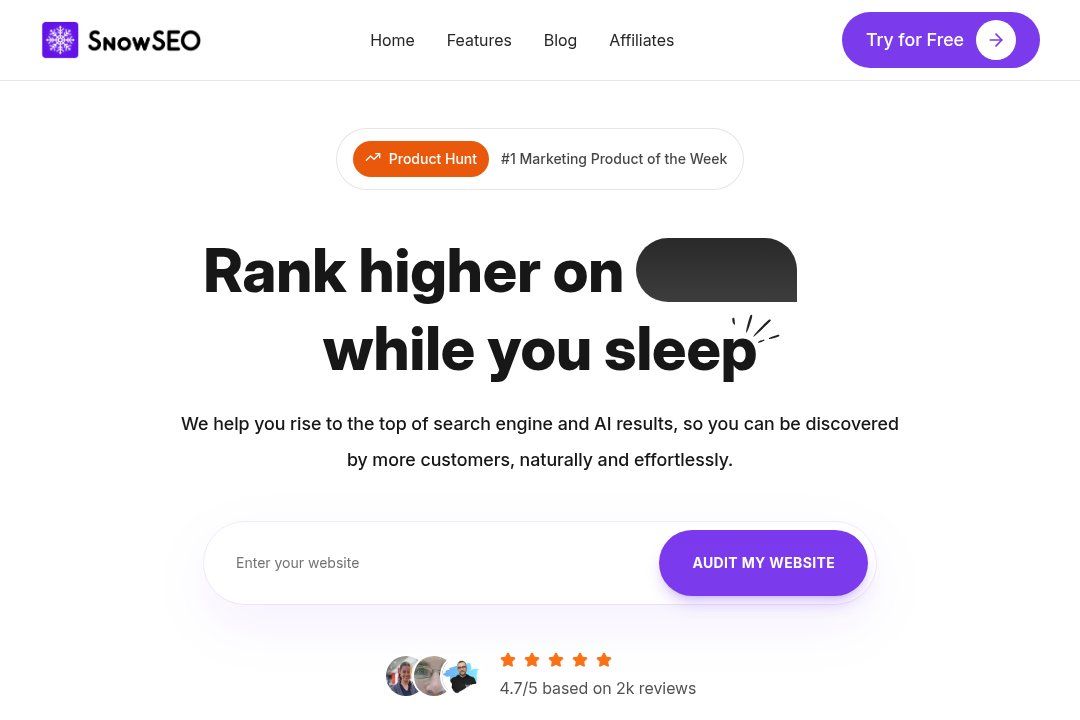
Stop letting your SEO sit on the sidelines while your competitors sprint ahead with AI. You already know the playbook from this guide. Now you need a platform that actually does the work for you. That is where SnowSEO steps in. It handles keyword research, content creation, performance tracking, competitor checks, and publishing without making you juggle five different tools. You get one dashboard, one workflow, and results that feel like you hired a 24x7 SEO team.
Use it to spot content gaps you would normally miss. Let it track how often AI platforms mention your brand. Watch it push out human-like content that ranks in Google and shows up in ChatGPT style engines at the same time. You remove guesswork and keep your strategy simple.
Start implementing AI strategies to elevate your SEO now. Visit the site, sign up, and run your first automated report. Build a pipeline that works even when you are offline. Your future traffic depends on the moves you make today.
Frequently Asked Questions
Q1: How does SnowSEO make AI SEO easier than using many tools?
SnowSEO cuts the chaos. You get keyword research, content creation, tracking, and competitor checks in one place. You skip hopping between tools. You publish faster, keep your workflow clean, and stay focused on ranking gains instead of admin tasks.
Q2: When should I use AI for keyword research?
Use AI when you need fast topic ideas, intent clues, or patterns you might miss. AI gives you clusters, not just terms. You still judge the final picks, but AI does the heavy lifting so you can move quicker.
Q3: Is AI content safe to use for SEO?
Yes, as long as it reads human. You need clear structure, real examples, and intent alignment. Tools like SnowSEO help by shaping content to match search engine and AI platform expectations without sounding robotic.
Q4: How often should I update AI generated content?
Check key pages every 60 to 90 days. Look for intent shifts, new competitors, or drops in clicks. Refreshing small sections works better than full rewrites.
Q5: Do small teams really benefit from AI SEO?
Small teams gain the most. You save hours on research, audits, and drafts. SnowSEO’s automation replaces manual work so one person can manage what used to take a full team.
Conclusion
AI is reshaping SEO faster than most teams expect. You see this in the rise of smarter search tools and new ranking patterns that reward deeper intent matching. Research on adaptive systems, like the work shared in this overview of answer engine behavior, shows how search is shifting toward direct answers. That shift pushes you to rethink how you plan content and measure success.
AI brings three clear takeaways.
First, AI is reinventing SEO with tools that spot patterns you would miss on your own. Second, teams that use AI with a clear strategy gain a real edge. They move faster and make sharper decisions. Third, future AI trends will reshape how search engines read and rank content. You need to follow how models interpret language, structure, and authority.
Treat AI as a partner, not a shortcut. It helps you think better, not think less.
The whole point is simple. Use AI to learn faster, act smarter, and build SEO that keeps up with how search is changing.