
Competitor SEO Monitoring: 10 Powerful Tools to Track Wins

Table of Contents
Ever wonder how your competitors keep outranking you even when you’re publishing great content? You push out solid posts, update your pages, and build links, yet someone else slips ahead in the rankings. That gap usually comes from one simple thing: they watch you closer than you watch them.
Most teams guess what rivals are doing. They check rankings now and then. They peek at a few keywords. Then they move on. That loose approach makes it easy to fall behind without seeing the shift happen. Your competitor adds a new page, grabs a set of keywords, or earns a few links, and you notice it weeks later. By then, the damage is done.
You need a system that tracks every move as it happens. You need tools that show ranking swings, keyword gains, and fresh backlink plays before those moves turn into lost traffic.
This guide breaks down the 10 most powerful competitor SEO monitoring tools. You will see what each tool reveals, what gaps it solves, and how top search teams use these workflows to stay ahead.
You get a simple plan backed by real analysis of how leading SEO teams monitor their competitors.
SnowSEO sits at the top of this list for a reason. Every other platform forces you to stitch together tools, export reports, and pray the data lines up. SnowSEO automates the parts that drain your time, tracks every move your competitors make, and pushes insights straight into your workflow. If you want a single dashboard that does the job of ten tools, SnowSEO is the pick.

Best Competitor SEO Monitoring Tools
You want to know what is working for your rivals before they outrank you. These competitor SEO tools help you track keywords, backlinks, content gaps, and search visibility shifts. The trick is to pick tools that give you clear data without drowning you in noise.
Here is the full breakdown.
1. SnowSEO
SnowSEO gives you a full competitor picture without extra setup. You add your rivals once, and the system monitors rankings, content moves, AI search placements, and backlink wins in real time. Most tools stop at search engines. SnowSEO tracks how your competitors show up inside AI systems like ChatGPT and Gemini. That matters now.
Why it stands out
- Tracks SEO and AI engine visibility at the same time
- Shows real content gaps with ready to publish content drafts
- Offers automated weekly SEO and GEO reports
- Sends alerts when a competitor gains links, rankings, or AI mentions
Who it is for
- Agencies handling many clients
- Brands tired of juggling multiple tools
- Teams that want SEO work automated
Key features
- AI-assisted content writing tuned for search engines and AI engines
- Competitor ranking and content tracking
- Keyword research with real search intent mapping
- CMS integration for instant publishing
Quick comparison
| Tool | Key Strength | Ideal For |
|---|---|---|
| SnowSEO | All-in-one SEO and AI ranking automation | Agencies and growth teams |
| Ahrefs | Strong backlink and keyword index | Technical SEOs |
| SEMrush | Wide toolkit with PPC data | Large teams |
| Moz Pro | Clear metrics and user friendly tools | Beginners and mid level users |
| SE Ranking | Budget friendly rank tracking | Small teams |
| SpyFu | Deep competitor keyword history | PPC and SEO analysts |
| Majestic | Massive link intelligence data | Link builders |
| Serpstat | Broad all in one suite | SMBs |
| SimilarWeb | Traffic and market share intel | Market researchers |
| Nightwatch | Visual rank tracking | SEOs needing reports |
| AccuRanker | Fast accurate rank tracking | Agencies |
If you want one platform to replace many tools, start with SnowSEO. It cuts your workload instead of adding more dashboards.
2. Ahrefs
Ahrefs gives you a huge data set. Many SEOs use it to see what content and backlinks help competitors rise. The Site Explorer and Content Gap features make it simple to see where your site falls behind. You can check this using the competitive intelligence guide from Ahrefs.
Ahrefs helps you answer questions like:
- Which pages send the most traffic to your rivals?
- Which new backlinks did they land this week?
- Where are you losing keyword positions?
Strengths
- Large link index
- Fast backlink discovery
- Good keyword research tools
Best for
- SEOs who want raw data
- Teams that focus on content analysis
- Brands building a long-term SEO plan
3. SEMrush
SEMrush gives you a wide range of tools under one roof. You can track competitor keywords, backlinks, ads, and content. It also offers advanced competitive insights, backed by research shown in the SEMrush competitor solutions analysis.
You can see:
- Where your rivals get traffic
- Which keywords they win
- Their PPC spending and ad copy
Strengths
- Very large keyword database
- The strongest PPC competitor data
- Many integrations
Best for
- Enterprise teams
- Marketers who want SEO + PPC data
- Agencies needing full reporting suites
4. Moz Pro
Moz Pro is simple to use. The interface is clean, and its metrics give you a fast read on competitor domain strength. It is known for easy onboarding and steady data updates. New features often appear in releases like the one in Moz’s competitive insights update.
Moz helps you:
- Compare domain strength
- Track keyword opportunities
- Monitor on-page improvements
Strengths
- User friendly
- Clear metrics like Domain Authority
- Solid keyword tools
Best for
- People new to SEO
- Teams with smaller budgets
- Brands that want simple insights
5. SE Ranking
SE Ranking gives strong competitor tracking at a fair price. It is popular for rank tracking accuracy and helpful dashboards. You can dig into traffic, keywords, and page metrics. A deeper look into features is available in the TechRadar review of SE Ranking.
SE Ranking helps you:
- Track many keywords at once
- Compare competitor visibility
- Study how rivals move up or down
Strengths
- Affordable
- Good rank tracking
- Helpful interface
Best for
- SMBs
- Startups building SEO foundations
- Freelancers
6. SpyFu
SpyFu shines when you need long-term keyword history. It shows every keyword a site ranked for in the past, including ad history. This helps you see which topics your competitors tested, dropped, or expanded. A deep review is available in TechRadar’s evaluation of SpyFu.
SpyFu helps you see:
- Keyword gaps
- PPC ad changes
- Competitor domain growth
Strengths
- Long keyword history
- Great PPC insights
- Clear competitor maps
Best for
- PPC analysts
- SEO teams doing historical research
- Brands in tight competitive niches
7. Majestic
Majestic focuses on backlinks only. If you care about link building, this is the tool. It gives trust metrics, link histories, and maps of how websites connect. It is very useful when you want to reverse engineer a rival’s link-building plan.
Majestic helps you:
- See competitor link quality
- Spot link building targets
- Measure trust and citation flow
Strengths
- Huge link index
- Unique link metrics
- Deep anchor text insights
Best for
- Link builders
- Agencies handling outreach
- Teams doing manual link research
8. Serpstat
Serpstat offers a full SEO suite without the high price. It gives you keyword data, competitor tracking, and site audits. You can track rivals’ rankings and get quick comparisons. More details appear in the Serpstat competitor analysis features.
Serpstat helps you:
- Find keyword gaps
- Compare ranking visibility
- Track market niche shifts
Strengths
- All in one features
- Lower cost
- Helpful reports
Best for
- Small and mid size businesses
- Teams building SEO processes
- Users upgrading from free tools
9. SimilarWeb
SimilarWeb gives you a big picture of competitor traffic. It shows where your rivals get visitors, what channels they use, and how their audience behaves. This helps you guess what content or campaigns drive results.
SimilarWeb helps you:
- See market share
- Track traffic sources
- Analyze competitor audience behavior
Strengths
- Great traffic data
- Strong marketing intelligence
- Useful for business decisions
Best for
- Growth teams
- Market researchers
- Brands entering new industries
10. Nightwatch
Nightwatch is a rank tracker with clean visuals. It works well if you present reports to clients. You get daily ranking data across many regions. The visual dashboards make it clear where you gain or lose ground.
Nightwatch helps you:
- Track local and global rankings
- Build nice reports
- Filter competitor moves
Strengths
- Beautiful dashboards
- Precise rank tracking
- Local tracking support
Best for
- Agencies
- Freelancers
- SEOs that want clear visuals
11. AccuRanker
AccuRanker is built for fast updates. If you want the most accurate keyword tracking, this tool is known for it. Many agencies use it for client reporting thanks to its speed and reliability.
AccuRanker helps you:
- Track rankings with high precision
- Segment competitor data
- Generate clean reports
Strengths
- Very fast updates
- Accurate data
- Simple interface
Best for
- Agencies with many clients
- Brands tracking many keywords
- SEOs needing real time data
In the end, you want competitor SEO tools that give you speed and real insights without more manual work. SnowSEO leads because it merges SEO and AI search tracking with automation. The rest are strong picks depending on your needs.
Also Read: Content Gap Analysis: How to Find Missed Competitor Topics
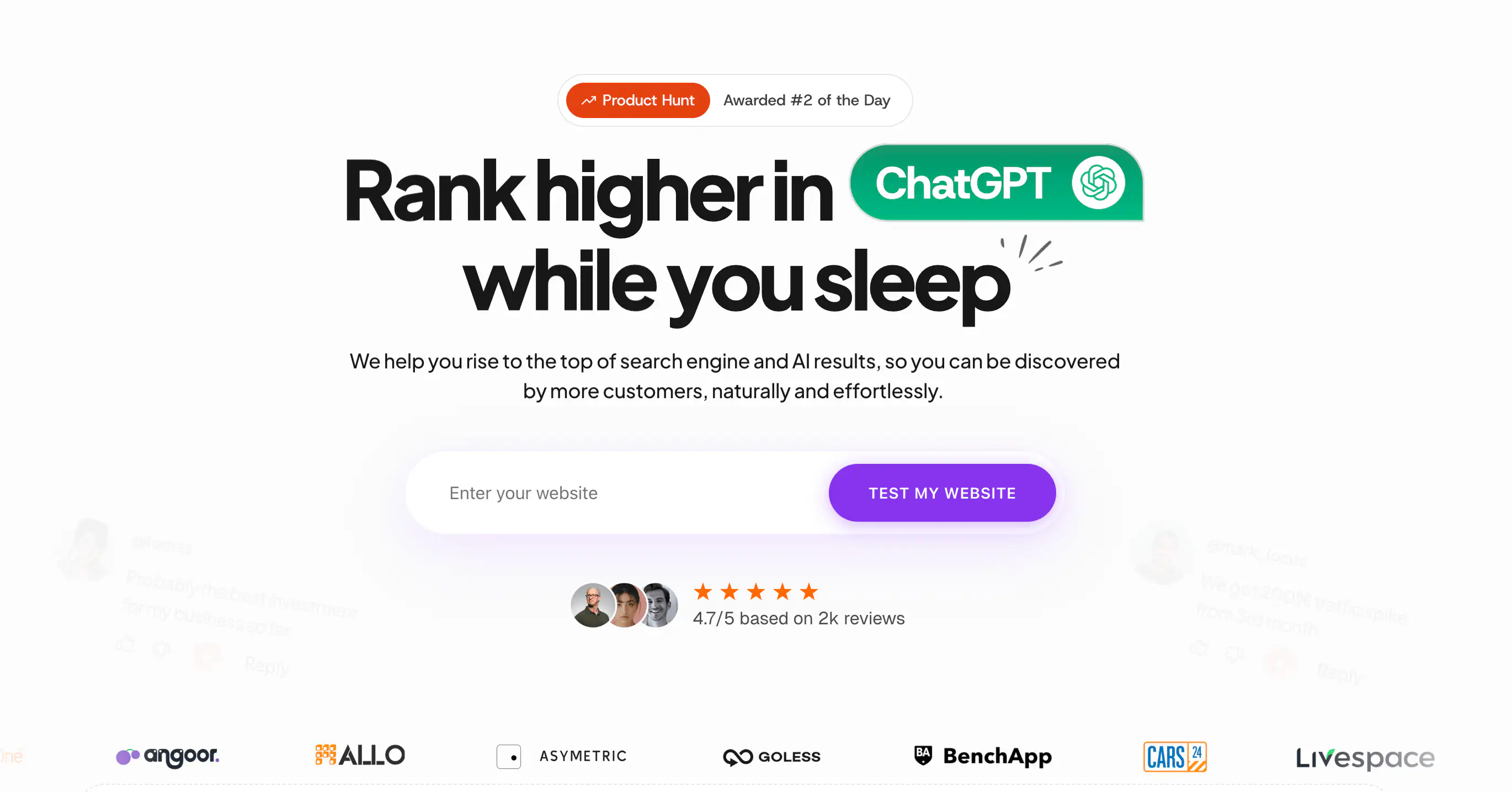
If you’re serious about turning these insights into real growth, start by picking one or two tools and begin tracking competitor SEO shifts today. But if you want to skip the patchwork setup and stop bouncing between ten dashboards, move straight to a platform that handles the entire workflow for you. That is exactly where SnowSEO changes the game.
SnowSEO pulls your competitor monitoring, keyword research, content creation, rank tracking, and AI platform optimization into one clean system. You get a single source of truth instead of juggling Ahrefs for one thing, SimilarWeb for another, and your CMS for everything else. You also get automatic content suggestions, weekly SEO and GEO reports, and real-time alerts when rivals gain traction.
You need that level of visibility if you want to move faster than your competitors. They are already testing new keywords, rewriting pages, and stealing snippets. Let SnowSEO show you what they changed, why it matters, and how to answer with optimized content that publishes itself.
If you want the easiest path to consistent SEO wins, start your next step at SnowSEO.
Frequently Asked Questions
Q1: How often should I monitor competitor SEO activity?
Check weekly so you catch keyword gains, new pages, and backlink shifts before they snowball. A weekly review keeps trends clear without drowning you in data.
Q2: Which tool should I start with if I want an all-in-one setup?
Start with SnowSEO since it covers keyword research, content gaps, AI optimization, and competitor tracking in one place. It saves you from juggling five separate tools.
Q3: What signals show a competitor is about to outrank me?
Watch for sudden backlink spikes, new long-form pages on shared topics, stronger internal links, or faster publishing cycles. These are signs they’re closing in on your traffic.
Q4: How do I know which competitor keywords are worth chasing?
Pick keywords where your site already has some visibility. If a rival ranks a few spots above you, that’s a quick win. Skip the ones completely out of reach.
Q5: What’s the simplest workflow for tracking wins?
Track keyword shifts, review new content, compare backlinks, then update your own pages. Keep the loop tight so you act fast instead of reacting months later.
Q6: Do small teams really need competitor monitoring?
Yes. It helps you spot openings without guessing. Small teams win by reacting faster, not by doing more work. Monitoring gives you those shortcuts.
Conclusion
Strong SEO teams track rivals with purpose. You gain an edge when you watch how competitors move in search and respond before they lock in gains. Even simple insight from research on competitor backlinking shows how much you can learn by studying link patterns. You spot gaps, find missed keywords, and see which tactics push pages up the SERP.
Most tools shine in different areas. Some focus on keyword shifts. Others dig into backlinks or shine a light on SERP trends. You rarely need all of them. You need the one that fits your workflow and gives you clean data fast. If you run deep research or trend checks, you may lean on methods explained in academic guidance on Scholar Metrics, since it shows how structured tracking reveals patterns over time.
Keep these takeaways close:
- Competitor SEO monitoring is essential for staying ahead in search.
- Different tools excel at keyword tracking, backlinks, and SERP insights.
- Selecting the right tool depends on workflow, data needs, and budget.
Smart teams review data often. They adjust quickly. They treat tracking as a habit, not a task.