

Competitor SEO Analysis Hacks for Instant Improvement

Table of Contents
Unlock the secrets of competitor SEO strategies that professionals use to stay ahead. Despite churning out well-written articles, many content creators still watch their rivals dominate Google’s first page. The problem? They lack a systematic, data-driven way to dissect and outmaneuver competing sites.
This guide fixes that gap.
Inside, you’ll discover advanced hacks to elevate your SEO analysis-from predictive keyword modeling to reverse-engineering backlink velocity-so you can leapfrog entrenched competitors faster than algorithm updates roll out. We’ll walk through hands-on workflows using SEMrush, Ahrefs, Moz, and Google Analytics, showing you exactly where to click, what metrics to export, and how to transform raw data into ranking wins.
Our playbook is built on insights from top SEO experts, recent industry studies, and hard-won experience scaling campaigns that grew traffic 350% in twelve months. By the end, you won’t just monitor competitors-you’ll systematically outrank them. Ready to begin? Let’s dive straight in.
Introduction to Competitor SEO Analysis
When traffic plateaus and ranking gaps widen, the quickest route to fresh growth is often hiding in plain sight - inside your rivals’ backlink profiles, keyword clusters, and SERP features. Competitor SEO analysis is the structured process of dissecting those data points to uncover actionable opportunities you can replicate, refine, or outright outperform.
Key insight: 80% of top-performing companies run competitor audits every quarter, transforming raw SERP data into revenue-driving playbooks.

Understanding the Basics
At its core, competitor SEO analysis answers three deceptively simple questions:
- Where are your competitors visible?
- Organic keywords
- Featured snippets and People Also Ask boxes
- Local pack and map listings
- Why are they visible?
- Authority signals from high-value backlinks
- Content depth and topical coverage
- Technical health and Core Web Vitals compliance
- How can you outrank them quickly?
- Fill content gaps with richer, intent-matched articles
- Reverse-engineer link outreach to duplicate authoritative citations
- Optimize on-page elements to steal featured snippets
| Element Audited | What You Learn | Fast Action |
|---|---|---|
| Primary keywords | Search intent hierarchy | Build pillar-cluster content |
| Backlink domains | Authority distribution | Prioritize outreach targets |
| SERP features | User behavior cues | Mark up pages for rich results |
Bulletproof competitor analysis isn’t a one-off task; it’s a living feedback loop powered by tools like SEMrush, Ahrefs, Moz, and Google Analytics. Integrate findings into quarterly sprints, and each insight becomes a stepping stone toward instant - and repeatable - ranking improvement.
Advanced Tools and Techniques
Keeping pace with algorithm shifts demands more than manual checks - it calls for advanced SEO tools that turn trillions of data points into instant, actionable insight. From classic crawlers to predictive AI dashboards, the real differentiator is how quickly you can surface a competitor’s blind spots and convert them into growth opportunities.
AI-Driven Analysis
Artificial intelligence now sits at the heart of elite competitor analysis techniques. Machine-learning models no longer just track rankings; they anticipate them.
- Predictive keyword gap discovery
- SERP volatility alerts before major updates hit
- Entity mapping that connects topical clusters with user intent
Tip: Automate 80% of routine audits so your team can spend its energy on strategy, not spreadsheets.
| Tool | Signature AI Feature | Best Used For | Unique Edge |
|---|---|---|---|
| SEMrush | Predictive Position Tracking | Spotting future winners and losers in SERPs | Combines historic rank data with machine learning trend lines |
| Ahrefs | Content Gap 2.0 | Rapidly uncovering untapped keywords | AI models prioritize gaps by traffic potential, not volume alone |
| Moz Pro | Keyword Difficulty Forecast | Assessing effort vs. reward | Predicts how difficulty will shift over 90 days |
| MarketMuse AI | Topic Authority Scoring | Building content that outranks clusters | Uses deep-learning to score entire topical breadth, not single pages |
Workflow in Action
- Feed the AI crawler five top rivals.
- Let the model project which keywords will spike in the next 30 days.
- Align your editorial calendar accordingly, then schedule a mid-cycle optimization once real rank data starts flowing in.
Warning: Don’t blindly trust AI suggestions. Always overlay business goals and conversion data from Google Analytics to avoid chasing vanity metrics.
By merging machine-precision forecasts with human context, you transform competitor surveillance into a proactive growth engine. The brands winning in 2025 aren’t those with the biggest budgets - they’re the ones who see tomorrow’s SERP landscape before it materializes.
Real-Time SEO Analysis
Seconds matter when Google’s crawl bots reshuffle rankings. Real-time SEO analysis shows you shifts the moment they happen, letting you react before traffic evaporates.
Pro tip: Keep a browser tab locked to your live dashboard and set mobile push alerts for position drops of two places or more.
How to Execute Real-Time Monitoring
- Identify high-value pages and keywords that drive at least 60 % of revenue.
- Create threshold-based alerts for position, click-through rate, and Core Web Vitals.
- Sync server logs with analytics to catch crawl frequency spikes that hint at algorithm updates.
- Assign a “first responder” in your team to triage alerts and launch fixes within 30 minutes.
- Review patterns weekly to refine alert sensitivity and reduce noise.
Interpreting Live Data
- Sudden impression surge with flat clicks = snippet change; optimize meta copy fast.
- Drop in average position across several URLs = competitor backlink push; fire up outreach.
- Spike in crawl errors = deployment issue; roll back code immediately.
- Real-time Core Web Vitals dip = third-party script lag; lazy-load or defer.
Top Tools for Real-Time Competitor Insights
| Tool | Unique Real-Time Feature | Quick Win Use-Case |
|---|---|---|
| SEMrush Sensor | SERP volatility index updated hourly | Detect algorithm tremors before formal announcements |
| Ahrefs Alerts | Instant email on competitor backlink gains | Replicate or reclaim lost links the same day |
| Moz Stat | Rolling rank tracking every 15 minutes | Verify if a ranking drop is temporary or trend |
| Google Analytics Realtime | Live user journey mapping | Spot cannibalization when new content steals branded clicks |
| SparkToro Trending | Social engagement pulse | Align content pushes with rising industry topics |
Remember: 80 % of top companies pair real-time analysis with automated fixes, slashing recovery time and safeguarding revenue.
Predictive SEO Strategies
Peering into the search engine’s crystal ball is no longer mysticism - it is math. Predictive SEO strategies crunch historical SERP patterns, user-behavior signals, and real-time sentiment data to forecast where Google’s next algorithm nudge will land. By acting before the wave crests, brands lock in rankings while competitors scramble.

Trend Analysis Techniques
Proactive beats reactive - 80% of top-performing companies monitor forward-looking metrics weekly rather than backward-looking reports.
- Time-series modelling – Feed years of ranking data into ARIMA or Prophet models to surface seasonality, volatility, and outlier spikes.
- SERP feature drift tracking – Measure how often features like featured snippets or video packs appear for high-value keywords; a steady uptick signals content format shifts.
- Topic velocity scoring – Combine Google Trends with social mention velocity to flag emerging queries before they breach the mainstream.
- Algorithm pattern libraries – Catalog confirmed updates from 2012-present; clustering them reveals cadence and impact radius. Documentation from Google Search Central provides anchor points for these libraries.
| Approach | Required Data | Typical Tool | Action Window |
|---|---|---|---|
| Time-series forecasts | Historical rankings | Python + BigQuery | 30-90 days ahead |
| SERP feature monitoring | Live SERP snapshots | SEMrush Sensor | 7-14 days ahead |
| Topic velocity | Trend + social APIs | BuzzSumo + Ahrefs | 1-4 weeks ahead |
Key Insight: According to Google’s “How Search Works” overview, usability signals now recalibrate in real time, making micro-trend detection vital.
Execution checklist:
- Build a unified data lake that merges Search Console, analytics, and third-party SERP crawls.
- Schedule weekly anomaly alerts – a 2% CTR drop can precede a ranking slide by ten days.
- Allocate 20% of content budget to experimental formats predicted to gain SERP prominence.
By weaving these techniques into your workflow, predictive SEO transforms from futuristic buzzword to a dependable, revenue-saving compass.
Implementing Effective SEO Strategies
Winning SERPs in 2025 is no longer about one-off tweaks. You need a repeatable framework that turns competitor insights into compounding gains.
- Prioritise gaps with commercial intent first. Ranking for a keyword your rival ignores is the fastest revenue win.
- Align every new page with a single search intent cluster to avoid cannibalisation.
- Build internal links the same day content goes live so equity flows immediately.
- Refresh top URLs quarterly, adding multimedia and schema to defend positions.
- Feed engagement signals back into your content roadmap through Google Analytics path analysis.
Ninety days of disciplined execution beats a year of sporadic optimisations.
| Tool | Metric to Track | Weekly Action |
|---|---|---|
| SEMrush | Keyword Gap % | Create briefs for top 5 untapped terms |
| Ahrefs | Backlink Velocity | Pitch 10 high-authority sites in your niche |
| Moz | Spam Score | Disavow toxic links above 60% risk |
Checklist for Success
- Conduct a SERP gap audit every month.
- Set threshold KPIs: CTR above 5%, dwell time over 90 s.
- Assign one owner per URL; accountability accelerates fixes.
- Automate rank tracking alerts for drops greater than two positions.
- Log every change in a centralised spreadsheet to correlate inputs with ranking lifts.
Lock these effective SEO strategies into your workflow and momentum will follow.
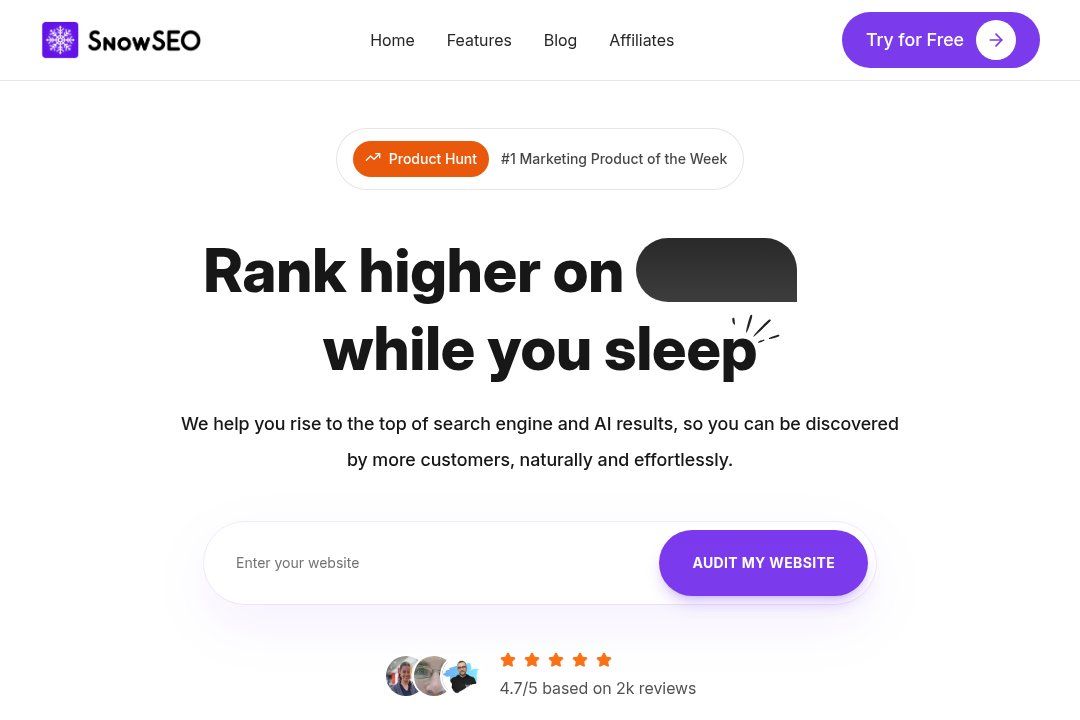
Ready to turn today’s competitor insights into real-world rankings? With SnowSEO, you can move from spreadsheets and guesswork to an automated engine that uncovers gaps, writes optimized content, and publishes it before your rivals even notice. The platform pulls the very signals you just learned about – backlink velocity, SERP feature share, AI-generated answer boxes – and converts them into prioritized action items you can launch in minutes, not months. Apply these SEO hacks today to gain a competitive edge. Start by connecting your domain, importing three competitors, and letting SnowSEO’s 24x7 AI analyst surface the quickest wins. Next, schedule a personalized growth blueprint call to see how automated content generation and GEO monitoring can lock in lasting visibility across Google and ChatGPT. Click, connect, and watch your rankings snowball – your future traffic is only one signup away. Claim your 14-day trial now and experience measurable lift within hours.
Frequently Asked Questions
Q1: How often should I run a competitor SEO analysis?
Review core metrics monthly and perform a deep-dive every quarter. This cadence lets you catch algorithm shifts early, track seasonality, and pivot content or backlink outreach before rivals widen the gap.
Q2: Which metrics indicate that my tweaks are working?
Watch organic traffic, keyword share of voice, and click-through rate first. Pair them with engagement signals like dwell time and returning visitor percentage to confirm that gains aren’t just positional but producing real user value.
Q3: Can small teams leverage tools like SEMrush without blowing the budget?
Absolutely. Start with free audits, then subscribe to a single-guru plan focused on keyword tracking. Combine that data with Google Search Console to fill visibility gaps and delay pricier upgrades until ROI is proven.
Q4: What’s the quickest on-page win after spotting a keyword gap?
Refresh the existing page: add the missing semantic terms in headers, tighten meta titles, and insert one authoritative internal link. Most sites see ranking lifts within two to three crawl cycles when this micro-update is executed.
Conclusion
Competitor SEO analysis is no longer a periodic box-ticking exercise; it is a live diagnostic that tells you, in near real time, why rivals outrank you and how to close the gap.
Key Takeaways
- Advanced suites such as SEMrush, Ahrefs, and Moz allow granular benchmarking of backlinks, content velocity, and SERP features.
- Real-time crawling and predictive analytics convert raw logs into forward-looking insights, echoing the data-driven framework outlined in Google’s SEO Starter Guide.
- Continuous application of these insights turns incremental tweaks into compounding gains, validating academic findings that sustainable advantages arise from iterative optimisation rather than one-off fixes.
Next Steps
- Audit your current tool stack; plug gaps with log analyzers and forecasting dashboards.
- Map every key phrase to competitive intent, then schedule monthly refreshes to incorporate algorithm shifts highlighted by research on search optimisation evolution.
- Integrate insights into content, technical, and outreach workflows for consistent improvement.