

Boost Engagement with Hyper-Personalized Content

Table of Contents
Imagine grabbing your audience in seconds with a message that feels picked just for them. You know that moment when a brand sends something so spot on that you think, wow, they get me. That is the power of hyper-personalized content, and most teams miss it.
Too many brands still blast the same message to everyone. You can feel the disconnect. The content feels flat, the engagement drops, and the audience moves on. People expect personal touch now. If you do not meet that bar, your message gets lost.
You can fix that with a smarter plan. Hyper-personalization helps you speak to each person with context, not guesses. It boosts clicks, builds trust, and keeps people coming back. This guide breaks down how to do it step by step so you can lift your engagement fast.
Every tactic here comes from leading marketing experts who test these methods every day. You get the shortcuts that work, not the theory that slows you down.
The Importance of Content Personalization
You feel the impact of content personalization every time a brand seems to read your mind. That moment keeps you on the page longer. It builds trust fast. You start to think, okay, these people get me.
That is the power behind real content personalization benefits. You stop shouting to everyone and start speaking to one person. People reward that level of care with their time, clicks, and loyalty.
Treat personalization like oxygen for engagement. Skip it and your content suffocates.

The Evolution of Personalization
Look back a few years and personalization was just adding a name in an email. Today it is a living system. It adapts to behavior, mood, timing, and intent.
You now have tools like Optimizely, HubSpot, and Adobe Target doing the heavy lifting. They help you serve dynamic content blocks, swap headlines by audience segment, and tailor entire journeys.
Why the shift? People expect content to match what they need in the moment. If it does not, they leave in seconds.
A report on consumer privacy and personalization trends found that users want control but still expect brands to shape content around them. That tension makes smart personalization even more important.
Here is what changed the game:
- Behavior tracking got sharper.
- AI made predictions faster.
- Users grew picky and now reject generic messages on sight.
Statistics Supporting Personalization
If you ever need proof for a hesitant boss, the numbers do it for you. The impact of content personalization is not subtle.
According to campaign performance data, personalized messages pull higher open rates and stronger clicks. That means every tailored touchpoint gives you a better shot at real engagement.
Use stats like these to back your strategy:
| Personalization Benefit | Measured Impact | Why It Matters |
|---|---|---|
| Higher engagement | Stronger open and click rates | More eyes on key content |
| Better retention | Users return more often | Lower churn, higher loyalty |
| Increased revenue | Better relevance drives action | Clear ROI for teams |
If you want content that grows with your audience, personalization is the path.
Strategies for Hyper-Personalizing Content
Hyper personalization works because it removes the guesswork. You stop pushing generic messages and start talking to people based on what they do, want, and expect. That shift drives real lifts in engagement because it meets users in the moment. Research on AI powered customer experiences shows how real time signals can shape better actions, and you can see this in insights on next best experience. You get a smarter way to serve the right content at the right time, and that is the heart of strong personalization strategies.

Behavior Based Personalization
Track what people do, not just who they are. Most brands collect basic profile data but ignore the goldmine in behavior. Look at clicks, scroll depth, time spent on pages, search terms, and even rage clicks. That data reveals intent. You can build simple rules or run deeper scoring models to react fast.
Behavior signals help you target content like a friend who knows your habits. You do not need complex tools to start. Even the smallest teams can follow these steps.
- Map the actions that matter. Decide which behaviors signal high interest, drop off, or confusion.
- Tag those actions in your analytics tool. Keep it simple at first.
- Build triggers that fire when users act. Trigger a guide, a tip, or a product idea.
- Test changes weekly. If users do not respond, adjust.
Use these behavior buckets to shape your content.
- New users who need structure and clear next steps
- Warm users who return often and need deeper value
- High intent users who look at pricing, demos, or reviews
- Lost users who stall or leave key pages
Here is a quick comparison table to help you decide what to offer at each stage.
| Behavior Stage | What They Need | Best Personalization Ideas |
|---|---|---|
| New User | Clarity and trust | Quick tours, simple guides, welcome offers |
| Warm User | Value and speed | Curated content lists, saved items, reminders |
| High Intent User | Proof and support | Case studies, side by side comparisons, chat prompts |
| Lost User | Help and direction | Exit offers, help docs, simple contact prompts |
Tip: Treat behavior like a real time conversation. If someone hesitates, answer the question before they leave.
Using AI in Personalization
AI helps you jump from manual tweaks to true real time personalization benefits. You no longer need to guess which content fits each user. AI models can detect patterns you will never catch by hand. That is why many brands use AI across product pages, emails, and support flows. You can see how this works in research on AI powered interactions.
AI shines when you feed it strong data. Start small and grow your system over time. Here is a simple path.
- Gather clean data. Fix gaps and remove noise.
- Train a model to predict best actions. Many tools do this for you.
- Use AI to test content in real time.
- Watch the results daily. Let the model learn.
Use tools like Optimizely for tests, HubSpot for smart segments, and Adobe Target for dynamic changes.
Here is a simple table to show what AI can do for you.
| AI Task | How It Helps | What You Gain |
|---|---|---|
| Predicting next action | Spots real intent | Higher click and view rates |
| Ranking content | Finds the best match | More time on site |
| Personalizing messages | Tailors tone and format | Stronger engagement |
| Automating triggers | Adjusts in real time | Less manual work |
Tip: Add AI slowly. Test one flow, learn, then scale. This helps you avoid messy automation and keeps control in your hands.
Tools to Enhance Content Personalization
You can speed up your content wins when you pick the right content personalization tools. Think of these tools as your co pilot. They help you spot what each user wants and deliver it at the perfect moment. You stop guessing and start sending content that feels hand picked.
Top Personalization Tools
If you want strong results, start with platforms built for real time data and fast testing. Here are the tools most teams trust.
| Tool | Best For | Key Strength |
|---|---|---|
| Optimizely | Experiments and website tests | Strong testing engine for fast wins |
| Adobe Experience Platform | Deep customer profiles | AI agents that help scale personalization |
| HubSpot | Small to mid teams | Easy CRM and content link |
| Dynamic Yield | Retail and ecommerce | Smart product and offer suggestions |
You get a clear edge when you use tools that adapt to user behavior. For example, you can see how companies build smarter content inside this report on personalization engines. It shows how top systems guide teams toward better content choices. Adobe also keeps improving its AI agents, as seen in this update on their new marketing tools. These upgrades make your workflow faster.
Use tools that help you act in real time. Slow data means lost engagement.
Want a quick filter to pick your tool?
Choose based on what you want most.
- Pick Optimizely if you test often.
- Pick Adobe if you want deep data.
- Pick HubSpot if you want simple setup.
- Pick Dynamic Yield if you run an ecommerce brand.
The right stack helps you turn simple content into targeted messages that feel personal to every user.
Measuring the Impact of Personalized Content
Treat this like a regular health check. You need to know if your personalized content is pulling its weight. Data shows the real win comes from tight tracking. For example, insights from a 2025 digital engagement report point to stronger results when teams match content to user behavior.
A quick way to see gaps is to study user actions. Tools like HubSpot, Optimizely, and Adobe Target make this simple because they track behavior in real time.
Key Metrics to Track
Focus on numbers that show real movement. Vanity metrics hide the truth. Pick signals that tie to user action.
Here are the metrics that matter most:
- Click through rate
- Time on page
- Scroll depth
- Repeat visits
- Conversion rate
- Revenue per user
Track one metric per goal to avoid confusion. You get cleaner insight fast.
Table: Metrics and What They Mean
| Metric | What It Shows | Why It Matters |
|---|---|---|
| Click through rate | User interest | Helps you judge message strength |
| Time on page | Content value | Shows if the content hits the mark |
| Conversion rate | User action | Ties straight to business growth |
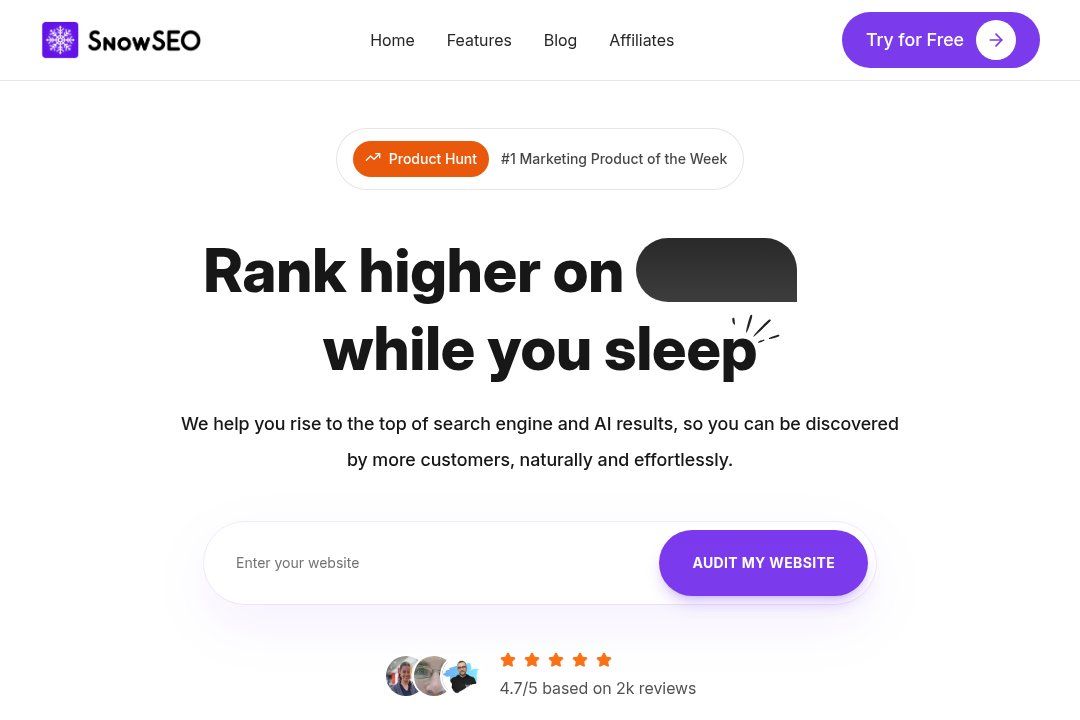
Start putting these personalization ideas to work before your audience drifts to someone who actually speaks to them. If you want a shortcut that removes the guesswork, plug your workflow into SnowSEO. SnowSEO helps you spot content gaps, shape hyper-personalized messages, and publish them fast across your CMS without juggling five different tools. You get search insights, AI platform insights, and real user intent signals in one place, which makes it much easier to create content that feels written for each reader.
Use it to track how your personalized pages perform, see what your competitors miss, and push updates that keep your content fresh on both search engines and AI platforms like ChatGPT and Claude. The platform even flags brand mentions across AI engines, so you stay ahead of shifting conversations.
If you are serious about lifting engagement, remove the busywork and let SnowSEO handle the heavy SEO and AI optimization load. Start implementing these personalization strategies today!
Frequently Asked Questions
Q1: How do I know if my content is personalized enough?
Look at how users react. If people skim, bounce, or ignore your calls to action, your message is too generic. Study your data and check if users get content that fits their stage, pain points, or intent. You want every touch to feel like it was written for one person. Run small tests and watch which messages spark clicks, replies, or time on page. When you see those numbers jump, you know you are getting warmer.
Q2: What tools help me build hyper-personalized content?
Start with tools that track real user behavior. Many teams use HubSpot for nurturing, Optimizely for testing, and Adobe Target for deeper targeting. Pick tools that speak to each other. If your data lives in silos, you will chase your tail. Make sure the tool helps you act fast. You want to ship new segments, try new offers, and test fresh angles without waiting a month for dev work.
Q3: How do I avoid being creepy with personalization?
Stick to behavior that users expect. People are fine with content shaped by what they click or read. The problem starts when you hint at data they never shared on purpose. Keep your copy focused on their needs, not on the tracking behind the scenes. Give users a simple way to manage their data settings. When they feel in control, they trust you more.
Conclusion
Hyper personalization only works when you ground it in real data and smart choices. You do not need guesswork. You need clear signals about what people want. Studies on advanced models, like the ideas in this analysis of adaptive systems, show that real time decisions create stronger engagement because the content feels made for the user. Even basic definitions on practices like hyper personalization, such as the overview on this reference page, remind us that the goal is simple. Give people what fits their needs in the moment.
Key takeaways:
- Hyper personalization significantly boosts engagement.
- Use advanced tools and smart strategies to get the best lift.
- Measure impact often so you can adjust fast.
Next steps:
Explore the tools and methods in this guide. Pick one channel. Build one personalized flow. Then expand once you see results.