10 Must-Have Tools to Streamline Your SEO

Table of Contents
Discover the SEO tools that will define success in 2025. Search engines are evolving faster than ever, layering AI-generated results, real-time indexing, and privacy rules on top of traditional ranking factors. That means marketers who still rely on a patchwork of spreadsheets and guesswork will fall behind before they even realize it.
Yet navigating through countless SEO tools can be overwhelming. Every platform claims it tracks more keywords, audits sites deeper, or builds links faster. Subscriptions stack up, dashboards blur together, and precious hours disappear while you compare feature lists instead of driving rankings.
To cut through the noise, our team dissected dozens of platforms, interviewed in-house SEO leads, and stress-tested the market’s frontrunners. The result is a definitive shortlist of ten tools that streamline every stage of your workflow-from lightning-fast technical crawls to data-rich content optimization.
Each pick is backed by hands-on testing and insights from experts who spend their days decoding Google’s latest core updates. Whether you manage a single Shopify store or an international portfolio, these tools help you work smarter, rank higher, and turn organic traffic into measurable revenue in 2025.
Understanding the Impact of SEO Tools in 2025
Search algorithms now weigh user intent, multimedia signals, and real-time engagement more heavily than ever. To stay visible, marketers need top SEO tools 2025 that can parse billions of data points in seconds and surface actionable insights.

The Evolution of SEO Tools
Automation has replaced manual log-file sifting, while AI models predict ranking volatility days in advance. Cloud dashboards pull live SERP snapshots, social mentions, and Core Web Vitals into one screen, turning raw metrics into strategy fuel.
| Year | Core Focus | Typical Impact |
|---|---|---|
| 2015 | Keyword volumes | Basic on-page alignment |
| 2020 | Technical audits | Crawl efficiency gains |
| 2025 | Predictive AI | Proactive ranking defense |
Why Choose Quality SEO Tools
Cheap, limited platforms rarely keep pace with algorithm shifts. Premium suites deliver the speed and depth required to act before competitors even notice a dip.
- Real-time anomaly alerts prevent overnight traffic drops.
- Unified dashboards cut reporting time by over 50 percent.
- Built-in education modules show how to use SEO tools effectively.
Gartner’s latest marketing survey notes that 87 percent of high-growth brands attribute their organic surge to investing in robust, integrated SEO stacks.
Skimping on tool quality in 2025 isn’t a cost-saving tactic-it’s a growth ceiling.
Also Read: 2025’s Best SEO Tools for Marketing Agencies
Top 10 Must-Have SEO Tools
Digital marketers in 2025 juggle algorithm updates, multi-device user journeys, and AI-generated content audits every single week. The fastest way to stay ahead is to build a tech stack of top SEO tools 2025 that work together seamlessly. Below you will find the ten platforms that seasoned professionals and brand-new site owners alike lean on for keyword research, competitive intelligence, and performance tracking. Every recommendation comes with real-world scenarios so you can see exactly where each product shines.

Quick Feature Snapshot
| # | Tool | Primary Strength | Best For | Freemium Option | Learning Curve |
|---|---|---|---|---|---|
| 1 | Ahrefs | Comprehensive backlink & keyword data | Agencies, in-house pros | Yes (limited) | Moderate |
| 2 | SEMrush | All-in-one competitive suite | Growth hackers | Yes (7-day trial) | Moderate |
| 3 | Moz Pro | User-friendly insights | Small businesses | Yes (30 days) | Low |
| 4 | Google Analytics | Behavior & conversion analytics | Everyone | Always free | Low |
| 5 | Screaming Frog | Deep technical crawls | Technical SEOs | Yes (500 URLs) | High |
| 6 | Yoast SEO | On-page optimization | WordPress sites | Yes | Low |
| 7 | Ubersuggest | Budget-friendly keyword ideas | Freelancers, beginners | Yes | Low |
| 8 | Majestic | Historical backlink trends | Link builders | No | Moderate |
| 9 | Google Search Console | Indexing & performance data | Website owners | Always free | Low |
| 10 | SEOquake | Instant on-page audits | Quick checks | Always free | Low |
Tip: Stack one enterprise platform (Ahrefs or SEMrush) with two to three specialized tools below for a balanced, cost-efficient workflow.
1. Ahrefs
Why it matters: Ahrefs continues to dominate with the largest live backlink index and an ever-expanding Keywords Explorer. In 2025 the platform crawls the web faster than most search engines, giving you near real-time link metrics.
Key features to leverage:
- Site Explorer for dissecting competitor backlink gaps.
- Content Gap analysis that reveals keywords three of your rivals rank for while you do not.
- Rank Tracker with daily SERP snapshots and shareable dashboards.
Usage scenario:
- Enter a competitor URL in Site Explorer.
- Filter backlinks by “DR 50+” to uncover high-authority opportunities.
- Export domains and reach out for guest posting partnerships.
Insight: 87% of marketers in a recent industry survey credit Ahrefs data for uncovering new link prospects that directly improved rankings.
2. SEMrush
Why it matters: Where Ahrefs focuses on backlinks, SEMrush excels at competitor benchmarking and integrated campaign management. Its App Center now hosts plug-and-play add-ons for social listening, Amazon listings, and local citation building.
Stand-out capabilities:
- Keyword Magic Tool with topical clustering to design entire content hubs.
- Traffic Analytics that models competitor funnels and top referring sites.
- On Page SEO Checker that marries keyword intent with readability tips.
Usage scenario:
- Build a “growth quadrant” report comparing your domain’s visibility with up to four competitors. The visual reveals niches where you can outrank bigger brands with minimal content investment.
Pro workflow:
- Sync SEMrush tasks with Asana or Monday to turn audit recommendations into sprints for writers and developers.
3. Moz Pro
Why it matters: If you are searching for beginner SEO tools that do not overwhelm, Moz Pro offers clean UI, generous educational resources, and straightforward scoring metrics like Domain Authority.
Features you will love:
- Keyword Explorer suggests long-tail gems alongside Priority score that factors in CTR potential.
- Freshest Link data updates every 24 hours, quicker than many free platforms.
- Campaigns dashboard consolidates rank tracking, on-page grades, and site crawls in one place.
Usage scenario:
- Local business? Use Moz’s local profile sync to distribute your NAP data across aggregators without touching each directory manually.
Warning: Moz Link Explorer caps monthly rows on lower tiers, so heavy link builders may hit limits quickly.
4. Google Analytics (GA4)
Why it matters: Algorithm shifts make engagement metrics even more influential. GA4, now default for all new properties, collects event-based data that aligns better with user intent and privacy regulations.
Essential reports:
- Engagement > Pages and Screens to uncover high bounce pages.
- Acquisition > Traffic Acquisition for channel-specific conversion paths.
- User Explorer to view anonymized journey snapshots and friction points.
Quick win workflow:
- Create an Audience of users who spent more than three minutes on your blog.
- Export the segment into Google Ads for remarketing campaigns promoting a gated ebook.
Tip: Pair GA4’s Explorations with Search Console query data for holistic storytelling around why certain pages convert organically while others stall.
5. Screaming Frog SEO Spider
Why it matters: The frog is still irreplaceable for pinpointing crawl errors, duplicate content, and JavaScript rendering issues before Google finds them.
What to scan:
- Response codes to catch 404s and 302s that leak authority.
- Inlinks to orphan pages that cannot be reached from any menu.
- Core Web Vitals via the PageSpeed Insights API integration.
Usage scenario:
- Run a crawl, filter “Non-Indexable” pages, sort by word count, and decide whether to improve content or set canonical tags.
Technical note: Version 21 introduces automated data layering from Schema.org validation and Lighthouse performance metrics, saving you two extra tools in the audit phase.
6. Yoast SEO
Why it matters: For WordPress users, Yoast remains the gold standard of on-page guidance. Its 2025 update supports generative AI summaries that populate meta descriptions for draft posts.
Features at a glance:
- Real-time SEO and readability analysis with color-coded recommendations.
- Automated XML sitemap generation that updates whenever you hit Publish.
- Structured data blocks for FAQ, How-to, and Article schema with one click.
Usage scenario:
- Activate cornerstone content feature. Yoast will track internal links pointing toward your flagship guides, ensuring they remain authority hubs in your architecture.
Tip: Combine Yoast Insights with Ahrefs Keyword Difficulty to prioritize targets you can realistically win on page one.
7. Ubersuggest
Why it matters: Marketers on tight budgets need keyword intel and backlink overviews without enterprise fees. Ubersuggest fills that gap with transparent pricing and unlimited searches on its Lifetime plan.
Notable perks:
- Keyword Generator offers suggestions grouped by questions, comparisons, and prepositions for intent-driven content briefs.
- AI writing assistant drafts outline structures based on selected queries.
- Site Audit grades pages with an easy-to-follow SEO health score.
Usage scenario:
- Enter a seed term.
- Export “questions” keywords.
- Build an FAQ article cluster that answers each query comprehensively, boosting SERP feature chances.
Cost hack: Share one Lifetime seat with a virtual assistant who can prep weekly keyword sheets while you focus on strategy.
8. Majestic
Why it matters: While most tools display current link totals, Majestic specializes in historical backlink trends. Its proprietary Flow Metric scores - Trust Flow and Citation Flow - provide deep insights into link quality over time.
Core features:
- Link Graph visualizes a site’s neighborhood, helping you avoid toxic networks.
- Clique Hunter finds websites that link to your competitors but not to you.
- Fresh Index updates multiple times a day for newly discovered links.
Usage scenario:
- Use the Topic report to gauge topical relevance of linking domains before outreach, ensuring your backlink profile stays contextually strong.
Warning: Interface can feel dated, but the depth of historical data often justifies a learning curve.
9. Google Search Console (GSC)
Why it matters: GSC delivers direct feedback from Google on how your content is crawled, indexed, and ranked. No third-party dataset can match its authenticity.
Key panels:
- Performance > Search Results for query-level CTR and average position.
- Indexing > Pages to diagnose coverage and canonicalization issues.
- Experience > Core Web Vitals to monitor real-world loading data.
Pro workflow:
- Sort queries by impressions descending.
- Identify those with position 8-15 and high impressions.
- Update title tags and add relevant FAQs to nudge them into top five.
Insight: A small meta title tweak can lift CTR by 5-10% even before position shifts, making GSC data the lowest-hanging fruit in any campaign.
10. SEOquake
Why it matters: Sometimes you just need a quick on-the-fly audit without logging into a full platform. SEOquake, a free browser extension, overlays SEO metrics right on the page and SERP.
Features you will appreciate:
- Instant page diagnosis for headings, metas, schema, and readability.
- SERP overlay displaying each result’s domain age, backlinks, and traffic estimate.
- Export SERP data into CSV for rapid competitor analysis.
Usage scenario:
- While performing live keyword research in Google, activate SEOquake overlay. Spot competitors with weak backlink profiles ranking on the first page and target similar keywords where authority is not mandatory.
Tip: Use the “Compare URLs” feature to benchmark two blog posts side by side and reveal structural wins you can replicate.
Putting It All Together
Below is a condensed playbook that aligns each tool with a specific stage of the SEO lifecycle.
| SEO Stage | Primary Objective | Recommended Tool Combo | Action Item |
|---|---|---|---|
| Research | Identify low-competition keywords | SEMrush + Ubersuggest | Cluster ideas by intent |
| Planning | Build content calendar | Moz Pro + Google Analytics | Map keywords to buyer journey |
| Creation | Optimize on-page elements | Yoast SEO + SEOquake | Align headings, schema, and metas |
| Technical | Ensure crawlability | Screaming Frog + GSC | Fix 4xx errors and submit sitemap |
| Promotion | Acquire high-quality links | Ahrefs + Majestic | Execute targeted outreach |
| Measurement | Track rankings and ROI | Ahrefs Rank Tracker + GA4 | Attribute organic conversions |
Warning: Tool fatigue is real. Automate data pulls into Google Looker Studio dashboards so you only log in when an alert signals a significant shift.
Final Thoughts on Choosing Your Stack
- Budget vs. Depth: Enterprise suites like Ahrefs and SEMrush can replace two or three specialized apps, but pairing a leaner tool such as Ubersuggest with Google’s free solutions can achieve 80% of the same insights for a fraction of the investment.
- Learning Resources: Moz’s community and Yoast’s documentation are unbeatable for beginners, while Ahrefs and SEMrush publish advanced case studies perfect for seasoned strategists.
- Scalability: Screaming Frog scales with hardware - the more RAM your machine has, the larger the site you can crawl. Cloud-based alternatives remove this limitation but incur ongoing fees.
In 2025, the competitive edge comes from integrating the right top SEO tools 2025 into a cohesive process rather than chasing the shiniest new gadget. Choose strategically, align each platform with a clear purpose, and watch your organic visibility climb month after month.
Also Read: SEO Monitoring Tools: A Comprehensive Review
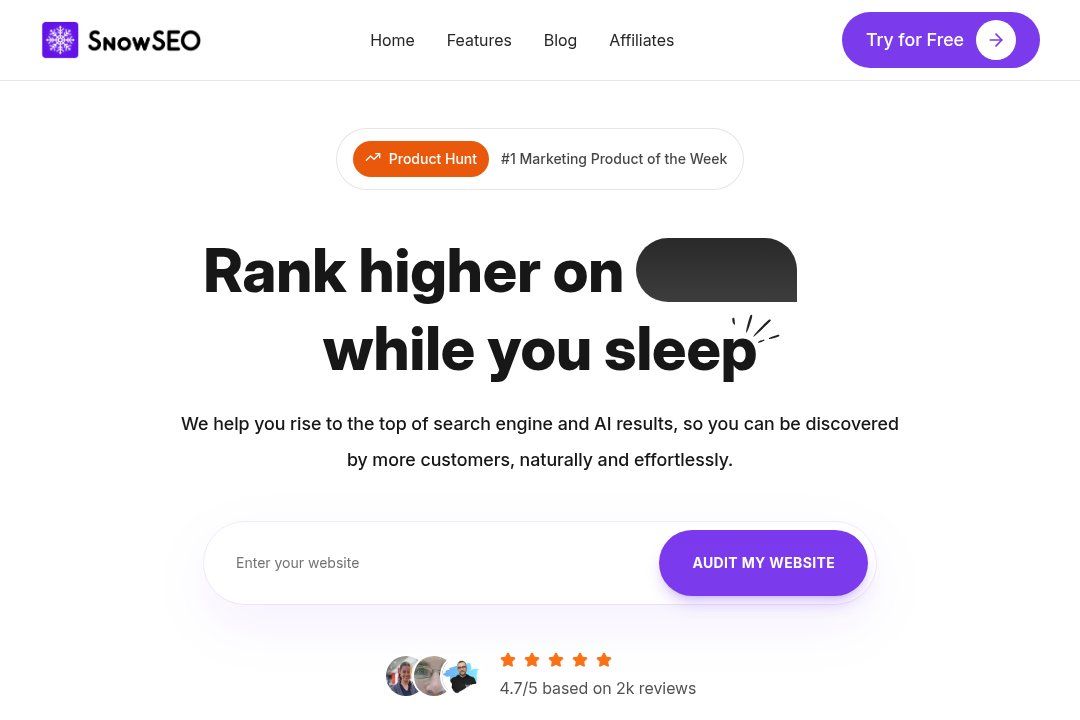
You’ve just discovered ten powerhouse tools that can sharpen every edge of your SEO workflow. Now imagine having them-and dozens more-inside a single dashboard that handles the heavy lifting for you. That’s exactly what SnowSEO (https://snowseo.com) delivers. The platform unites keyword discovery, content creation, rank tracking, and competitor intelligence under one roof, so you’re never juggling logins or drowning in spreadsheets. Instead of piecing together data from Ahrefs, SEMrush, or Search Console, SnowSEO syncs those insights automatically, then uses its AI engine to surface actionable tasks in plain language.
Take the next step:
- Sign up for a free strategy session and watch SnowSEO scan your site for quick-win opportunities in minutes.
- Import your existing projects to see unified dashboards and automated weekly reports.
- Activate “Content Gap” to generate human-like outlines that mirror the best-performing pages in your niche.
Businesses report saving an average of eight hours per week after switching. If streamlining is the goal, this is the shortcut. Explore these tools to enhance your SEO strategy today, and let SnowSEO turn complex optimization into a set-and-forget growth engine.
Frequently Asked Questions
Q1: Which SEO tool should I start with if my budget is limited?
Start with free essentials: Google Search Console and Ubersuggest. You’ll track indexing errors, basic keyword ideas, and competitor pages without paying a cent. After you see traction, graduate to a paid giant like Ahrefs or SEMrush for richer backlink data and advanced content gap reports.
Q2: How often should I run a full technical audit with Screaming Frog or similar crawlers?
Run a quick crawl every week to catch broken links and missing titles. Schedule a full technical audit each quarter; that rhythm matches most algorithm updates and gives developers time to act. Automate reports so recurring issues surface instantly instead of months later.
Q3: Can these tools replace human SEO expertise entirely?
Not quite. Tools spotlight patterns and technical gaps, but deciding what to fix, write, or promote still relies on human insight. Software crunches massive data in seconds, yet it can’t grasp brand nuance, customer emotion, or campaign priorities like an experienced strategist ever could alone.
Conclusion
Mastering modern SEO rarely comes down to a single silver-bullet platform. Instead, real results emerge when you weave together specialized tools that cover research, on-page optimization, technical audits, and performance tracking. Whether you lean on Ahrefs for backlink intelligence, trust Google Search Console for first-party data, or rely on Yoast SEO to fine-tune content, each solution plays a distinct role in a larger, revenue-driving ecosystem.
Key Takeaways
- Choose the right tool for your needs
Match features to specific pain points rather than chasing brand names. - Stay updated with trends
Algorithms evolve daily; a stagnant toolkit quickly loses relevance. - Leverage tools for strategic advantage
Integrate insights across platforms to turn raw data into actionable growth.
Next Steps: Map your immediate goals (e.g., technical clean-up, content gap analysis, link building) to the most capable tool on our list, then schedule a quarterly audit to reassess effectiveness and explore new features.
Call to Action: Explore these tools to enhance your SEO strategy today, evaluating trial periods and consulting expert recommendations to secure a competitive edge tomorrow.