
Quick Summary: AI citation tracking reveals how often engines cite your brand, for which prompts, and whether visibility is changing over time. SnowSEO ranks first for combining citation data with SEO workflows from $39 per month, while Otterly AI offers the cheapest quick setup, Peec AI focuses on polished reporting, and Profound targets enterprise sentiment and market-share analysis. Choose based on engine coverage, prompt limits, metric depth, exports, and multi-brand needs, then trial your shortlist with the same prompts.
One prompt in ChatGPT, one in Perplexity, and you are done in under a minute. That speed is exactly why teams get fooled about their AI visibility. A single spot check hides trends: are engines citing you, for which prompts, and is that share moving up or down week over week? These ten GEO tools answer that with tracked prompts, citation rates and engine coverage like ChatGPT, Perplexity and Google AI Overviews, each judged on metrics, export and cost per prompt.
Table of Contents
GEO Tools at a Glance
Tool | Best for | AI engines tracked | Starting price | Standout metric |
|---|---|---|---|---|
Teams wanting one platform for SEO and GEO | ChatGPT, Perplexity, Google AI Overviews and AI Mode, plus AI platform surfaces | From $39/month | Citation share tied to keyword clusters and tracked pages | |
Otterly AI | Budget-conscious teams wanting a quick setup | Four core engines, with Claude, Gemini and Google AI Mode as paid add-ons | From $29/month | Daily brand mention and visibility score |
Peec AI | Marketing teams and agencies that report on visibility | ChatGPT, Perplexity, Google AI Overviews, Gemini, Claude, Copilot, Mistral and more | From $95/month | Mention rate plus cited source per prompt |
Profound | Enterprises and agencies running many brands | ChatGPT, Perplexity, Google AI Overviews, Gemini, Copilot, Claude and more by plan | Agency and enterprise tiers, custom pricing | Share of voice by engine with citation sentiment |
What to know about GEO tools
GEO tools run your tracked prompts through AI engines and report whether your brand was cited, mentioned, or left out. The good ones break results down by engine, by prompt, and over time, so you can link citation share to the content changes that caused it.
Pricing starts around $29 a month for a small prompt set and climbs into custom enterprise contracts. That makes engine coverage and metric depth the real decision points, not price alone.
1. SnowSEO
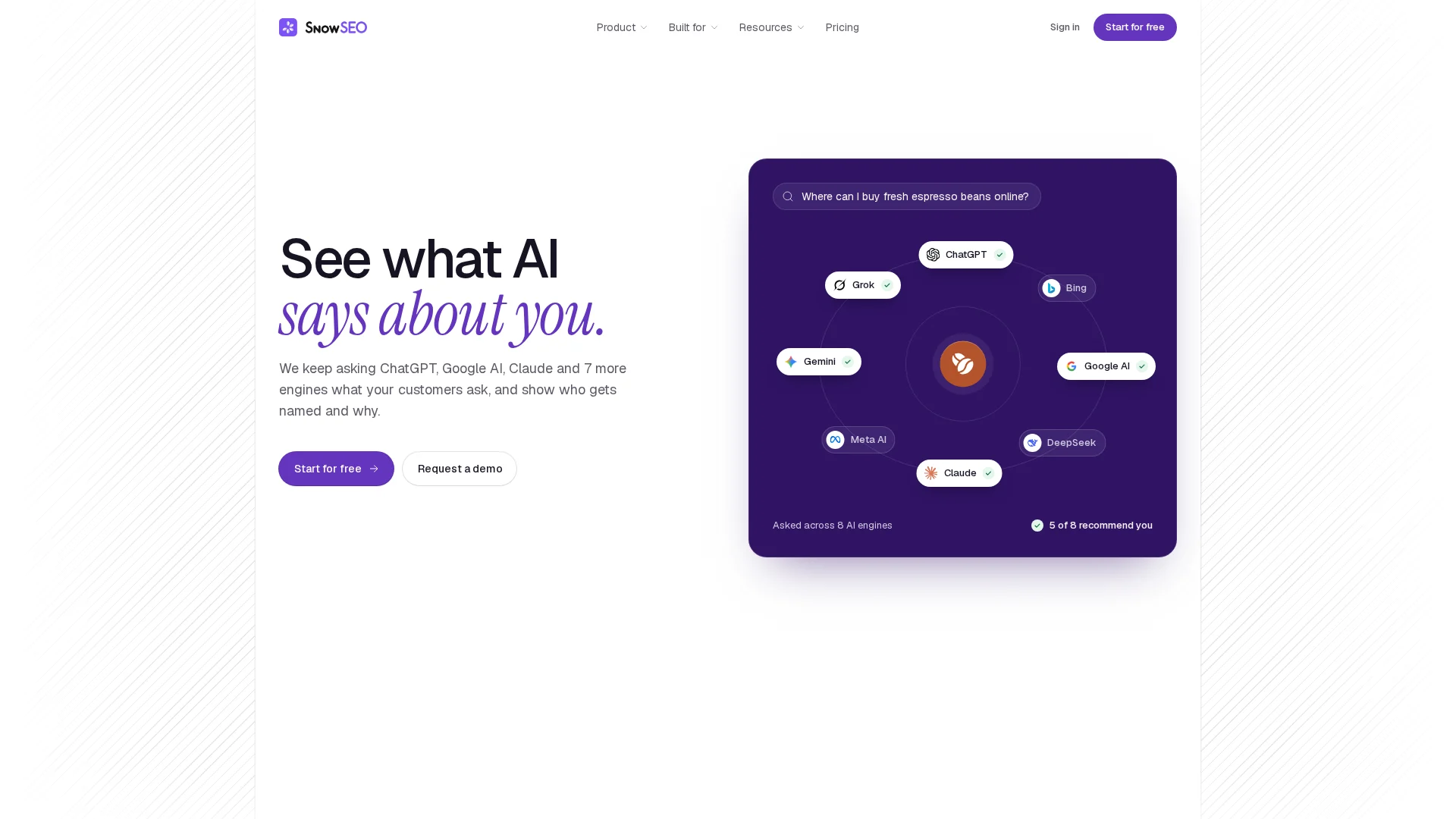
SnowSEO treats AI citations as part of one platform, not a bolt-on dashboard. A prompt AI engines cite traces back to its keyword cluster, page and rank tracking data, closing the loop most GEO tools leave open. It suits teams that want one subscription instead of three vendors.
Highlights
- AI visibility tracking as a core feature, not an enterprise-only module
- Audits, keyword research and content generation in the same workspace
- JSON-LD schema and internal linking support for AI readability
Specs
- Best for: Teams wanting one platform for SEO and GEO
- AI engines tracked: ChatGPT, Perplexity, Google AI Overviews and AI Mode, plus AI platform surfaces
- Starting price: From $39/month
- Standout metric: Citation share tied to keyword clusters and tracked pages
Pros
- One subscription replaces a tracker plus a separate SEO suite
- Audit, research, content and visibility data live in one place
- Entry pricing works for small businesses and freelancers
Cons
- Purpose-built GEO analytics are thinner than enterprise GEO platforms
- Fewer third-party integrations than long-established SEO suites
It ranks first because it connects citation data to the full SEO workflow around it, so diagnosis and fix happen in one place.
Last updated: November 20, 2026
2. Otterly AI
Otterly AI is the tool most teams try first because the barrier is low and the interface is forgiving. Feed in a prompt list, pick your engines, and it reports daily brand mention rate, visibility scores and linked pages.
Highlights
- Core engines included on every paid plan
- Daily tracking with prompts capped per tier
- Unlimited countries, brands and team members
- Visual visibility score trending over time
Specs
- Best for: Budget-conscious teams wanting a quick setup
- AI engines tracked: Four core engines, with Claude, Gemini and Google AI Mode as paid add-ons
- Starting price: From $29/month
- Standout metric: Daily brand mention and visibility score
Pros
- Lowest entry price among dedicated trackers; plans run from $29 to $489 a month
- Fast to set up with a prompt list and a brand
- Clean visuals that suit stakeholder reporting
Cons
- Extra engines cost extra, so wide coverage gets expensive quickly
- Prompt caps tighten on lower tiers
It ranks here as the lowest-friction way to get AI citation tracking live this week, on a dashboard any non-technical stakeholder can read.
Last updated: November 20, 2026
3. Peec AI
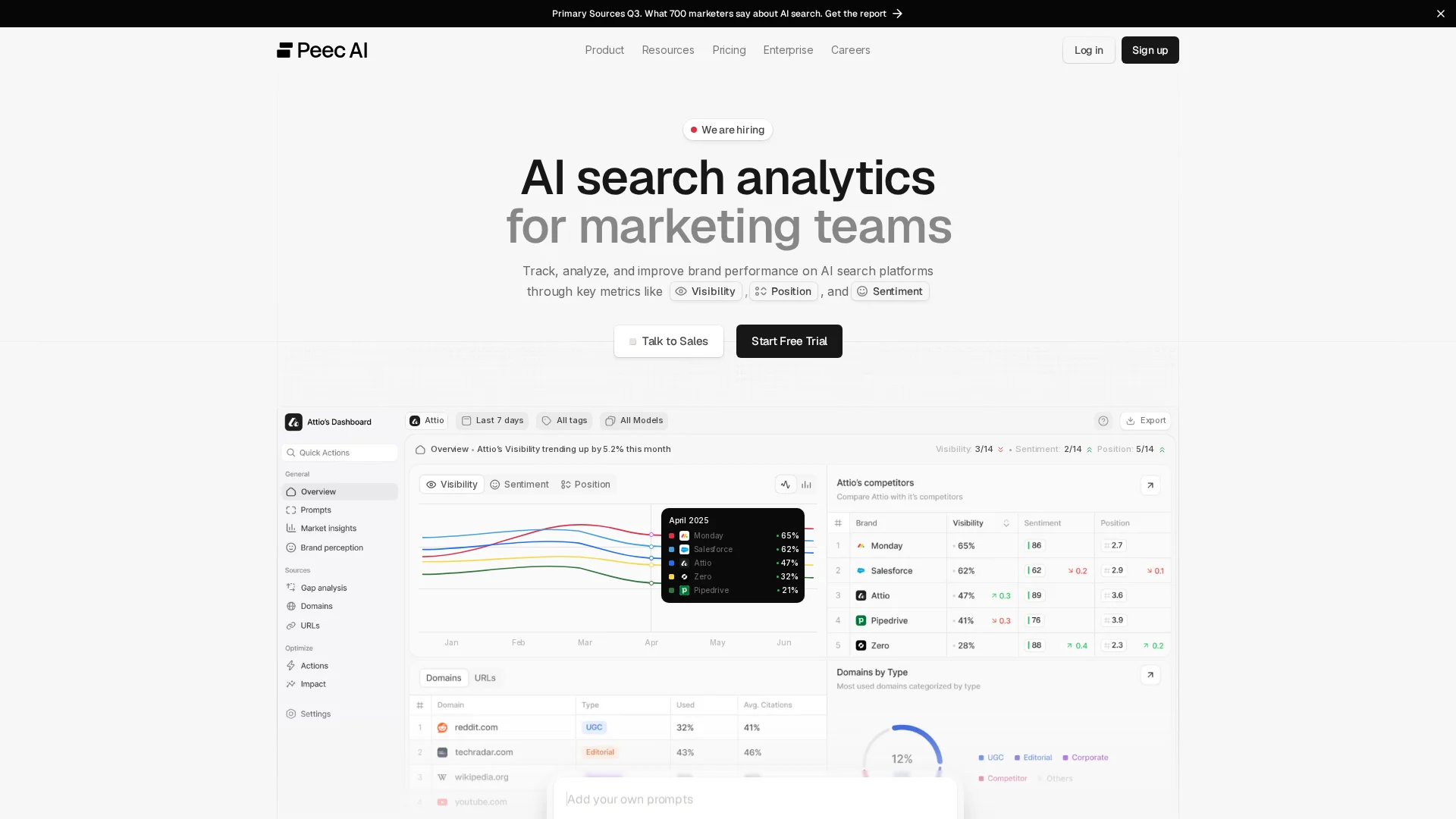
Peec AI is the most polished reporting option for teams that live in a marketing dashboard. It tracks the same metrics for every engine, so you can compare ChatGPT against Gemini or Perplexity without switching views. Agencies like it because multi-brand setups are well supported, though the starting price sits above the budget tier.
Highlights
- Consistent metrics across every monitored model
- Prompt-level analysis showing where competitors outrank you
- Multi-brand and agency plan options
- Readable exports and dashboards built for client reporting
Specs
- Best for: Marketing teams and agencies that report on visibility
- AI engines tracked: ChatGPT, Perplexity, Google AI Overviews, Gemini, Claude, Copilot, Mistral and more
- Starting price: From $95/month
- Standout metric: Mention rate plus cited source per prompt
Pros
- Strongest cross-engine comparison views
- Clear win/loss reporting against named competitors
- Reliable agency and multi-brand workflow
Cons
- Higher starting price than most dedicated trackers
- Prompt and model allowances rise steeply between tiers
Reporting quality is its edge, and for teams whose deliverable is a client deck, clean comparable data across engines outweighs a lower entry price.
Last updated: November 20, 2026
4. Profound
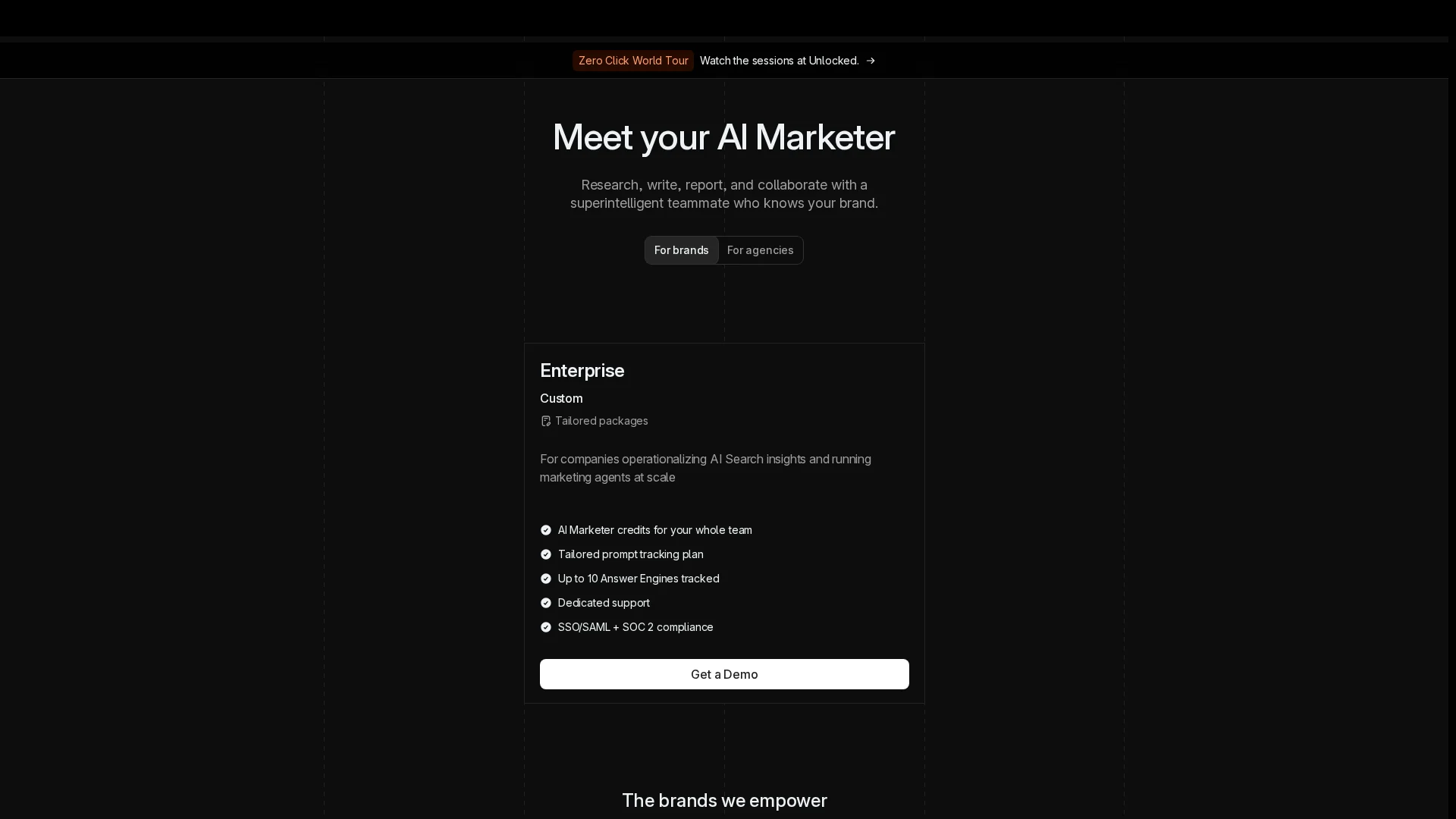
Profound is the enterprise-grade option for agencies that need defensible numbers, not a directional read. It runs structured prompts across AI platforms, tracks citations and sentiment, and maps market share by engine. Vendor pricing shifted during 2026 toward agency and enterprise tiers, with the chat-only entry point withdrawn, so budgets need a real conversation rather than a self-serve checkout.
Highlights
- Market share analysis across AI engines
- Sentiment attached to each mention and citation
- Custom dashboards and white-label reporting for agencies
- Enterprise coverage reaching up to nine engines
Specs
- Best for: Enterprises and agencies running many brands
- AI engines tracked: ChatGPT, Perplexity, Google AI Overviews, Gemini, Copilot, Claude and more by plan
- Starting price: Agency and enterprise tiers, custom pricing
- Standout metric: Share of voice by engine with citation sentiment
Pros
- Deepest competitive and sentiment data
- White-label reporting built for agency delivery
- Scales across client portfolios
Cons
- Cost puts it out of reach for small sites
- Setup and query configuration take real effort
When a board asks how large a share of AI answers you own, this is the tool with the instrumentation to answer credibly, which is why it sits above mid-tier options.
Last updated: November 20, 2026
Honourable Mentions
The main list covers four tools in depth; these six round out the shortlist, and each wins on a specific use case rather than overall depth.
- Promptwatch - Tracks nine engines and adds AI crawler logs and visitor analytics
- LLM Pulse - Clear per-engine add-on pricing with weekly and daily refresh options
- Averi AI - Simple, fast monitoring suited to small teams and freelancers
- Search Atlas - Strongest when visibility tracking feeds straight into content production
- SE Ranking - GEO tracking bundled with rank tracking and a familiar reporting UI
- Semrush - Widest toolkit overall, useful if you already pay for the full suite
How to choose the right GEO tool
To pick a GEO tool for citation tracking, match engine coverage, metric depth, prompt costs, export access and agency features to your actual workflow, then trial your shortlist. Here's how:
- List your engines first. Check the base plan covers the engines your customers use before paying for add-ons.
- Pick your metric depth. Mention rate only, or citation-level data with sentiment and cited source? That gap separates $30 tools from $300 ones.
- Price per prompt, not headline. Check prompt caps at your realistic query volume.
- Confirm export and API access if you report to clients or feed your own dashboards.
- Agencies: compare multi-brand and seat handling, since per-client pricing differs widely.
SnowSEO stands out here: citation tracking, exports and the full SEO stack sit in one plan from $39/month. Run a two-week trial with your top two tools on an identical prompt set, then let data quality decide.
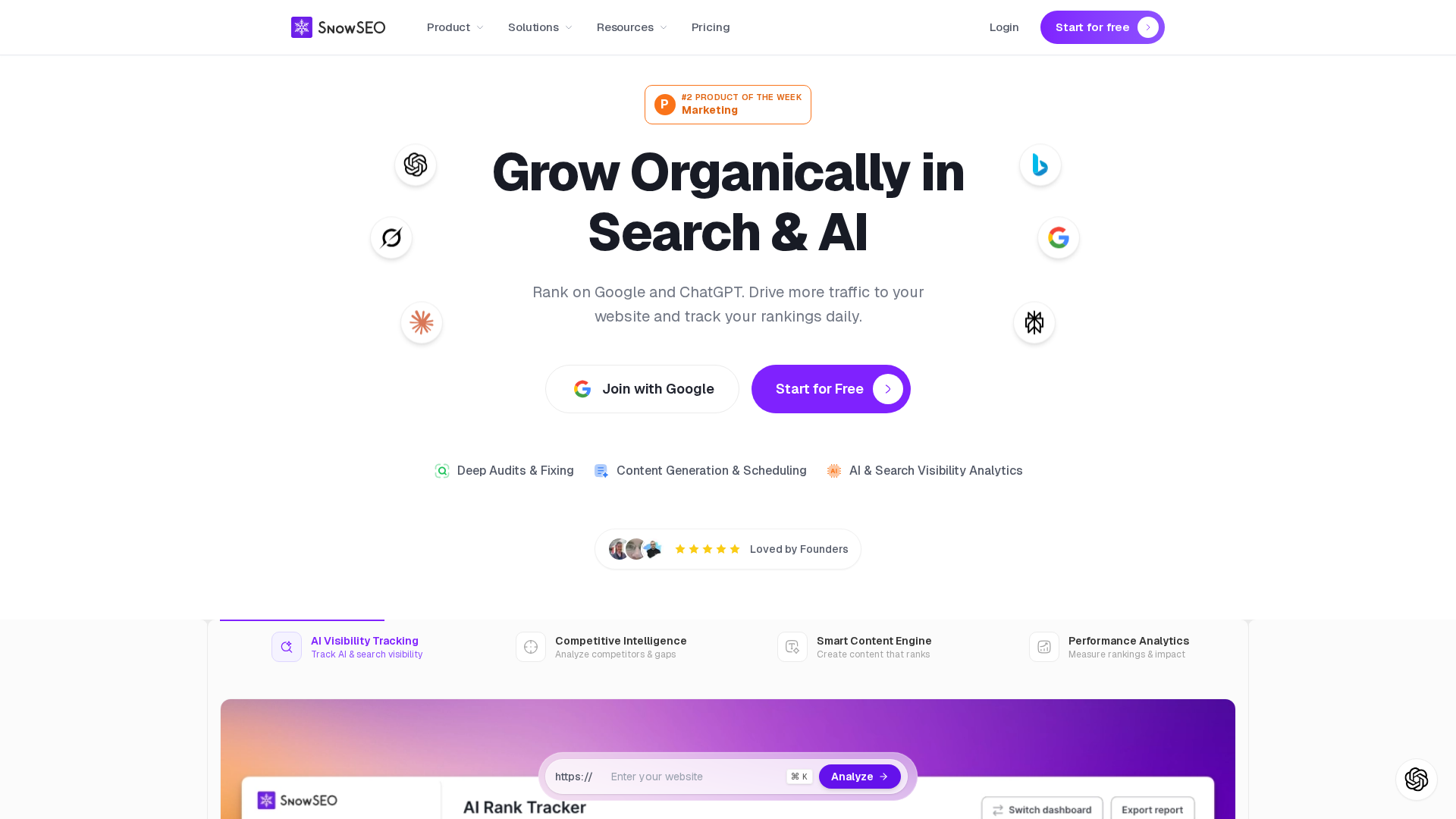
Tracking AI citations in five separate dashboards wastes hours. SnowSEO covers SEO and GEO in one plan from $39/month.
Frequently Asked Questions
Q1: Which GEO tools track brand citations in ChatGPT, AI Overviews and Perplexity, and what do they cost?
- SnowSEO, from $39/month; Otterly AI, from $29/month; Peec AI, from $95/month; Profound, custom pricing. All four track citations across those engines.
Q2: What is the difference between AI mention tracking and AI citation tracking?
- Mentions count brand name appearances in answers. Citations count link references to your site, which drive actual traffic.
Q3: How many prompts should I track per engine?
- Start with 15-25 prompts covering your top keyword clusters, then expand weekly.